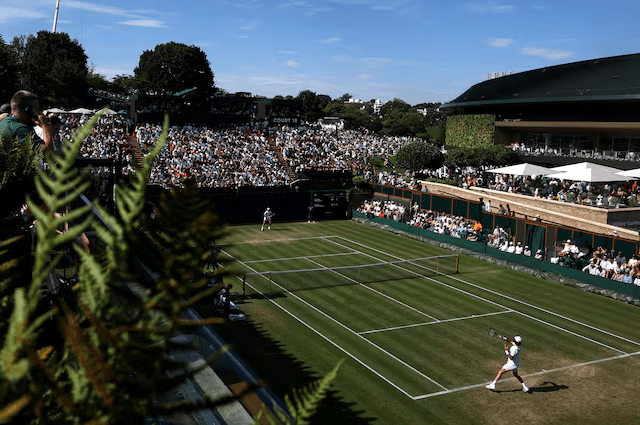
The All England Lawn Tennis & Croquet Club’s (AELTC) ambitious £200 million expansion project for Wimbledon, aimed at tripling the tournament’s footprint and modernizing facilities, has moved into a high-stakes legal phase with a judicial review set to begin this week. As this legal tennis match unfolds in London’s Royal Courts of Justice, the future of the iconic Grand Slam venue hangs in the balance.
A Grand Vision for a Modern Wimbledon
Approved by the Greater London Authority (GLA) in September 2024, the expansion proposes transforming the old Wimbledon Park golf course—already owned by the AELTC—into an enlarged Wimbledon site spanning approximately 115 acres, up from the current 42 acres. Highlights include the construction of 39 additional grass courts, including a new 8,000-seat show court with a retractable roof, and on-site relocation of qualifying matches to better align with the other Grand Slams.
Proponents, including global tennis elite such as Novak Djokovic and Carlos Alcaraz, tout the project as transformative—enhancing capacity (from 42,000 to 50,000 daily), improving player facilities, and extending public engagement with a 27-acre lakeside park. Tournament Director Jamie Baker emphasised that consolidating all grounds would secure Wimbledon’s long-term status, benefiting both championship and community.
These are Exciting Times
AELTC Chair Deborah Jevans described it as potentially the “greatest sporting transformation for London since 2012”.Environmental assurances—such as planting 1,500 trees and enhancing lake biodiversity—garnered support from the London Wildlife Trust. Support polls show more than 60% of local residents backing the scheme.
Local Opposition: Conservation vs Construction
However, the expansion has drawn significant resistance. Campaign group Save Wimbledon Park, supported by residents and local politicians like Councillor Malcolm Grimston and MP Fleur Anderson, argues that the GLA ignored key legal protections—statutory covenants and the park’s status as Metropolitan Open Land (MOL). Critics warn of ecological damage, the removal of 300 mature trees, lorry traffic, noise pollution, and loss of open green space.
One such critic, 100-year-old local resident Thelma Ruby, passionately stated she might “chain herself to a tree” to block what she calls an “industrial tennis complex”.. Environmentalists like Susan Cusack also fear harmful effects on biodiversity including the surrounding lake’s ecosystem.
The Legal Match Begins
The judicial review over two days (July 8–9, 2025) will scrutinize whether the GLA lawfully granted planning permission, whether it correctly considered restrictive covenants and recreational land statuses, and if the Special Planning Circumstances required for building on MOL were properly evaluated.
AELTC maintains confidence: “Our confidence in the development and the proposals… is as strong as it ever has been,” said Jamie Baker.
Implications for the Community and the Sport
Should the expansion proceed, construction would likely span eight years, boosting local infrastructure, creating jobs, and increasing the grounds’ capacity and operational efficiency.Conversely, opponents argue that the cost to green space, public enjoyment, and local character is too high—setting a precedent for protected open land developments.
The Next Serve: What to Expect
- July 8–9, 2025: The High Court hearing delves into the project’s legality.
- Post-hearing: Decision timelines are fluid—could take weeks or months. Further appeals by either side remain possible .
- Public Impact: The outcome will influence London’s planning norms and could reshape how sports venues expand into protected areas.
Final Set: A Tournament of Legal Drama
This expansion judicial review has become Wimbledon’s most consequential off-court contest. Balancing heritage, community, environmental values with the drive for modernization, the court’s ruling will shape Wimbledon’s future for decades—deciding whether the sport’s evolution will preserve or reshape the open spaces it once found too sacred for change.