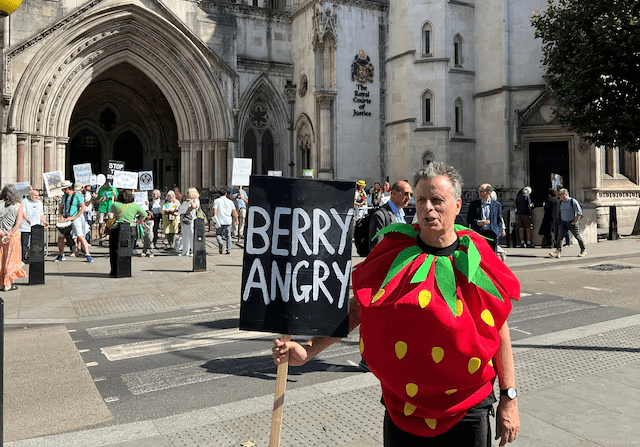
In a significant legal decision on July 21, 2025, London’s High Court has ruled in favor of the All England Lawn Tennis and Croquet Club’s (AELTC) controversial £200 million expansion project, reinforcing the lawfulness of planning permission granted for a major redevelopment of Wimbledon’s grounds. The campaign group Save Wimbledon Park had brought the case, asserting that London’s Greater London Authority (GLA) overlooked critical legal and planning constraints. In a detailed judgment, Judge Pushpinder Saini declared that there was no error in the GLA’s approval process and that the permission stands legally sound.
The expansion plan, previously approved in September 2024 by Deputy Mayor Jules Pipe on behalf of the GLA, envisages nearly tripling the size of Wimbledon’s main site. It includes the construction of 39 new grass tennis courts, among them a new 8,000-seat show court, spread across the former Wimbledon Park Golf Club—categorized as Metropolitan Open Land (MOL). The project proponents maintained that redeveloping this land would bring tangible public benefits: 9.3 hectares (about 23 acres) of newly accessible parkland, improved facilities for hosting qualifying rounds at the same venue, and opening up tennis courts to community use year-round.
Led by Save Wimbledon Park, opponents argued the decision failed to account for restrictive covenants dating back to the land’s acquisition in 1993, which stipulate use for leisure, recreation, or open space only. They asserted this, paired with the status of Wimbledon Park as both a Grade II*-listed heritage site and MOL with protections akin to zone green belt, amounts to a protected recreational trust that cannot be overridden by new development.
Judge Saini’s ruling emphatically dismissed these arguments, finding the legal challenge insufficient to overturn the planning consent. However, the battle is not yet over. A separate legal case concerning whether the land falls under a statutory public recreation trust is scheduled for early 2026. That hearing will address whether the land’s historic recreational obligations legally bind it and potentially restrict development beyond what was considered in the planning process.
Despite the formal court ruling, opposition remains strong. Critics—including signatories of Save Wimbledon Park and local residents—continue to protest the environmental and infrastructural impact of the plan. They voice concern over mature tree removal (initially about 300 trees) and years of construction-related disruptions. Some high-profile dissenters, like centenarian local actress Thelma Ruby, have vowed to take direct action—threatening to chain herself to trees to block the expansion.
AELTC chair Debbie Jevans affirmed the club’s confidence in the project’s legal standing, describing the plan as essential to preserving Wimbledon’s position among the elite Grand Slam tournaments. Without increased infrastructure and competition facilities—especially bringing qualifying rounds on-site—the club argues it risks lagging behind counterparts such as the US Open, which recently completed its own sizable renovation program.
The project’s supporters point to projected economic and community benefits—creation of jobs, local investment, and wider audience access to new recreational lands. Meanwhile, critics warn of precedent-setting consequences: that approving private development on formally protected public parkland may open a door to further encroachments on London’s highly safeguarded green spaces.
Looking ahead, if the statutory trust case upholds restrictions, Wimbledon’s development plan could encounter major revisions or resubmission. For now, though, the High Court has allowed the planning permission to stand, enabling AELTC to continue future preparatory steps. The legal showdown remains ongoing—a two-front challenge, with planning permission upheld but property status still in question.
Key Points:
- London’s High Court upheld the lawfulness of GLA’s planning permission for Wimbledon’s £200 million expansion project, approving construction of 39 courts and a new show court on former Wimbledon Park Golf Club land.
- Save Wimbledon Park’s judicial review argued that restrictive covenants, statutory trust obligations, and heritage protections were ignored—but the court found these insufficient to invalidate the permission.
- The project includes public access elements—parkland, community courts, and on-site qualifying matches—but critics remain concerned about environmental harm and loss of protected green space.
- A future trial in early 2026 will determine whether the land is legally held in a public recreation trust, which could affect the expansion’s legal standing.