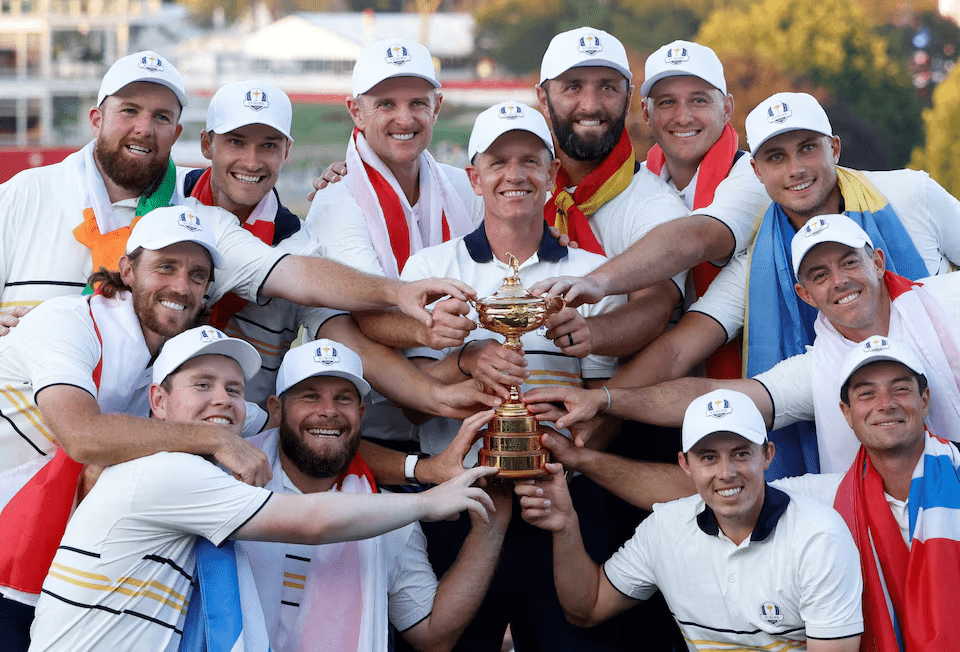
In a rare public display of contrition, American golf legend Tom Watson has apologized to Team Europe for the behavior of certain U.S. spectators at the 2025 Ryder Cup held at Bethpage Black. He expressed shame over the conduct of some golf fans, condemning their “rude and mean-spirited” actions while congratulating Europe on their hard-earned victory.
Watson, 76, a long-time figure in Ryder Cup lore as both a player and a captain, took to social media (X, formerly Twitter) with a message that struck an emotional tone. He wrote, “I’d like to congratulate @RyderCupEurope on their victory. Your team play the first few days was sensational. More importantly, I’d like to apologize for the rude and mean-spirited behavior from our American crowd at Bethpage. As a former player, Captain and as an American, I am ashamed of what happened.”
The apology came amid intense scrutiny of crowd behavior over the three days. Reports and footage surfaced of repeated heckling, obscenities aimed particularly at Rory McIlroy, and even an object being thrown at McIlroy’s wife, Erica, during the matches. McIlroy publicly criticized the language and denigrating chants used by spectators, saying golf should maintain a higher standard of respect and sportsmanship.
Watson’s position as a respected elder statesman of the game gave his apology weight. Over his career, he competed on multiple Ryder Cup teams and captained the U.S. side on at least two occasions. He contrasted the exuberant play by Europe in the opening days—calling it “sensational”—with the negative elements produced by some in the crowd.
While the European team’s victory (15-13) was built on strong early performance, the latter phases of the competition saw a U.S. comeback effort that drew even more attention to the tensions between players and fans. Watson’s apology was in many ways a gesture to calm lingering controversy and reaffirm the values of decorum in golf.
Still, reactions to Watson’s statement have been mixed. Some view it as overdue and courageous, while others argue that responsibility should extend beyond individual apologies and into institutional change—by tournament organizers, national golf bodies, and fan education efforts alike. McIlroy himself insisted after the event that behavior of that nature should not be tolerated in future competitions.
For Watson, the apology stands as a reinforcing moment: even in defeat, the spirit of the game demands civility. Whether it will prompt structural changes in crowd control, fan conduct policies, and cultural expectations in American golf remains to be seen.