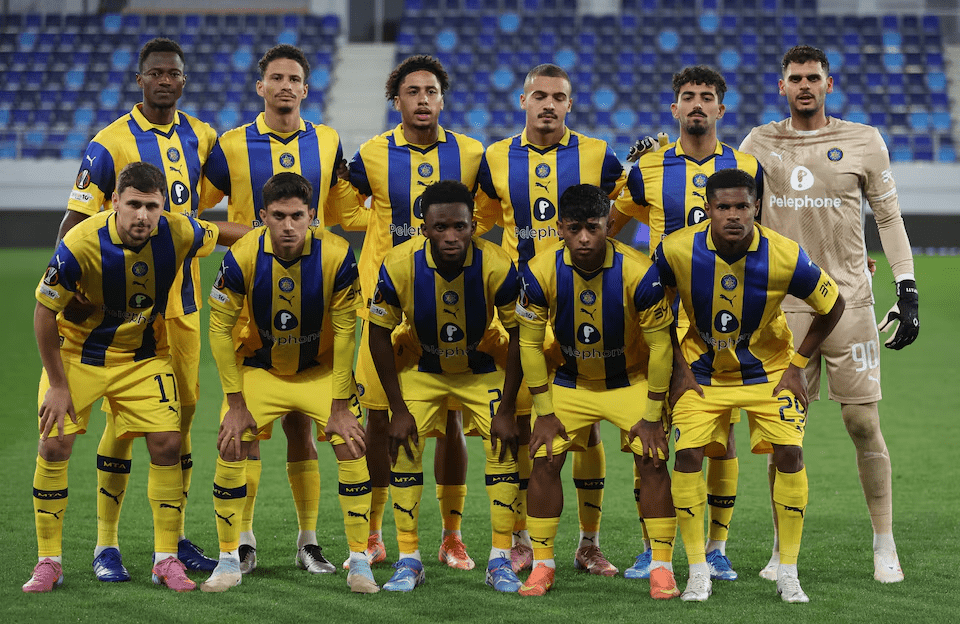
In a move that has already sparked political backlash and questions about safety, fans of the Israeli club Maccabi Tel Aviv will not be permitted to attend their team’s upcoming Europa League fixture at Aston Villa’s Villa Park. The decision, made by Birmingham’s Safety Advisory Group on the advice of West Midlands Police, cites public safety concerns amid fears of protests and unrest tied to the ongoing Israel–Gaza conflict.
Risk assessment, precedent, and security rationale
The match has been classified by local authorities as “high risk,” largely due to current intelligence and historical precedent involving Maccabi supporters. The police point specifically to violent incidents and hate crime offences at a 2024 Europa League fixture between Ajax and Maccabi Tel Aviv in Amsterdam, where tensions spilled into street violence.
Authorities argue that the risk of protests or clashes outside the stadium bowl would be difficult to manage. West Midlands Police has said that concerns around crowd control and protests “on the night” influenced the recommendation to exclude away supporters.
The Safety Advisory Group (SAG), which includes emergency services, local council officials, and event organizers, issued guidance to Aston Villa that no away fans should be admitted. The club stated it is in ongoing dialogue with both Maccabi Tel Aviv and local authorities throughout the process.
While SAG recommendations are advisory rather than legally binding, local event safety planning often gives them decisive weight when combined with police assessments.
Political fallout and public reaction
The ban has drawn strong criticism from across political and civil society spheres. In the United Kingdom, Prime Minister Keir Starmer called the decision “wrong,” emphasizing that antisemitism must not be tolerated. He argued that policing should ensure all football fans can enjoy matches safely rather than excluding them.
Some members of the Conservative Party also condemned the move, labeling it a “national disgrace.” Meanwhile, the West Midlands Police and Crime Commissioner has urged a review of whether the ban is a proportionate response, seeking clarity on whether alternative security measures could allow fans to attend.
In Israel, Foreign Minister Gideon Saar denounced the ban as “shameful” and called on British authorities to reverse it.
Jewish organizations have also weighed in. The Jewish Leadership Council described the decision as “perverse,” arguing that excluding away fans because their safety cannot be guaranteed sets a dangerous precedent.
The principal executive officer of Maccabi Tel Aviv, Jack Angelides, said the club was disappointed and expressed concern about what the exclusion signifies. He noted that many Israeli teams have played in countries with difficult political contexts without bans, and questioned why venue security could not be arranged.
Wider implications and questions raised
The exclusion of Maccabi fans raises important questions about the balance between security and access, sports governance, and potential discrimination. Some observers caution that such bans may disproportionately affect a single group and carry an appearance of prejudice when linked to nationality or religion.
UEFA, responsible for organizing the Europa League, expressed that local authorities retain responsibility for decisions around match safety. The governing body encouraged the involved parties to find arrangements that allow fan attendance in a “safe, secure and welcoming environment.”
Since the decision was announced, government ministers in the UK have begun urgent talks to see if there might be a “way through” that reverses or softens the ban. Culture Secretary Lisa Nandy is coordinating with the Home Office and other stakeholders to explore the possibility of safe access.
At stake is not only whether Maccabi fans will attend this specific match, but the broader principle of whether supporters of certain clubs or nations can be excluded on the basis of external conflict. The case may set precedent for how security risks tied to political tensions are managed in international sports fixtures in Europe—and how far authorities can go when ruling that certain fans cannot attend.
In the coming days, attention will be on whether an appeal or revision is granted, whether alternative security protocols can satisfy both safety concerns and the right of fans to travel, and how UEFA and domestic authorities respond in balancing risk with fairness.