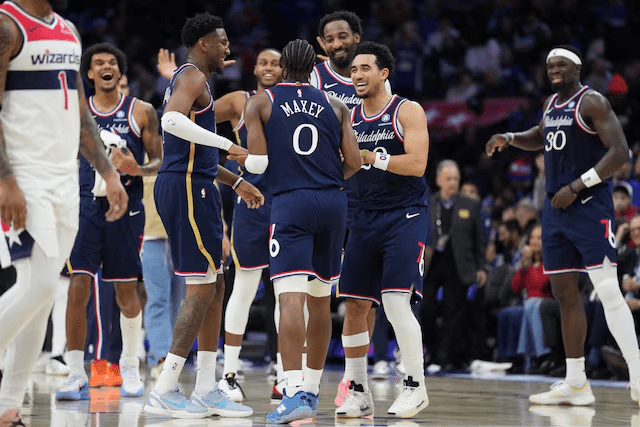
On December 3, 2025, the National Basketball Association (NBA) announced that the 76ers had been fined US $100,000 for violating league injury-reporting rules following Embiid’s return against the Atlanta Hawks on November 30.
The violation stemmed from the team’s initial injury report, which listed Embiid as “Out” — only for him to end up playing that same night, logging 30 minutes and scoring 18 points in a 142–134 double-overtime loss.
According to the league, the fine also reflects the 76ers’ prior history of similar violations.
What the rules require — and what went wrong
Under NBA guidelines, teams must disclose the injury status of any player whose availability may be affected by 5 p.m. local time on the day before a game (unless the game follows another, i.e. a back-to-back). (
From that point forward, if a player’s status changes (for example from “Out” to “Questionable,” or “Available”), teams are expected to update the league and opponents promptly.
In this case, the 76ers’ disclosure failed to reflect that Embiid ultimately would play — effectively misleading the league and potentially opponents, who prepare game plans based partly on reported injuries.
Because this was not the first time the franchise violated the rule (they had been penalized in prior seasons for similar lapses), the NBA considered their record in levying the $100,000 fine.
Context: Embiid’s injury history and recent availability
Coming into the Hawks game, Embiid had missed nine consecutive games as the team managed his right-knee issue.
Though his return might offer a boost on the court, the circumstances and misreporting highlight how sensitive availability disclosures remain in a league where injuries, betting markets, and competitive fairness intersect.
This isn’t the first time the 76ers have been fined for mishandling injury reports concerning Embiid. Previous fines came after games in which he was listed as “Out” or his status was misreported before he played.
Implications for the 76ers and the NBA
- For the 76ers: The fine signals that the league is keeping strict watch on injury-reporting compliance — even for marquee players — and is willing to penalize repeat offenders.
- For other teams: It’s a reminder that reporting rules are mandatory and that last-minute changes must be communicated transparently.
- For the league’s integrity: Accurate injury disclosures help maintain fairness, protect competitive integrity, and safeguard public confidence — including in betting markets, fan expectations, and rival teams’ preparations.