The 2026 Six Nations Championship opened with a dramatic, rain-soaked clash at the Stadio Olimpico on Saturday, where Scotland suffered a narrow 18-15 defeat to Italy in conditions that tested both sides’ handling, discipline and resilience. In the aftermath, Scotland head coach Gregor Townsend was unapologetic in defending his players, insisting that their effort and commitment in testing conditions deserved credit even if the result bluntly underscored unfinished business.
The loss leaves Scotland with early questions about their credentials in this year’s competition, particularly as they prepare to meet traditional powerhouse England next weekend at Edinburgh’s Murrayfield. Townsend, now nine years into his role without having secured a Six Nations title, acknowledged the disappointment — but also emphasised that the performance was not without encouraging signs.
A Half-Changed Contest in Harsh Weather
From the first whistle in Rome, the weather shaped the narrative. Rain hammered down in persistent sheets, turning the ball slippery and the pitch treacherous, with handling errors becoming a defining feature of the contest that opened the 2026 championship. The simple physics of wet conditions — heavy ball, heavier boots on soggy turf — made the game less about expansive running rugby and more about territory, set pieces and error management.
Italy seized the early initiative. In the eighth minute, winger Louis Lynagh, capitalising on a well-judged grubber kick and run, crashed over for the opening try, giving the hosts an emotional lift and an early psychological edge. Within minutes, centre Tommaso Menoncello had doubled Italy’s tally, collecting off a perfectly executed backline play that rewarded composure in conditions where most teams struggle to string phases together. Fly-half Paolo Garbisi added both crucial points with his boot, combining a conversion and later penalties to keep Italy ahead and in rhythm despite the poor handling conditions.
Scotland’s reply came not instantly, but with growing confidence and a shift in momentum. No 8 Jack Dempsey forced his way over for a try that sparked Scottish fans and visitors alike, a tightly contested drive that showed Scotland’s intent to wrestle back control even though the conditions remained caustic. Fly-half Finn Russell slotted the conversion, cutting the Italians’ lead and giving Scotland a platform to build.
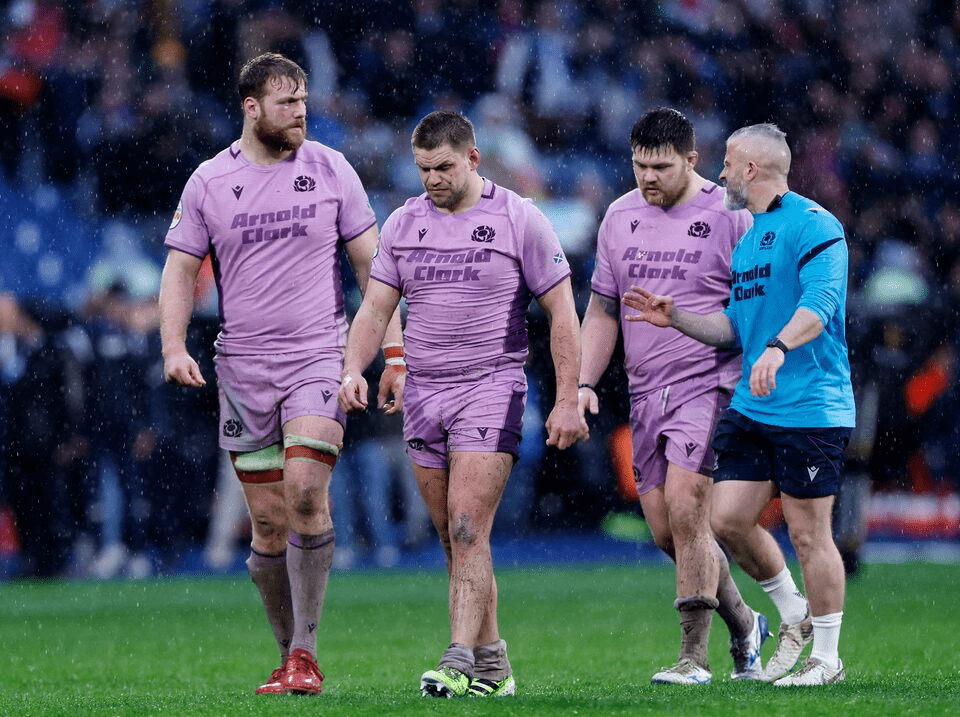
Townsend’s Response: Honest but Supportive
In his post-match comments, Townsend was both candid about Scotland’s shortcomings and robust in his backing for the players who wore the thistle. “Hugely disappointed to lose your first game in the tournament, makes things tougher,” he told BBC in excerpts reported by Reuters, reflecting the coach’s realistic appraisal of the field. “Obviously, the guys are very disappointed. The effort was there.”
Townsend acknowledged that Scotland failed to hit their stride early and handed Italy too much field position and momentum. “We just gave away too many possessions,” he said, emphasising that the first half — which saw Scotland fail to score enough points — left them with too much to do under brutal conditions. Still, he stressed that the players’ endeavour in the second half and their refusal to surrender despite the weather was something he could not fault.
“When the rain came down, it was extremely difficult,” Townsend said. “But the effort the players put in was tremendous — just not enough to win the game.” He reminded critics that rugby is a game of fine margins, especially in the Six Nations, where tactical nuance and physical grit often matter more than expansive flair. In dry weather, errors can be more easily overcome; in Rome on Saturday, there was little margin for those mistakes.
Crucially, Townsend offered a public seal of confidence in the squad — insisting that he remained “100 per cent” behind the group and confident in the direction of his coaching plan even if this defeat could attract criticism from supporters and pundits alike. “Of course there’ll be criticism,” he said. “I’m with my team … I believe in them, I believe in what we’re doing. Today, it didn’t happen and we’re going to make sure it happens next week.”
Scotland Captain and Team Reflection
Scotland captain Sione Tuipulotu, an influential midfield presence, echoed his coach’s sentiments about learning from the defeat. He admitted that Scotland struggled to adapt to the rain and that loose carries and mis-execution cost them valuable territory. “It’s a setback, definitely,” he said, adding that in the Six Nations, a single loss can pivot the competition’s narrative quickly. However, he avoided blame on individuals, insisting collective responsibility lay with the team.
Tuipulotu’s remarks highlighted that while Scotland showed fight — repeatedly pushing Italy back in waves late in the game — they lacked precision in key moments that could have turned the tide. Scotland mounted a final charging sequence of nearly 30 phases inside the Italian 22 in the closing minutes, a period that encapsulated both their determination and missed opportunities. In the end, that valiant charge proved fruitless, with Max Williamson held up over the line in the defining defensive moment.
Key Match Moments That Defined the Game
Key tactical and breakdown moments shaped the match. Scotland’s lineout woes and handling errors in the early phases handed Italy both possession and confidence, an advantage the home side converted into scoreboard momentum. Conversely, Italy’s tactical kicking — measured and intelligent despite conditions — helped them pin Scotland inside their own half at critical junctures. Garbisi’s contributions with boot and game management underlined Italy’s broader control, even when Scotland threatened to swing momentum.
The weather emphasised discipline over flair, but Italy’s execution under pressure was eventually the deciding factor. Their defence late — particularly in that final Scotland set — showcased patience and physicality, drawing praise from their captain, Michele Lamaro, who described the effort as “absolutely incredible” and a testament to his team’s unity and commitment.
Context and Consequences for the Six Nations Table
For Scotland, the defeat is a sobering start. The Six Nations is a tournament where momentum and points difference can swing a campaign, and an opening loss adds pressure before facing a revitalised England side at home. Historically, Scotland has shown pedigree and fight in this championship, but errors in the opening match now raise questions about consistency and execution against well-organised opponents.
Conversely, Italy’s victory — their second over Scotland in recent years and a rare Six Nations win — boosts their confidence significantly. Even in less favourable conditions, the Azzurri demonstrated tactical discipline and defensive unity that defy their underdog status, a theme that could shape their tournament journey and raise their prospects beyond early expectations.
Townsend’s Long-Term View
Townsend’s willingness to publicly back his squad underlines a broader leadership strategy: fostering belief and unity rather than reacting defensively when results don’t go Scotland’s way. In a sport where coaches are often the first to feel pressure after narrow defeats, his stance suggests confidence in a process rather than a short-term fix.
That belief might become crucial in the coming weeks. Scotland’s campaign will be defined not just by tactical adjustments, but by psychological resilience — converting disappointment into determination rather than defeatism. For Townsend, the message to supporters and players alike is clear: the result stings, but it will not fracture the cohesion he believes lies at the heart of his team’s identity.
What Comes Next
Scotland now turn their attention to a marquee showdown with England in the Calcutta Cup at Murrayfield. It’s a daunting fixture, but one that offers redemption and a chance to reset after a difficult opening. Addressing set-piece precision, handling under pressure and early game tempo will be priorities in training, as Townsend’s side looks to rebound against one of the championship’s biggest names.
Even with the loss, Townsend’s outlook remains resolute: “We need to learn from this and come back stronger.” Whether that belief translates into victories in the weeks ahead will shape Scotland’s Six Nations narrative — and Townsend’s legacy — as the campaign unfolds under the prism of rugby’s most unforgiving championship.