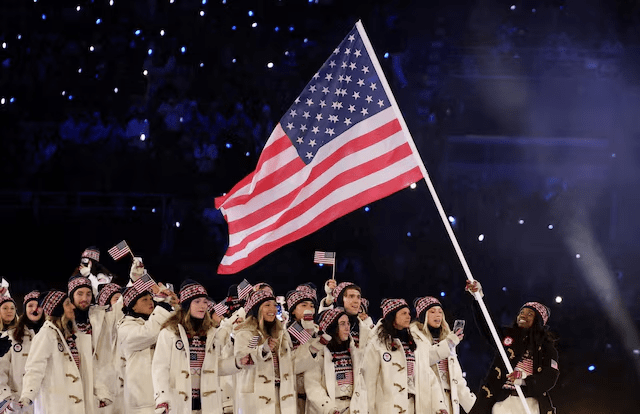
U.S. President Donald Trump publicly criticised American Olympic skier Hunter Hess, igniting a fresh controversy at the Milano Cortina Winter Olympics after the athlete voiced nuanced views on representing the United States amid domestic political tensions. The president’s comments — made on his Truth Social platform — came amid an increasingly heated intersection of sports, national identity and politics at this year’s Games.
Trump’s post blasted Hess, 27, branding him “a real loser” and questioning his place on Team USA after the skier said in a press conference that competing under the Stars and Stripes brought up “mixed emotions” because of the current political climate back home. “If that’s the case, he shouldn’t have tried out for the Team … Very hard to root for someone like this,” Trump wrote online, urging a more unequivocal display of patriotic pride from American athletes.
What Hess Actually Said
Hess, a freestyle skier from Bend, Oregon competing in the men’s halfpipe event, had been asked by Reuters and other reporters about what representing the U.S. at the Games meant to him. He acknowledged that while wearing the U.S. flag is an honour, it also stirred complicated feelings because there are aspects of American politics and policy he does not personally support.
“It brings up mixed emotions to represent the U.S. right now,” he said, explaining that he focuses on representing friends, family and the values he believes are positive rather than a blanket endorsement of everything happening in the country. Hess emphasised that just because he wears the flag on his uniform, “doesn’t mean I represent everything that’s going on in the U.S.”
His remarks were echoed in part by fellow U.S. skier Chris Lillis, who also spoke to reporters about feeling conflicted given contentious issues such as immigration enforcement and treatment of civil liberties at home. Lillis said he was “heartbroken” by aspects of the situation in the United States and hoped the American team could embody a version of their country that is compassionate and respectful.
Trump’s Response and Backlash
Trump’s response was swift and caustic, reflecting his longstanding pattern of confronting athletes — and especially Olympians — who express political views or criticisms of U.S. policy. Calling Hess “a real loser” on social media, the former president framed the skier’s comments as unpatriotic and argued that athletes with reservations about national politics should not wear the U.S. uniform.
This public chastisement was supported by some conservative commentators and figures who joined Trump in condemning Hess’s remarks. The controversy quickly rippled across social media, with some echoing Trump’s criticism and others defending Hess’s right to express his perspective.
The dispute highlights a broader cultural and political divide playing out not just in elite sports but across American public life. In recent days, multiple U.S. athletes competing in Italy have used media opportunities to speak candidly about social and political issues — a departure from the Olympic norm of apolitical focus that has drawn both praise and rebuke this week.
Politics Amid the Olympic Spotlight
The incident comes amid an unusually politically charged atmosphere at the Winter Games. Protests and tensions have followed the U.S. delegation’s activities, in part due to recent U.S. immigration enforcement actions that have sparked national debate and international scrutiny. Vice President J.D. Vance received a notably cool reception during the opening ceremony, underscoring the fraught backdrop against which Team USA’s athletes are competing.
Hess’s comments — and Trump’s criticism — aren’t isolated. Other U.S. athletes, including figure skater Amber Glenn, have faced backlash or discussion after speaking about aspects of U.S. domestic politics, social policy, and the pressures of competing on the world stage while holding personal beliefs. Some athletes have reported online abuse or threats after sharing their viewpoints, illustrating the intense scrutiny that comes with being both a high-performance competitor and a public figure during a highly partisan moment in American politics.
The Broader Debate: Patriotism, Representation and Free Expression
At the heart of the dispute are conflicting views about what it means to represent one’s country — particularly at an event like the Olympics, which is traditionally framed as a symbol of national pride and unity. Critics of Hess’s comments, including Trump, argue that Olympic athletes should unequivocally embody patriotic devotion and refrain from public criticism of their own government when competing internationally.
Supporters of Hess’s stance, on the other hand, say his remarks reflect a modern understanding of representation — one that allows athletes to be proud of their heritage while also acknowledging and critiquing policies or leadership decisions they disagree with. They argue that representing a country’s ideals and people does not require uncritical admiration of every aspect of its politics or leadership.
This tension between patriotism and personal conviction is not new, but the spotlight of the Winter Olympics has intensified the conversation. Past instances — from the raised fists protest at the 1968 Mexico City Games to more recent athlete activism around racial justice — show that the intersection of sport and politics has long been complex and contested.
What Comes Next
As the Milano Cortina Winter Olympics continue, the question of how athletes balance personal beliefs with national representation is likely to remain a topic of debate. For Hess, the backlash — both from political figures and segments of the public — could define part of his Olympic experience regardless of his performance on snow. For U.S. officials, the dispute underscores the challenge of managing a national team in an era where athletes are more willing to openly discuss their values and concerns.
Whether this clash will have consequences for team morale, future athlete statements, or even how national Olympic committees navigate public discourse remains to be seen. But for now, the exchange between Trump and Hess is a stark reminder that in 2026, international sport and domestic political tensions are deeply intertwined on the world stage.