Barcelona were thrust into political focus this week after Joan Laporta formally stepped down as club president, a move that immediately triggered confusion, speculation, and intense debate across Spain and Europe. While the phrase Joan Laporta resignation has dominated headlines, the decision is neither sudden nor destabilizing. Instead, it is a mandatory procedural step required under Barcelona’s statutes as the club prepares for its upcoming presidential elections.
Joan Laporta’s resignation does not signal an end to his leadership ambitions. On the contrary, it marks the beginning of his campaign for a renewed mandate, with club elections scheduled for March 15. Laporta is seeking a third distinct term as president and has stepped aside only to comply with the rules governing electoral neutrality.
Why the resignation was unavoidable under club statutes
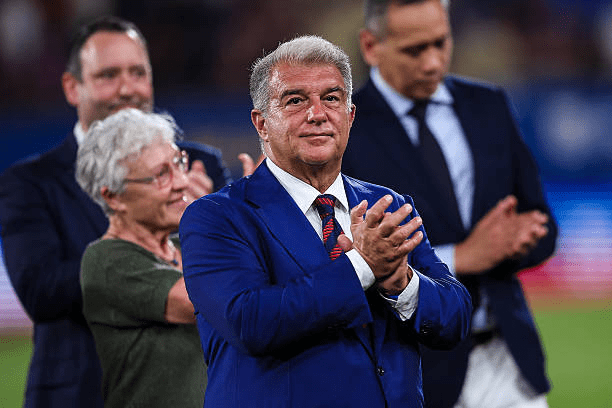
Barcelona’s internal regulations require any sitting president who intends to contest elections to resign once the electoral process is officially triggered. The Joan Laporta resignation is therefore a legal formality rather than a political concession. By stepping down, Laporta clears the way for a level playing field and avoids accusations of using the club’s institutional resources to influence voters during the campaign period.
This framework exists to protect the integrity of the election, but it also exposes the president’s record to full scrutiny. Laporta can no longer govern and campaign simultaneously, meaning his previous decisions now stand alone as the basis on which members will judge his bid for re election.
Interim leadership after Joan Laporta’s resignation
Following the resignation of Joan Laporta, responsibility for Barcelona’s daily operations has passed to a temporary management commission led by vice president Rafa Yuste. The commission’s mandate is strictly administrative, ensuring continuity while refraining from major policy decisions that could influence the election outcome.
Although this arrangement is designed to ensure neutrality, Barcelona’s political environment makes complete separation between governance and campaigning difficult. Every sporting, financial, or administrative development between now and March 15 will inevitably be interpreted in the context of this resignation and the election race it has set in motion.
Election rivals emerge as Joan Laporta resignation opens the race
Laporta enters the contest as the favourite, but the Joan Laporta resignation has opened the door for challengers to press their case aggressively. The most prominent rival once again is Víctor Font, who finished second in the 2021 election and has spent the intervening years positioning himself as the principal alternative.
Font’s platform focuses on governance reform and long term financial discipline, directly challenging Laporta’s reliance on extraordinary revenue measures. Other candidates have also declared their intention to run, but all face the immediate hurdle of gathering the required number of member signatures to appear on the ballot.
What this means for Barcelona’s future
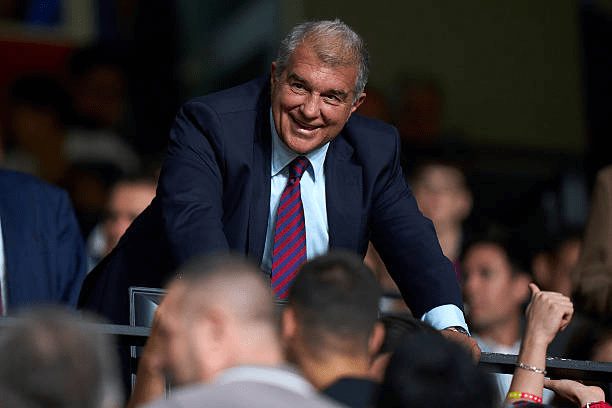
Beyond the electoral mechanics, Laporta’s resignation places Barcelona’s recent direction under examination. Joan Laporta returned to office in 2021 amid severe financial distress and institutional instability. Since then, the club has stabilised competitively and restored its domestic standing, but questions remain about sustainability and long term risk.
A central issue in the campaign will be the redevelopment of Camp Nou. Laporta is expected to argue that continuity of leadership is essential to complete the project without undermining sporting competitiveness. Opponents are likely to focus on delays, financing methods, and the broader economic consequences tied to the rebuild.
Sporting policy will also feature heavily. While Barcelona have regained relevance on the pitch, critics contend that the margin for error remains slim. Joan Laporta’s resignation ensures these debates are no longer abstract but directly tied to a leadership choice members must now make.
The significance of Joan Laporta’s resignation
Laporta’s first presidency between 2003 and 2010 remains one of the most successful periods in Barcelona’s history, and that legacy still carries weight. His supporters view the Joan Laporta resignation as a confident step toward finishing the reconstruction he began in 2021. His critics argue that nostalgia cannot substitute for structural reform and fiscal restraint.
Ultimately, this resignation is not about departure but accountability. It forces a pause in governance and hands decision making power back to the members. When Barcelona’s socios vote in March, they will be deciding whether Laporta’s approach merits continuity or whether the club requires a change in direction as it enters a critical new phase. The coming weeks will define Barcelona’s political and institutional future. The resignation has simply started the clock.
