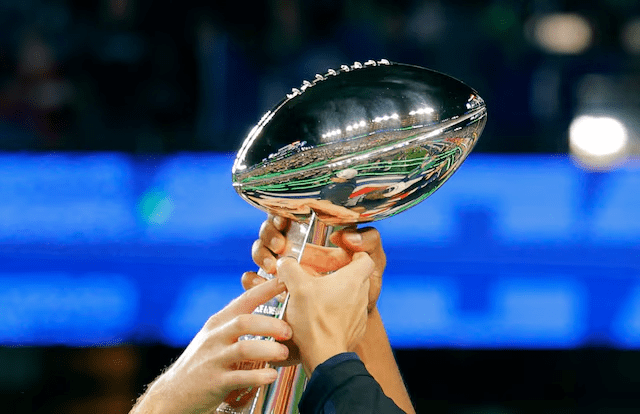
Nevada’s glittering sportsbook windows long synonymous with America’s biggest sporting spectacle told a different story this year: muted enthusiasm, thinner wagering and a plunge in money put down on the Super Bowl compared with recent years. According to preliminary figures released by the Nevada Gaming Control Board, a total of $133.8 million was wagered on Super Bowl LX across the state’s 186 licensed sportsbooks, marking the smallest betting handle since 2016.
That total, down more than 11 percent from the $151.6 million wagered on last year’s Super Bowl, and significantly shy of the recent peaks in 2024, underscores a shift in how Americans are engaging with sports betting particularly as digital platforms and nationwide options have proliferated outside Nevada’s borders.
A Decade Low in the Silver State
Nevada’s annual tally of wagers on the Super Bowl has become a de facto barometer of broader interest in football gambling and tourism especially given the event’s ability to draw casual bettors and out-of-state visitors to Las Vegas each year. But the 2026 figures show a stark reversal of that trend. The $133.8 million figure for Super Bowl LX is the lowest total wagered since the 2016 Super Bowl between the Denver Broncos and Carolina Panthers, when $132.5 million was bet in the state.
The metrics reflect a market that is no longer dominated by brick-and-mortar sportsbooks clustered along the Las Vegas Strip. Bettors today have far more choices: mobile apps, online sportsbooks in legalized states, and even prediction markets avenues that pull action away from Nevada’s traditional books. Analysts suggest that this diversification of platforms, while expanding the overall betting ecosystem, has diluted the share of Super Bowl action captured by Nevada’s casinos.
Despite the lower handle, Nevada sportsbooks did record a profit nearly $9.9 million on the Seahawks’ 29-13 victory over the New England Patriots, with a 7.4 percent hold on all wagers. That profit, while respectable, was also well below last year’s record of $22.1 million.
What the Numbers Reveal
A deeper look at the figures from the Nevada Gaming Control Board paints a picture of a market in transition:
- 2026 Super Bowl LX: $133,813,230 in total wagers; $9,892,055 net for sportsbooks; 7.4% hold.
- 2025: $151,618,159 in wagers; $22,134,104 net; 14.6% hold.
- 2024: Peak year with $190,020,783 in wagers, boosted by the Super Bowl being hosted in Las Vegas.
Those totals not only emphasize the drop from year to year but show just how much the location of the Super Bowl can influence betting behavior. When the championship was played in Las Vegas in 2024, the combination of local interest and tourism helped generate record wagering a rare event in the Super Bowl era.
By contrast, the 2026 matchup between the Seattle Seahawks and New England Patriots, played at Levi’s Stadium in Santa Clara, Calif., did not produce the same spike in interest among the Nevada crowd. Whether due to team appeal, the absence of local betting incentives or increased access to out-of-state betting markets, the result was a marked slowdown.
Shifting Tides in Sports Betting
The emerging trends in Nevada are a microcosm of the broader evolution of sports wagering in the United States. Before the U.S. Supreme Court’s ruling in 2018 that struck down the federal ban on sports betting (PASPA), Nevada was essentially the only legal destination for such wagering. Today, more than 30 states offer legal sports betting, each capturing a share of action that once flowed largely through Vegas casinos.
Industry analysts point out that Nevada remains an important hub for retail wagering especially for tourists and high-rollers but the explosive growth of mobile apps, live-in-game betting and social prediction platforms has decentralized much of the demand. These alternatives not only offer convenience but also often entice bettors with bonuses, promotions and user interfaces that are tailored to individual preferences.
Moreover, the popularity of alternative betting vehicles like daily fantasy sports and prediction markets may be siphoning off traditional sportsbook handle. Some firms reported significant volumes in these newer formats during Super Bowl week, suggesting that at least some of the activity that would have occurred at Nevada books is happening elsewhere.
Casinos Still in the Game, But Changing Strategies
For Nevada casinos, the Super Bowl remains a marquee event and even a reduced handle can still produce profits when managed well. A 7.4 percent hold rate might be lower than the previous year’s 14.6 percent, but sportsbooks often aim to balance risk rather than strictly maximize hold, particularly in high-volume events where liability can fluctuate wildly depending on which side bettors favor.
Still, the declining wagering totals have prompted operators to rethink how they attract action. Some casinos have expanded their live betting offerings, investment in customer loyalty programs, and targeted promotions to draw bettors into their sportsbooks rather than lose them to mobile competitors. Additionally, some analysts say internal revenue strategy such as adjusting odds and betting limits plays a role in shaping how much money sportsbooks are willing to accept on certain outcomes.
The Super Bowl’s Betting Narrative
It’s worth noting that Super Bowl LX itself was not an especially high-scoring or unpredictable affair a factor that can dampen betting enthusiasm. Historically, games featuring larger spreads or dramatic finishes tend to generate more last-minute wagers and higher overall engagement. The 29–13 scoreline, while decisive, may not have inspired the same buzz required to drive larger bets among casual fans.
Team matchups also influence wagering volumes. When iconic franchises with large national followings are involved, betting tends to spike. While the Seahawks and Patriots each possess passionate fan bases, this pairing did not command the same national mania seen in past Super Bowls featuring powerhouse rivalries or marquee offensive showdowns.
Furthermore, public perception of betting value reflected in odds and point spreads affects willingness to wager. When lines are perceived as “too sharp” (meaning they heavily favor one side), casual bettors might stay on the sidelines, reducing overall handle. Such dynamics are particularly germane when betting is easily accessible via smartphones, as real-time analysis and betting apps make it easier to spot unfavorable spreads.
What This Means for Nevada and Beyond
The drop in betting handle raises important questions about Nevada’s role in a rapidly evolving sports gambling landscape. While the state’s casinos and sportsbooks continue to be influential players, they now operate in a far more crowded and competitive market. Legal wagering in multiple states, the rise of online platforms and shifting consumer habits all contribute to a landscape that is less dominated by physical sportsbooks than it once was.
Despite these headwinds, Nevada’s infrastructure and long history in sports betting remain valuable assets. Casinos still benefit from tourism associated with major sporting events, and the social experience of betting in person especially during marquee weekends continues to draw crowds. Operators are also innovating, offering in-person promotions, lounges and watch parties designed to entice bettors to participate in the Vegas sportsbook tradition rather than clicking a mobile app from home.
From the regulator’s perspective, these trends may inform how the Gaming Control Board and other stakeholders shape future policies. With competition from interstate betting platforms booming, regulators may explore new approaches to licensing, taxation and partnerships that can preserve Nevada’s competitive edge without stifling innovation.
A Broader Lens on Super Bowl Betting Trends
When viewed across the past decade, the 2026 Super Bowl handle adds yet another chapter to an increasingly complex story. The year-by-year totals show frequent fluctuations influenced by location, matchup, and broader economic and regulatory forces. While some years produce record handles due to exceptional circumstances as was the case when Las Vegas hosted the game others remind us that even America’s most watched sporting event does not guarantee peak gambling interest in every market.
Whether this year’s dip represents a temporary blip or part of a longer-term trend remains to be seen. But one thing is clear: Nevada’s sportsbook business is no longer insulated from broader shifts in how and where people choose to bet. In this new era, both physical casinos and digital platforms will continue to vie for attention, offering bettors a multitude of ways to engage with sports and wagering alike.
In the end, Nevada’s decade-low Super Bowl betting handle does not signal an end to the state’s influence in sports wagering. Rather, it highlights a dynamic industry in transition, one where traditional hubs must innovate, adapt and find new ways to capture the hearts and wallets of an increasingly decentralized betting audience.