At the Milan-Cortina 2026 Winter Olympics, Lindsey Vonn one of the most decorated alpine skiers in history suffered a horrific crash during the women’s downhill ski race, a discipline known for extreme speed and danger. The accident occurred just 13 seconds into her downhill run, abruptly ending what had been one of the most compelling comeback stories in sports.
Vonn, who is 41 years old, had returned to competitive skiing after nearly six years of retirement, attempting to cap her storied career with another Olympic medal. Prior to this crash, she had already battled a ruptured anterior cruciate ligament (ACL) in her left knee one of the key stabilizing ligaments less than two weeks earlier in a separate crash during the World Cup season. Despite that injury, she chose to compete at the Olympics, a testament to her resilience and competitive spirit.
However, on the day of the downhill final, as she hurtled down the steep and icy course in Cortina d’Ampezzo, Italy, her right ski pole caught on a gate, and she was violently thrown from her line. The impact caused a severe and complex fracture to her left leg specifically the tibia, a major load-bearing bone in the lower leg.
Immediately after the crash, Vonn was airlifted by helicopter to Ca’ Foncello Hospital in Treviso, in northern Italy, where she was evaluated and stabilized by a team of orthopedic surgeons. The immediate prognosis was serious but not life-threatening; her condition was described as stable as she began the long and difficult road toward recovery.
Medical Treatment to Date: Multiple Surgeries
Initial Surgeries in Italy
Vonn’s injury was far more serious than a simple break, requiring multiple surgical procedures. According to medical updates and reporting:
- The first operation was performed on the day of the crash to stabilize the fractured leg.
- A second operation followed soon after to further support the damaged bone and soft tissue.
- The third surgery widely reported and confirmed by the athlete herself through social media was described as successful, though it marked only part of a much larger, complex repair process.
Following the third operation, Vonn posted an update from her hospital bed showing a metal external fixation device on her leg a stabilizing apparatus used when a fracture is severe and when surgeons need time to plan the full reconstructive repair. In that update, she expressed gratitude for the overwhelming support she has received from fans, family, and the ski community worldwide, and shared that while progress was slow, she was beginning to feel more like herself.
The Fourth Surgery in Italy
On Friday, as the Olympic Games continued around her, Vonn announced that she will undergo a fourth surgical procedure in Italy now scheduled for Saturday. In a video message shared via social media, she outlined her current condition and her treatment plan:
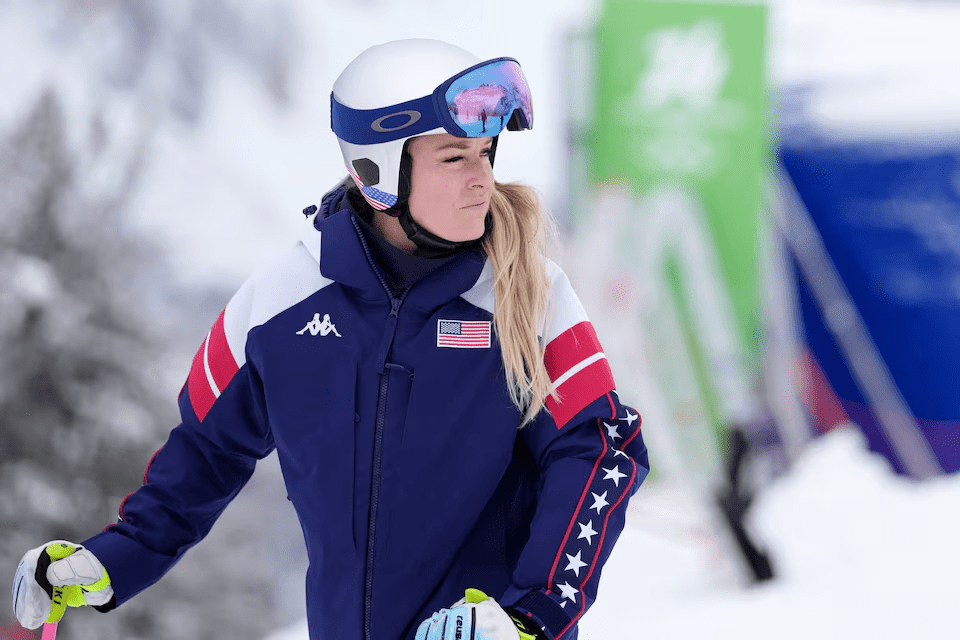
- She said she has been largely immobile in her hospital room, a difficult adjustment for someone whose identity and life has long been defined by physical movement and athletic achievement.
- She acknowledged the tough days she has already endured, emotionally and physically, but also shared that she was “finally feeling more like myself” after the intensity of the initial treatments.
- Reflecting a mixture of optimism and realism, Vonn said she has “a long, long way to go,” and that it’s still too early to know the full course of her rehabilitation.
The fourth surgery is part of a staged surgical approach often used in complex fractures. Instead of trying to fix everything at once which can increase risk surgeons often stabilize the injury with external devices first, allowing swelling and soft-tissue damage to subside before completing definitive internal reconstruction. This approach can improve long-term outcomes, but usually means more trips to the operating room.
Plans for Surgery After Returning Home
Beyond the upcoming surgery in Italy, Vonn has confirmed she expects another major surgical procedure once she returns to the United States. The reasoning for this plan is straightforward:
- Advanced imaging at home such as CT scans and MRIs will provide a clearer picture of the bone fragments, soft tissues, and overall structural integrity of her leg.
- With that detailed information, her U.S. medical team can plan final reconstructive surgery tailored to her body, lifestyle, and long-term mobility goals.
Vonn acknowledged that she doesn’t yet know exactly what the final procedures will entail, but said she expects them to be necessary once the immediate stabilization work in Italy is complete.
This staged surgical strategy initial stabilization in an emergency setting, followed by definitive repair back home is common in elite athlete care, where maximizing functional recovery and minimizing long-term disability are top priorities. It also reflects the challenges that complex fractures present, especially in weight-bearing bones like the tibia.
Emotional and Psychological Dimensions
While much of the focus has understandably been on the medical and surgical aspects of Vonn’s injury, the emotional and psychological impact of this event has also been deeply felt both by the athlete herself and by the broader skiing and Olympic communities. Olympics
Vonn’s Personal Response
In her updates, Vonn has expressed:
- Profound gratitude for the support and encouragement she has received from fans around the world.
- Appreciation for visiting family and friends, who have helped keep her spirits up during the most difficult moments.
- Encouragement drawn from watching her teammates and fellow U.S. athletes continue to compete, highlighting the communal nature of Olympic competition.
Despite her immobility and ongoing discomfort, Vonn’s message carried a theme of resilience a belief that despite how long and hard the road to recovery might be, she will continue to fight for her health and mobility. Olympics
Community and Expert Reactions
The crash and subsequent treatment have sparked widespread commentary within the skiing world and beyond:
- Many former athletes, coaches, and medical experts have weighed in on the risks elite competitors take, especially when returning from prior injuries.
- Vonn’s decision to race with a recently injured knee was both lauded for bravery and critiqued for potential risk, reflecting broader debates on athlete health, career pressures, and the emotional pull of the Olympic stage.
Broader Athletic Context
Lindsey Vonn’s injuries at the Winter Olympics are not isolated in the sport of alpine skiing, which is known for its high speeds and the fine margins between racing success and serious injury. Downhill skiing regularly sees athletes exceed speeds of 80–90 miles per hour (130–145 km/h), and the combination of speed, terrain, and equipment makes it one of the most dangerous Olympic disciplines. Olympics
Moreover, Vonn’s age and career arc add complexity to this story. At 41, she already had a record career that included multiple World Cup titles and Olympic medals, including downhill gold at the 2010 Vancouver Games. Her attempt to return to Olympic competition after years away from the highest level was inspiring to many, but also a reminder of the physical toll elite sport can exact over time especially in a discipline where milliseconds and millimeters can be the difference between podium finishes and catastrophic falls. Olympics
What’s Next?
Looking ahead, the clear milestones in Vonn’s recovery include:
- The fourth surgery in Italy (scheduled for Saturday) focused on advancing the stabilization and repair of the fractured tibia.
- Evaluation using advanced imaging once she returns to the U.S. to fully chart the next phase of reconstruction. Olympics
- Potential subsequent surgery in the United States — designed for long-term functional recovery and mobility.
- A lengthy rehabilitation period likely involving physiotherapy, strength training, and careful monitoring of healing.
While there’s no firm timeline yet for when those steps will unfold, what is clear is that Vonn’s Olympic story though cut short on the slopes — will continue off them for many months to come.
Final Thoughts
Lindsey Vonn’s journey is one of exceptional achievement and profound challenge. Her injury at the 2026 Winter Olympics serves as a stark reminder of both the risks athletes take in pursuit of excellence and the human cost behind elite sport. Yet even in the face of pain, surgery, and uncertainty, Vonn’s messages of gratitude and resilience continue to resonate not just within the ski community, but with anyone who has faced adversity and chosen to keep fighting. Olympics
Olympics