The NBA playoffs represent the most intense and decisive stage of the basketball season. After months of regular-season competition, only the best teams earn the opportunity to compete for the championship. Unlike the regular season, where consistency is key, the playoffs demand excellence, resilience, and the ability to perform under pressure.
Understanding how the NBA playoffs work requires breaking down the process step by step from qualification and seeding to the structure of the tournament and the final championship series. While the format may seem complex at first, it follows a clear and logical system designed to reward the best teams while maintaining competitive balance.
Qualification and the Road to the Playoffs
The NBA consists of 30 teams divided into two conferences: the Eastern Conference and the Western Conference. At the end of the regular season, teams are ranked within their conference based on their win-loss record.
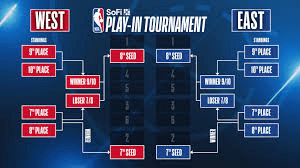
The top six teams in each conference automatically qualify for the playoffs. Teams that finish in positions seven through ten are not immediately eliminated; instead, they enter what is known as the Play-In Tournament. This system was introduced to increase competition and ensure that more teams remain engaged late in the season.
The Play-In Tournament determines the final two playoff spots (7th and 8th seeds) in each conference. The seventh and eighth-ranked teams play each other, with the winner securing the seventh seed. The loser is given another chance by facing the winner of a match between the ninth and tenth-ranked teams. The final winner of this sequence claims the eighth seed .
This format ensures that teams cannot become complacent, as even those close to playoff qualification must fight for their place.
Seeding and Matchups
Once the Play-In Tournament is completed, each conference has eight teams seeded from first to eighth. Seeding is based entirely on regular-season performance, meaning teams with better records receive higher seeds.
The playoff matchups are structured in a fixed bracket:
- 1st seed vs 8th seed
- 2nd seed vs 7th seed
- 3rd seed vs 6th seed
- 4th seed vs 5th seed
This arrangement rewards higher-seeded teams by pairing them with lower-ranked opponents. Unlike some sports leagues, the NBA does not reseed teams after each round. Instead, the bracket remains fixed throughout the playoffs.
The Best-of-Seven Series Format
One of the defining features of the NBA playoffs is the best-of-seven series format. In each round, two teams face off in a series that can last up to seven games. The first team to win four games advances to the next round.
This format minimizes the role of luck and ensures that the better team has multiple opportunities to prove its superiority. A team cannot advance by winning a single game; it must consistently outperform its opponent across several matchups.
Every series follows the 2–2–1–1–1 format for home games. The team with the better regular-season record receives home-court advantage, hosting Games 1, 2, 5, and 7, while the lower-seeded team hosts Games 3, 4, and 6 .
Home-court advantage can be crucial, as teams often perform better in front of their home fans.
Structure of the Playoffs
The NBA playoffs consist of four rounds, each progressively narrowing the field until a champion is crowned. The structure is identical in both conferences until the final stage.
The first round features 16 teams (eight in each conference). Winners advance to the Conference Semifinals, where competition becomes more intense. From there, the remaining teams move on to the Conference Finals, which determine the champion of each conference.
Finally, the winners of the Eastern and Western Conferences meet in the NBA Finals. This championship series decides the overall winner of the league.
Each round maintains the best-of-seven format, ensuring consistency throughout the postseason.
Duration and Number of Games
The NBA playoffs typically begin in April and conclude in June, lasting approximately two months. Each round takes about two weeks to complete, allowing for rest, travel, and scheduling between games .
The total number of games played during the playoffs can vary significantly. At a minimum, there are around 60 games if every series ends in four games. However, if all series go the full seven games, the playoffs can feature over 100 games .
This variability adds unpredictability and excitement, as fans never know how long each series will last.
Importance of Home-Court Advantage
Home-court advantage plays a significant role in the NBA playoffs. The team with the better regular-season record not only earns a higher seed but also benefits from hosting more games in a series.
Playing at home offers several advantages, including crowd support, familiarity with the court, and reduced travel fatigue. As a result, higher-seeded teams often have a measurable edge, particularly in closely contested series.
However, upsets are still common, as lower-seeded teams can overcome these disadvantages through strong performances and momentum.
Evolution of the NBA Playoff Format
The NBA playoff system has evolved over time to improve competitiveness and entertainment value. In earlier years, only the top eight teams in each conference qualified directly for the playoffs.
The introduction of the Play-In Tournament marked a significant change. It expanded opportunities for teams and added a new level of drama to the postseason. By allowing teams ranked seventh to tenth to compete for playoff spots, the league ensured that more teams remain competitive until the end of the regular season.
This evolution reflects the NBA’s commitment to maintaining a balance between fairness and excitement.
Why the NBA Playoff System Works
The NBA playoff format is widely regarded as one of the most effective systems in professional sports. It combines structure, fairness, and entertainment in a way that keeps fans engaged.
The best-of-seven format ensures that the strongest teams advance, reducing the likelihood of random outcomes. The seeding system rewards regular-season performance, while the Play-In Tournament introduces unpredictability and excitement.
Additionally, the fixed bracket system allows fans to follow the progression of teams easily, building anticipation as the tournament unfolds.
Conclusion
The NBA playoffs are the ultimate test of a team’s ability to perform under pressure. From the intensity of the Play-In Tournament to the drama of the NBA Finals, every stage is designed to identify the best team in the league.
In summary, the process follows a clear path:
- Teams qualify based on regular-season performance
- The Play-In Tournament determines the final playoff spots
- Sixteen teams compete in a bracket format
- Each round is a best-of-seven series
- Conference champions meet in the NBA Finals
This structure ensures that success in the NBA is not just about talent but also consistency, strategy, and resilience. The result is a postseason that delivers some of the most thrilling moments in sports.
As the league continues to evolve, the playoff format may undergo further changes. However, its core principles competition, fairness, and excitement will always remain at the heart of the NBA experience.