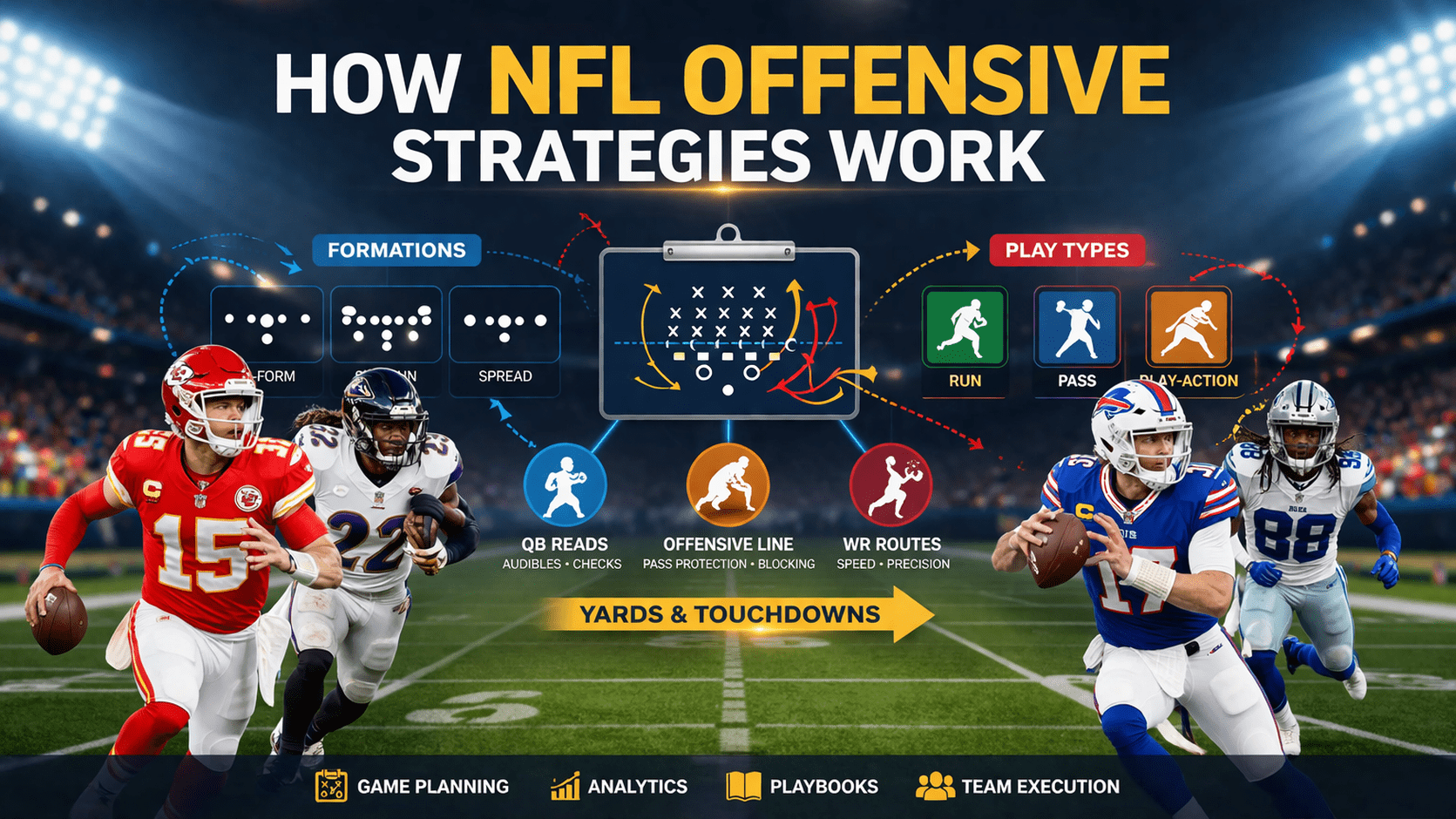
Understanding NFL offensive strategies is essential to appreciating how modern American football is played and won. While the sport is often seen as a contest of physical dominance, success in the NFL is largely determined by tactical intelligence, play design, execution and adaptability. Offensive coordinators spend countless hours analyzing film, studying defensive tendencies and crafting systems that maximize the strengths of their personnel.
Over time, NFL offensive strategies have evolved from simple run-heavy formations into highly complex systems that blend passing efficiency, analytics-driven decision-making and positional versatility. Today’s offenses are dynamic, unpredictable and tailored to the unique skill sets of quarterbacks, receivers and offensive linemen. This comprehensive guide explores how these strategies function, why they matter and how they continue to shape the modern game.
Core Philosophy Behind NFL Offensive Strategies

At the heart of NFL offensive strategies lies a simple objective: move the ball efficiently while minimizing turnovers. To achieve this, teams must balance running and passing plays while maintaining control of tempo and field position.
Offensive philosophy varies widely across franchises. Some teams prioritize ball control and clock management, using sustained drives to limit opponents’ opportunities. Others emphasize explosive plays, seeking quick scoring opportunities through aggressive passing attacks. Regardless of style, the most successful offenses share common traits such as disciplined execution, adaptability and strategic play sequencing.
Play sequencing refers to how coaches structure plays to set up future opportunities. For example, repeated running plays may condition defenders to focus on stopping the ground game, creating space for play-action passes. This layered approach is central to effective offensive planning.
The Quarterback’s Role in NFL Offensive Strategies
The quarterback is the central decision-maker within most NFL offensive strategies. Beyond throwing the ball, quarterbacks manage pre-snap adjustments, read defensive formations and control the pace of the offense.
Pre-snap reads involve identifying defensive alignments such as blitz packages or zone coverage. Elite quarterbacks use this information to audible into more favorable plays. Post-snap, they must process defensive movement in real time while maintaining accuracy and composure under pressure.
Modern quarterbacks are increasingly expected to contribute as runners. Dual-threat players force defenses to account for quarterback mobility, creating additional gaps in coverage. This evolution has expanded the scope of offensive strategy, allowing teams to incorporate run-pass option (RPO) concepts and designed quarterback runs.
Running Game Foundations in NFL Offensive Strategies
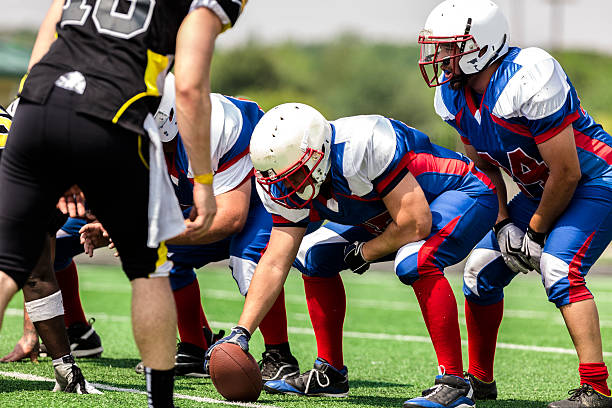
Despite the league’s shift toward passing, the running game remains a cornerstone of NFL offensive strategies. Effective rushing attacks establish physical dominance, control the clock and open opportunities for play-action passes.
There are several primary running schemes used across the NFL. Zone blocking systems require linemen to block areas rather than specific defenders, allowing running backs to identify cutback lanes. Power schemes rely on pulling guards or fullbacks to create decisive gaps at the point of attack.
Teams often combine these approaches to maintain unpredictability. A balanced rushing attack not only generates yardage but also forces defenses to allocate extra resources to stopping the run, thereby creating advantageous matchups in the passing game.
Passing Concepts and Route Design
Passing has become the defining feature of contemporary NFL offensive strategies, driven by rule changes that favor offensive production and quarterback protection. Offensive coordinators design intricate route combinations to manipulate defensive coverage and create separation.
The West Coast offense emphasizes short, high-percentage passes that function as extensions of the running game. In contrast, vertical passing systems focus on stretching defenses with deep routes, aiming for explosive plays.
Route design often involves layering receivers at different depths to create progression options for the quarterback. Concepts such as “mesh,” “flood” and “levels” are commonly used to confuse defenders and generate open throwing windows.
Play-Action and Deception in Offensive Planning
Deception is a vital component of NFL offensive strategies, with play-action serving as one of the most effective tools. By simulating a running play, offenses can draw linebackers and safeties closer to the line of scrimmage, opening passing lanes behind them.
Play-action effectiveness depends on the credibility of the running game. Teams that establish consistent rushing success are more likely to deceive defenders. Beyond play-action, offenses employ pre-snap motion, jet sweeps and misdirection plays to disrupt defensive alignment and timing.
These tactics create hesitation among defenders, which can translate into significant yardage gains. Deception also enhances unpredictability, making it difficult for opponents to anticipate play selection.
Formation Diversity and Personnel Versatility

Formations provide the structural framework for NFL offensive strategies. Different alignments dictate blocking responsibilities, route distribution and defensive responses.
Traditional formations such as the I-formation prioritize power running, while shotgun and spread formations facilitate passing efficiency. Modern offenses frequently employ hybrid formations that blend these elements, maximizing flexibility.
Personnel versatility has become increasingly important. Tight ends capable of lining up as wide receivers, running backs who excel in pass protection and quarterbacks who can operate outside the pocket all contribute to strategic diversity. This adaptability allows offenses to exploit mismatches and maintain unpredictability.
The Impact of Analytics on Offensive Decision-Making
Analytics have transformed how teams approach NFL offensive strategies, providing data-driven insights into play selection and game management. Metrics such as expected points added (EPA) and success rate inform decisions on fourth-down attempts, red-zone tactics and passing frequency.
Coaches now rely on advanced statistical models to identify optimal strategies based on game context. For example, analytics may suggest aggressive fourth-down conversions in certain field positions, challenging traditional conservative approaches.
Data analysis also influences roster construction, ensuring that player skill sets align with offensive schemes. This integration of analytics enhances efficiency and strategic precision.
Tempo Control and Game Flow
Tempo is another critical element of NFL offensive strategies. Some teams favor deliberate, methodical drives designed to control possession and wear down defenses. Others adopt high-tempo no-huddle systems that accelerate play execution and limit defensive substitutions.
Fast-paced offenses can exploit mismatches and create momentum, but they require exceptional conditioning and communication. Conversely, slower tempos allow teams to dictate game flow and reduce the number of possessions, which can be advantageous against high-scoring opponents.
Effective tempo management reflects broader strategic objectives, balancing aggression with situational awareness.
Red-Zone Execution and Scoring Efficiency

The red zone represents a decisive phase for NFL offensive strategies, where field space is limited and defensive pressure intensifies. Offenses must rely on precise execution, creative play design and disciplined decision-making to convert opportunities into touchdowns.
Common red-zone tactics include condensed formations, quick slant routes and power running plays. Quarterbacks must make rapid reads, while receivers and linemen must execute assignments flawlessly.
Teams with high red-zone efficiency often outperform opponents, as touchdown conversions significantly impact overall scoring potential.
Evolution and Future Trends in NFL Offensive Strategies
The evolution of NFL offensive strategies reflects broader changes in coaching philosophy, player development and technological innovation. Modern offenses increasingly emphasize versatility, integrating elements from college football systems such as RPOs and spread formations.
Dual-threat quarterbacks and multi-positional skill players are reshaping offensive possibilities. Advances in sports science and data analytics will likely continue to influence strategic development, leading to even more dynamic and unpredictable offensive systems.
As the league evolves, offensive strategies will remain central to competitive success, shaping how teams approach game planning and execution.
Conclusion
NFL offensive strategies represent the strategic backbone of modern American football. From foundational principles such as run-pass balance and formation diversity to advanced concepts involving analytics and tempo control, offenses are constantly evolving to gain competitive advantages.
Understanding these strategies enhances appreciation for the game’s complexity, revealing the intricate coordination required for success at the highest level. As innovation continues to shape the NFL landscape, offensive strategy will remain a defining element of football’s ongoing evolution.
