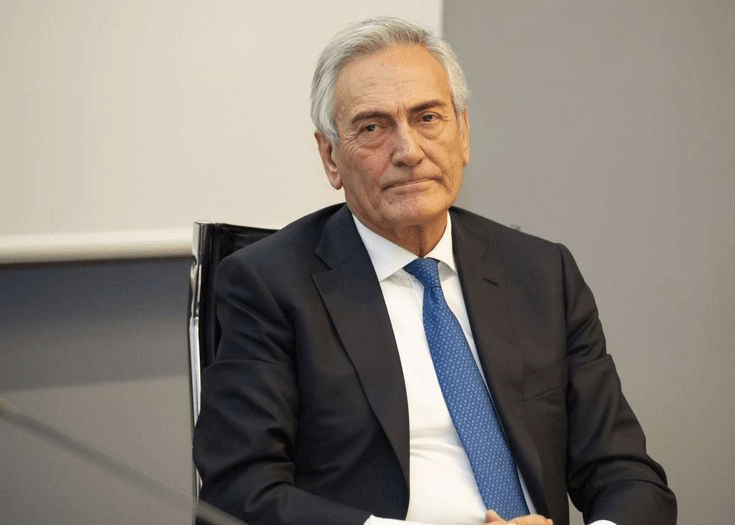
The resignation of Gabriele Gravina as president of the Italian Football Federation marks a defining and painful moment in the modern history of Italian football. Once a dominant global force and four-time World Cup winner, Italy national football team now faces a deep and prolonged crisis after failing to qualify for the FIFA World Cup 2026.
This latest setback represents Italy’s third consecutive absence from football’s biggest stage a shocking reality for a nation whose identity is closely tied to the sport. Gravina’s resignation is not just a reaction to one defeat; it is the culmination of years of mounting frustration, systemic shortcomings, and declining international relevance.
The Breaking Point: Another Failed Qualification Campaign
Italy’s World Cup dreams came to an abrupt end following a playoff defeat to Bosnia and Herzegovina national football team. After a tense 1–1 draw, the match was decided by a penalty shootout, where Italy fell short once again.
This result confirmed a grim statistic: Italy has now missed the World Cup in 2018, 2022, and 2026. For a country that once set the standard in international football, this unprecedented streak of failure has shaken the foundations of its footballing culture.
The disappointment has been particularly severe because the 2026 tournament expands to 48 teams, theoretically making qualification easier. Yet even under these conditions, Italy failed to secure a place an outcome widely described as a national embarrassment.
Critics argue that this is no longer a temporary slump but a sustained decline. Italy’s inability to compete consistently at the highest level suggests deeper issues that go far beyond a single campaign or coaching decision.
Leadership Fallout: Gravina and the Domino Effect
Gravina’s resignation came under intense pressure from multiple fronts, including government officials, fans, and media outlets. Having led the federation since 2018, he initially resisted stepping down but eventually conceded that change was necessary.
His tenure was not without success. The highlight came when Italy won UEFA Euro 2020 under Roberto Mancini, restoring pride and optimism across the nation. However, that triumph now appears to have been a temporary peak rather than the beginning of sustained progress.
The fallout did not stop with Gravina. Legendary goalkeeper Gianluigi Buffon also stepped down from his role within the national team setup, taking responsibility for the failure.
Meanwhile, head coach Gennaro Gattuso is expected to follow, with his tenure likely ending after the disastrous campaign.
This chain reaction of resignations highlights the scale of the crisis. It is not merely about one individual but about an entire system that has failed to deliver results.
A Decline Rooted in Deeper Structural Issues
Italy’s struggles cannot be explained solely by poor performances on the pitch. Analysts point to a range of structural problems that have gradually eroded the country’s footballing strength.
One major issue is youth development. While countries like France and Germany have invested heavily in academies and grassroots systems, Italy has lagged behind. Young players often struggle to find opportunities in top-tier football, limiting the emergence of new talent.
The domestic league, Serie A, has also faced criticism for prioritizing experienced players over youth. This conservative approach has created a bottleneck, preventing the next generation from gaining the experience needed to succeed internationally.
Infrastructure presents another challenge. Many Italian stadiums are outdated, and progress on modernization has been slow. UEFA president Aleksander Čeferin has even warned that Italy could risk losing its role as co-host of Euro 2032 if improvements are not made.
These issues point to a broader systemic failure one that requires long-term solutions rather than quick fixes.
Tactical Stagnation and Identity Crisis
Beyond structural challenges, Italy is also grappling with a tactical identity crisis. Historically known for its defensive discipline and tactical intelligence, the team has struggled to adapt to the modern game.
The traditional “catenaccio” style, once a hallmark of Italian success, has become less effective in an era defined by high pressing, speed, and attacking fluidity. Attempts to modernize the team’s approach have yielded inconsistent results.
The Euro 2020 victory suggested that Italy could evolve, but subsequent performances revealed a lack of cohesion and consistency. The team has often appeared caught between two identitiesunable to fully embrace modern tactics while no longer excelling in its traditional strengths.
This uncertainty has contributed to poor performances in key matches, particularly in high-pressure situations such as World Cup qualifiers.
Political Pressure and Public Outrage
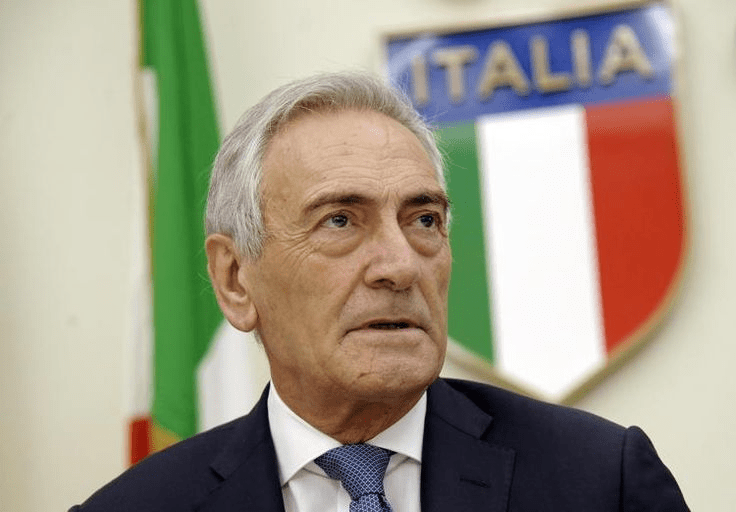
Football in Italy is more than just a sport it is a vital part of national identity. As a result, the team’s repeated failures have triggered widespread frustration and anger.
Government officials, including Sports Minister Andrea Abodi, called for sweeping reforms and demanded accountability from the federation.
Media outlets described the situation as a “third apocalypse,” emphasizing the scale of the crisis and the urgency of change.
Gravina’s own comments following the defeat, which were perceived as dismissive, further fueled the backlash. He later issued an apology, but by then, the pressure had reached a point where his resignation became inevitable.
What Comes Next: Rebuilding Italian Football
With Gravina gone, the focus now shifts to the future. The FIGC is expected to appoint a new president, with elections scheduled in the coming months.
Potential candidates include experienced administrators who can lead a comprehensive reform of the system. At the same time, decisions regarding the national team’s coaching setup will be crucial.
Names such as Antonio Conte and Massimiliano Allegri have already been mentioned as possible successors to Gattuso.
However, leadership changes alone will not be enough. Italy must address its deeper issues revamping youth development, modernizing infrastructure, and redefining its tactical philosophy.
This will require collaboration between clubs, the federation, and government bodies, as well as a willingness to embrace innovation and change.
Crisis as an Opportunity
The resignation of Gabriele Gravina represents both an end and a beginning. It marks the conclusion of a turbulent era in Italian football, but it also opens the door for renewal and transformation.
Italy’s failure to qualify for three consecutive World Cups is a stark reminder that past success does not guarantee future dominance. The challenges facing Italian football are complex and deeply rooted, but they are not insurmountable.
With the right vision and commitment, Italy can rebuild and reclaim its place among football’s elite. The road ahead will be difficult, but for a nation with such a rich history and passionate fanbase, the potential for resurgence remains strong.
Ultimately, this moment of crisis may prove to be the catalyst for a new era one defined not by past glory, but by a renewed commitment to excellence and progress.