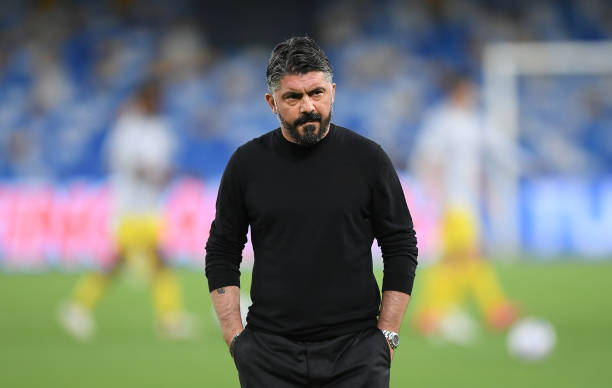
Gennaro Gattuso has stepped down as head coach of Italy national football team after the nation failed to qualify for the 2026 World Cup, marking a historic low for one of football’s most decorated sides.
The decision to part ways with Gattuso was described as mutual, but it comes in the immediate aftermath of Italy’s painful playoff defeat to Bosnia and Herzegovina, a result that confirmed their absence from a third consecutive World Cup.
Gattuso Era Ends in Disappointment for Italy

Gattuso’s tenure with Italy was short but not entirely without promise. Appointed as the successor to Luciano Spalletti, he oversaw eight matches and secured six victories, suggesting initial stability within the squad. However, the ultimate objective was always World Cup qualification, and failure on that front overshadowed everything else.
The playoff loss, decided by penalties, proved to be the defining moment of Gattuso’s time in charge. In his emotional post-match remarks, Gattuso accepted responsibility and acknowledged the weight of the failure. For a figure so closely tied to Italian football’s identity, the inability to guide the team back to the global stage was difficult to reconcile.
Gattuso’s departure reflects not just a managerial change but a deeper crisis within Italian football. The Azzurri, four-time world champions, have now missed three successive tournaments, a record unmatched by any previous World Cup winner.
Italy’s World Cup Absence Signals Deeper Structural Issues
The scale of Italy’s decline cannot be overstated. Since their last appearance in 2014, the national team has struggled to maintain consistency at the highest level. Despite moments of success, including their triumph at Euro 2020 under Roberto Mancini, the inability to qualify for the World Cup repeatedly raises serious questions about long-term planning and development.
Gattuso’s exit is only one part of a wider shake-up. Gabriele Gravina has also resigned as president of the Italian Football Federation, while legendary goalkeeper Gianluigi Buffon has stepped down from his role within the national setup. These changes underline the urgency of reform within the system.
The challenge now extends beyond appointing a new manager. Italy must address structural weaknesses in youth development, tactical evolution and squad depth if they are to return to the top tier of international football.
Who Could Replace Gattuso as Italy Manager

Attention will now turn to who takes over from Gattuso, with several high-profile names already being linked to the role. Massimiliano Allegri is widely viewed as a leading candidate given his success in Serie A and experience managing elite players. His tactical discipline could bring much-needed stability to the national team.
A return for Roberto Mancini has also been discussed, particularly given his previous success with Italy. Meanwhile, Antonio Conte offers a proven track record of transforming teams quickly, though his current club commitments may complicate any potential move.
Other options such as Fabio Cannavaro and Stefano Pioli represent different approaches, blending national pride with managerial experience. Whoever is chosen will inherit a team in need of both immediate results and long-term rebuilding.
What Gattuso’s Departure Means for Italy’s Future
Gattuso’s exit closes another chapter in a turbulent period for Italian football. While his tenure was brief, it highlights the immense pressure attached to managing the national team, particularly during a time of underperformance.
For Italy, the focus must now shift towards recovery and reinvention. The next appointment will not only shape the team’s short-term direction but also determine whether the Azzurri can reclaim their place among football’s elite.
As for Gattuso, his connection to Italian football remains unquestionable. Despite the disappointment of this campaign, his willingness to step aside reflects an understanding of the standards expected at the highest level.

1 comment
[…] taken another dramatic twist after Andrea Pirlo officially withdrew from consideration, leaving the Italian Football Federation (FIGC) scrambling to identify the right leader for the Italian National team. What initially appeared to […]