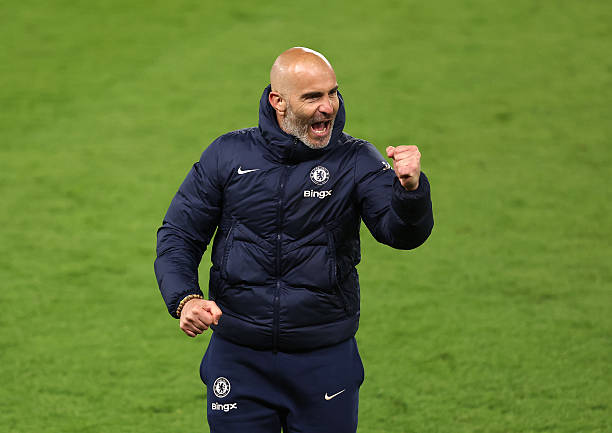
When Fabrizio Romano dropped his iconic “here we go” on Enzo Maresca’s appointment as the next Manchester City manager, confirming that Pep Guardiola will bring his legendary tenure at the Etihad to a close at the end of the current season, it completed one of the most dramatic managerial stories in recent Premier League history.
Because to understand why Enzo Maresca is heading to Manchester, you first need to understand why he left Chelsea. And that story did not begin on January 1, 2026, when the Blues released a clinical statement announcing that their Club World Cup-winning manager had departed. It began months earlier.
The Trophy Winners Who Felt Left Behind
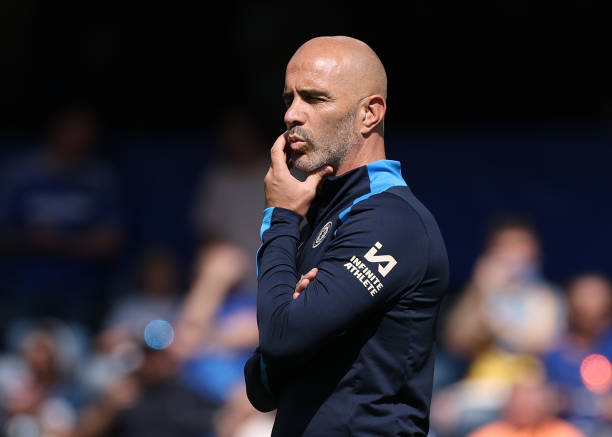
Enzo Maresca’s first season in west London was, by almost any measure, a triumph. He led Chelsea to the UEFA Conference League title, became the first English club manager to win the FIFA Club World Cup, and secured a top-four finish that returned the Blues to the Champions League. For a squad containing some of the youngest average first-team players in Europe, these were extraordinary achievements.
Reports that surfaced following his departure revealed a critical detail about the agreement under which Maresca had been hired. Chelsea and their head coach had reportedly reached an understanding that Maresca would be given a two-year grace period to build his squad, and that a formal assessment of his performance would only be conducted after his second full season in charge. In other words, had he missed out on the Champions League in his debut campaign, or failed to deliver those two trophies, no review would have been triggered. The results were not supposed to be the measuring stick yet.
The problem was that success arrived early, and the rewards did not follow equally. Following the Club World Cup victory in the summer, reports emerged that several of Chelsea’s sporting directors received improved contracts in recognition of their contribution to the club’s recent achievements. Enzo Maresca, who had masterminded both the Conference League and Club World Cup triumphs on the pitch, remained on his original terms.
Sources close to the situation indicated that Maresca felt the board had minimised his contribution to those successes, attributing them primarily to the club’s squad construction rather than to his coaching. He began to request improved terms, arguing that he had delivered and should be rewarded accordingly. Chelsea, it appears, disagreed, or at least delayed. This was the first crack in the wall.
The Colwill Problem: A Battle the Enzo Maresca Could Not Win
The tension over contract terms had barely had time to settle when defender Levi Colwill tore his ACL during a training a training session at Cobham and was ruled out for the remainder of the season.
Anyone who has watched Enzo Maresca’s Chelsea over any sustained period understands what Colwill means to his system. The England international is central to Maresca’s build-up play out of defence, his composure on the ball, his ability to carry possession into midfield lines, and his intelligence in switching positions during the press make him irreplaceable within the specific demands of that tactical model.
Enzo Maresca made this point with unusual directness in a press conference shortly after Colwill’s injury was confirmed. He stated clearly that none of Chelsea’s available centre-backs at that time could replicate what Colwill offered his system, and that the club needed to act in the transfer market.
Chelsea’s board disagreed. Their assessment was that the centre-back options already at the club; Trevoh Chalobah, Tosin Adarabioyo, Benoit Badiashile, and Wesley Fofana, were sufficient cover for the position. No centre-back arrived. Enzo Maresca, pragmatist that he is, downplayed the issue in his subsequent press conference and said he would work with what he had. He did. But as the season wore on, the consequences were visible every week.
December Collapse: From Manager of the Month to the Edge

It is worth pausing on how well Chelsea were performing before December, because context matters enormously here. Enzo Maresca won the Premier League Manager of the Month award for November. Chelsea sat in the upper reaches of the table and were competing across four competitions. The trophies from the previous season had bought considerable goodwill, and there was a sense, even amid murmurs of internal friction, that the project was progressing.
Like always for Chelsea Football Club, December happened.
On December 3, 2025, Chelsea travelled to Elland Road and lost 3-1 to Leeds United, a team fighting relegation at the time. Goals from Jaka Bijol and Ao Tanaka put Leeds two ahead at half-time before Pedro Neto briefly raised Chelsea hopes in the 50th minute. But in the 72nd minute, a defensive error from Tosin Adarabioyo, a panicked backpass that was intercepted, leading to Dominic Calvert-Lewin tapping into an empty net, sealed Chelsea’s defeat.
Enzo Maresca was blunt in his post-match assessment.
“A very poor night. They deserved to win the game, they were better in all aspects. There is nothing we can take from this game.”
His pre-match press conference ahead of the Bournemouth fixture three days later was no more forgiving of his own squad. He expressed public regret that he had not started Josh Acheampong ahead of Tosin, making his reservations about his own defensive options plain to anyone willing to read between the lines.
On December 6, Chelsea drew 0-0 at Bournemouth. On December 9, they lost 2-1 to Atalanta in the Champions League, surrendering a first-half lead to second-half goals from Gianluca Scamacca and Charles De Ketelaere. The run of one win in seven was cementing itself.
Then came December 13: Chelsea 2-0 Everton, and the press conference that changed everything.
“The Worst 48 Hours”: The Comment That Broke the Relationship
Winning 2-0 at home to Everton should have been a moment of relief. Instead, Enzo Maresca delivered one of the most extraordinary post-match statements a Premier League manager has given in years. Despite the victory, Chelsea’s first in four matches across all competitions, he stunned reporters with an admission that made internal whispers public.
“The last 48 hours have been the worst 48 hours since I joined the club,” Maresca said, “because many people didn’t support us.”
He praised his players effusively. He offered nothing else. In the days that followed, presented at multiple press conferences with clear opportunities to clarify, contextualise, or defuse the remark, Enzo Maresca refused every time.
“I was quite clear,” he said on December 16 ahead of the Carabao Cup quarter-final against Cardiff. “I have nothing to add.” Sources later confirmed that the “worst 48 hours” comment was directed at a long-running dispute with Chelsea’s medical department, a disagreement over player workload and availability that Maresca felt constituted interference in his football decisions, though the club characterized it differently.
The silence from Enzo Maresca’s side only amplified the speculation. His own agent, Jorge Mendes, reportedly contacted Chelsea seeking clarity on what had triggered the outburst.
City’s Interest: Why Enzo Maresca Left Chelsea
There is one element to this story that your average post-match report did not fully capture. While the contract dispute, the Colwill transfer battle, and the “worst 48 hours” saga were each corrosive on their own, there was a thread running through all of them that made the breakdown inevitable: Manchester City.
According to reporting by The Athletic, Maresca had become aware of City’s interest in him as a potential successor to Guardiola during the first half of the 2025-26 season. Crucially, his contract at Chelsea contained a clause obliging him to disclose any approach from another club. He complied, reportedly informing Chelsea of discussions with City on multiple occasions: twice in late October, and again in mid-December. He also disclosed contact with Juventus.
That compliance, while contractually correct, was devastating for his relationship with the Blues hierarchy. Co-owner Behdad Eghbali would later hint publicly that the full context behind Maresca’s departure would become clear in time. The picture that emerged was of a manager who had one foot out of the door, whose board knew it, and whose increasingly pointed public comments suggested he knew that they knew.
Chelsea’s final home match of Enzo Maresca’s tenure, a 2-2 draw against Bournemouth on December 30, saw supporters boo him from the stands and chant “you don’t know what you’re doing” when he substituted Cole Palmer. Maresca did not attend the post-match press conference, citing illness. It was, in retrospect, the end.
New Year’s Day, 2026: The Resignation That Cost Millions
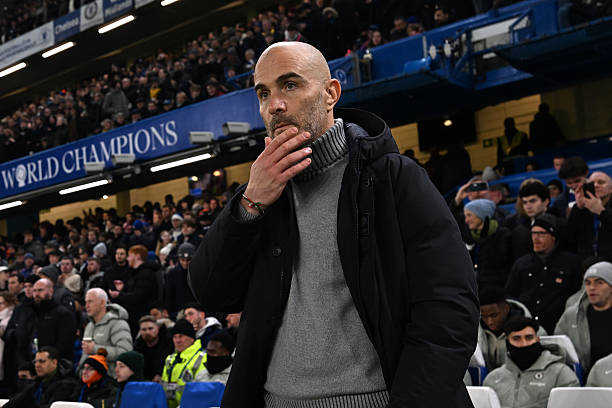
On January 1, 2026, Chelsea released their statement. The language was carefully lawyered, the club “parted company” with their head coach, a phrase deliberately avoiding the word “resigned” or “sacked,” as both parties entered what would become a legal dispute over whether Enzo Maresca was entitled to a compensation payout.
Reports confirmed that by choosing to step down, Maresca walked away from a contract running to 2029 and the multimillion-pound compensation package he would have received had Chelsea terminated his employment.
He did it anyway. Chelsea, for their part, were already preparing to make a change. The board considered his results, his media comments, his disclosed interest in other roles, and his disagreements with the medical department, and concluded the relationship was beyond repair. Maresca reached the same conclusion independently.
According to Opta, he became the first Premier League manager in history to leave his post on New Year’s Day.
The Destination Was Always Manchester
With Fabrizio Romano’s “here we go” on Enzo Maresca’s three-year deal at the Etihad now officially delivered, the full arc of this story is visible. A manager who won two trophies and delivered Champions League football in his first season, who felt his board did not value him sufficiently, who lost his starting centre-back and was denied a replacement, whose December results crumbled as his defensive concerns proved prophetic, who watched his relationship with the hierarchy fracture in real time and who, throughout all of it, maintained a back-channel conversation with the club he had left to join Chelsea in the first place.
It was not a sudden decision. It was a slow unravelling. And now, Enzo Maresca goes to Manchester City.

1 comment
For the reason that the admin of this site is working, no uncertainty very quickly it will be renowned, due to its quality contents.