Long before diversity became a major conversation in global motorsport, Willy T. Ribbs was already challenging the barriers that kept Black drivers away from the sport’s biggest stages. He raced against established names, confronted discrimination within the industry and refused to let rejection determine how far his ambitions could take him.
His journey eventually led him to the Indianapolis 500 in 1991, where he became the first Black driver to qualify for the legendary race. It was a landmark achievement, but the road there was anything but straightforward. The color barrier in American motorsport was not simply a question of getting behind the wheel. It was also about finding teams willing to support him, sponsors prepared to invest in him and people willing to judge him by his ability rather than his skin color.
A Young Driver with an Unusual Dream
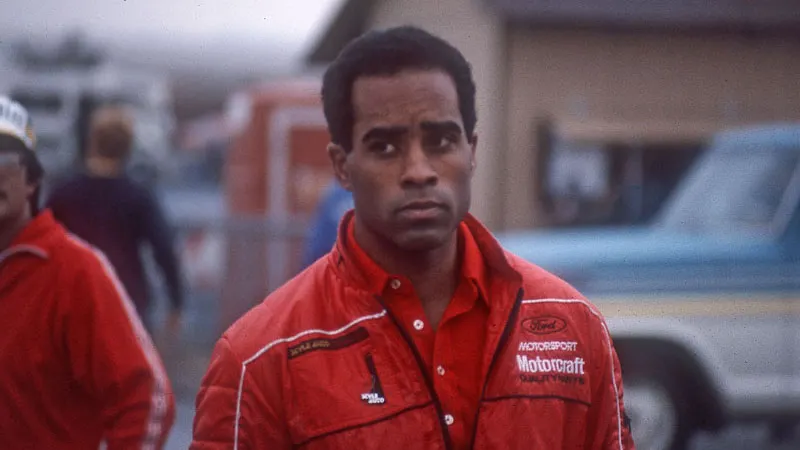
Born William Theodore Ribbs Jr. on 3 January 1956 in San Jose, California, Willy grew up in a family where motorsport was already part of everyday life. His father, William “Bunny” Ribbs Sr., was an amateur racing driver, and young Ribbs developed an interest in cars from an early age.
Rather than follow a conventional route, he decided to pursue professional racing. At 21, he travelled to Britain to begin his career in Formula Ford, believing that Europe offered a better opportunity to develop as a driver.
The decision quickly began to pay off. Racing against young talents who would go on to establish themselves in international motorsport, Ribbs demonstrated remarkable ability despite having little previous competitive experience. He won the British Formula Ford championship, attracting attention for his performances and opening the door to further opportunities.
His success abroad gave him confidence, but returning to the United States presented a different challenge. The opportunities available to him were not always determined by his results on the track.
Fighting the Color Barrier in American Motorsport

Ribbs’ talent was rarely the problem. Finding the financial and institutional support required to compete at the highest level proved much harder.
During his career, he encountered racial hostility from people within motorsport. In an interview with MotorTrend, he recalled concerns about whether his teams were giving him the same technical support as other drivers. He described situations where communication with mechanics was difficult and where improvements to his car appeared to be delayed.
For a driver competing at high speeds, such problems were more than frustrating. Trust between a driver, engineer and crew is essential, particularly when mistakes can have serious consequences.
Sponsorship was another major obstacle. Ribbs explained that even when he was winning races, corporate America was reluctant to support his career. He believed that his ability had been demonstrated, but the financial backing needed to reach the top levels of American racing remained difficult to secure.
He nevertheless found important supporters. Team owner Dan Gurney backed his talent, while Jim Trueman, Paul Newman and Bill Cosby also played significant roles in helping him remain in the sport.
From Trans-Am Success to the Indianapolis 500

Ribbs began establishing himself in American racing through Formula Atlantic and the SCCA Trans-Am Series. In 1983, he won five Trans-Am races and was named the series’ rookie of the year.
He continued to build his reputation, recording further victories in Trans-Am and IMSA competition. His performances demonstrated that he could compete successfully against established drivers, but reaching the most prestigious American open-wheel races remained a different challenge.
In 1985, Ribbs travelled to Indianapolis to attempt the Indianapolis Motor Speedway’s rookie orientation programme. He became the first Black man to drive official laps around the legendary circuit, although he did not qualify for that year’s race.
He also tested a Formula One car in 1986, becoming the first Black driver to test an F1 machine. The opportunity further demonstrated the level of his ability, even though it did not develop into a full-time Formula One drive.
1991: The Historic Indianapolis 500 Appearance

The defining moment of Ribbs’ career arrived in 1991. After years of setbacks, he returned to Indianapolis with another opportunity to qualify for the famous 500-mile race.
His attempt was almost derailed by mechanical problems. Engine troubles on the final day of qualifying threatened to end his chances, but his team managed to repair the car in time.
With only 45 minutes remaining, Ribbs took to the track and completed four qualifying laps at an average speed of 217.358 mph. The performance earned him 29th place on the starting grid and, more importantly, made him the first Black driver to qualify for the Indianapolis 500.
It was a historic breakthrough in a race whose history stretched back to 1911. Ribbs had crossed a barrier that had stood for generations, earning his place through the same qualifying process as every other driver.
He returned to the Indianapolis 500 in 1993, further cementing his place in the event’s history.
The Racing History of Willy T. Ribbs Goes Beyond One Race
Although the 1991 achievement remains the most recognizable part of his story, the racing history of Willy T. Ribbs extends well beyond Indianapolis.
He continued competing in IndyCar before returning to Trans-Am and later joining the NASCAR Craftsman Truck Series in 2001. With Dodge’s support, he became the first Black driver in the modern era to compete full-time in a major NASCAR division.
His career was not without disappointments. Financial difficulties and a shortage of sponsorship limited some of the opportunities available to him, even as he continued to demonstrate his ability behind the wheel.
Ribbs’ journey was later documented in Uppity: The Willy T. Ribbs Story, a film that explored his career, personality and experiences confronting racism in motorsport.
His legacy is not measured solely by the races he won or the championships he contested. It is also found in the opportunities his achievements helped make possible for other drivers.
Willy T. Ribbs challenged a sport that did not always welcome him, and his 1991 Indianapolis 500 qualification remains a defining moment in American racing history. He did not simply ask for a place on the starting grid. He went out, earned it and made history.
