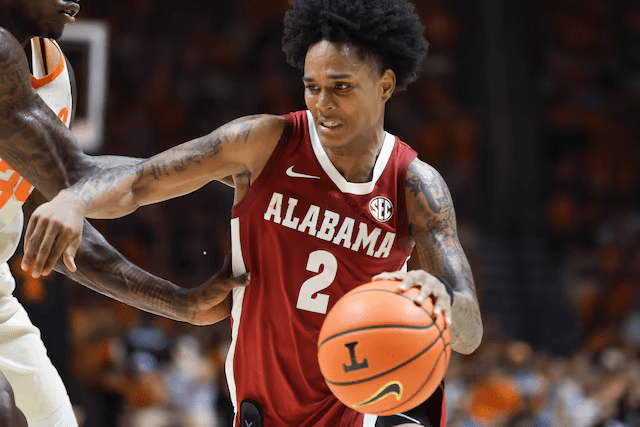
College basketball thrives on drama, but the kind that unfolded in mid-March 2026 surrounding Aden Holloway was not the type fans or the Alabama Crimson Tide men’s basketball program wanted just days before the NCAA Tournament. The talented guard, who had emerged as one of the team’s most important players this season, suddenly found himself in the headlines for reasons unrelated to his performance on the court.
Authorities in Tuscaloosa arrested Holloway on a felony drug charge after investigators reportedly discovered a significant amount of marijuana at a residence linked to the player. The arrest sent shockwaves across college basketball circles, especially given the timing—only days before Alabama’s scheduled opening game in the tournament.
This unexpected development raises several questions about Holloway’s future, the legal implications of the charges, and the potential impact on Alabama’s postseason ambitions. It also highlights the delicate balance college athletes must maintain between their personal lives and the intense spotlight that comes with competing at the highest level of NCAA sports.
A Promising Season Interrupted
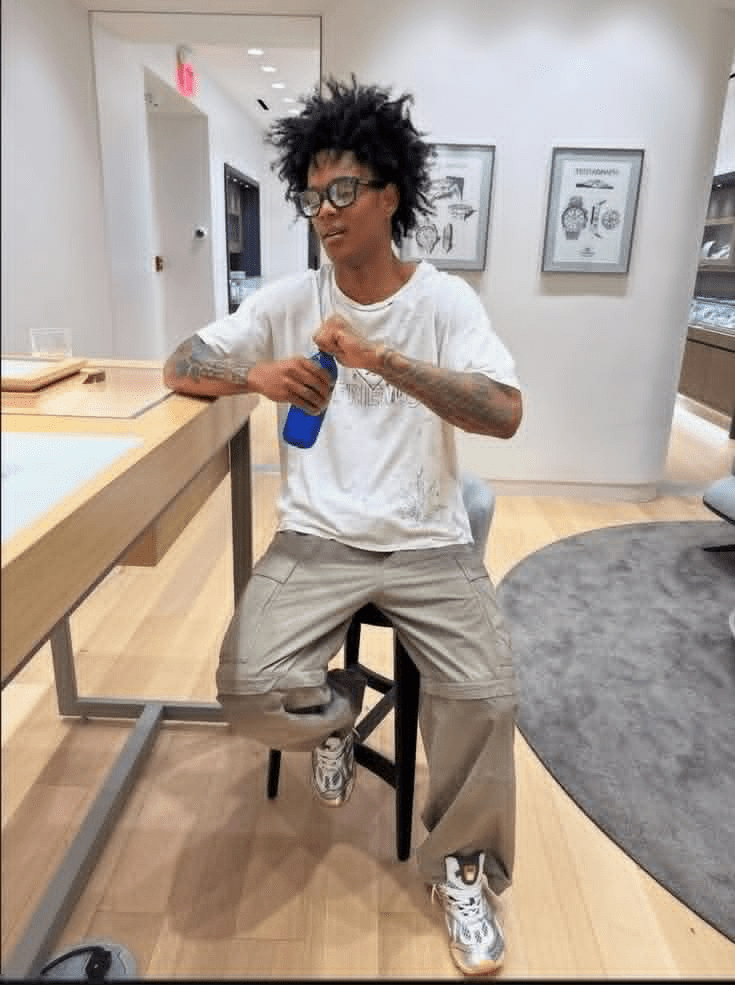
Before the arrest dominated headlines, Holloway had been enjoying one of the most productive seasons of his college career. The 21-year-old junior guard had become a central figure for Alabama’s offense, averaging 16.8 points, 3.8 assists, and 2.8 rebounds per game during the 2025–26 season.
His ability to stretch the floor with accurate outside shooting made him one of the team’s most dangerous offensive weapons. Holloway was converting 43.8% of his three-point attempts, an impressive figure that placed him among the more efficient shooters in the Southeastern Conference (SEC).
These performances helped Alabama secure a strong regular-season record and earn a favorable seed heading into the NCAA Tournament. For many analysts, Holloway’s scoring ability and playmaking were seen as essential to the Crimson Tide’s hopes of making a deep run in March Madness.
However, the arrest dramatically shifted the narrative surrounding the team.
Details of the Arrest
Law enforcement officials confirmed that Holloway was arrested on March 16, 2026, following a search conducted by agents from the West Alabama Narcotics Task Force. According to authorities, the search of a residence near the university campus resulted in the discovery of more than a pound of marijuana, drug paraphernalia, and cash.
Following the search, Holloway was charged with:
- First-degree possession of marijuana (not for personal use)
- Failure to affix a tax stamp
Under Alabama law, first-degree marijuana possession is classified as a Class C felony, meaning it can carry serious legal consequences.
Police transported the guard to the Tuscaloosa County Jail, where his bond was set at $5,000. Reports indicate he was released later the same morning after posting bail.
If convicted, the charge could potentially lead to up to 10 years in prison and a fine of up to $15,000, although such penalties vary depending on the legal outcome and circumstances of the case.
Timing Raises Major Questions
One of the most striking aspects of the situation is the timing. Holloway’s arrest came just four days before Alabama’s NCAA Tournament opener, where the Crimson Tide were scheduled to face Hofstra in the Midwest Region.
The NCAA Tournament—often referred to as March Madness is the pinnacle of college basketball competition. For players, coaches, and fans, it represents months of preparation culminating in a high-stakes elimination tournament watched by millions.
Because of this, the sudden legal issue surrounding a key player inevitably created uncertainty about:
- Whether Holloway would be allowed to play
- Potential disciplinary action from the university
- The overall impact on Alabama’s roster and strategy
At the time of the initial reports, the university had not issued an official statement regarding Holloway’s status with the team.
From Auburn to Alabama: Holloway’s Journey
To fully understand the significance of this incident, it helps to look at Holloway’s path in college basketball.
Born in Charlotte, North Carolina, Holloway was widely regarded as a five-star high school recruit and one of the most promising young guards in the United States. His talent earned him invitations to elite showcase events such as the McDonald’s All-American Game and the Nike Hoop Summit.
He began his collegiate career at Auburn Tigers men’s basketball during the 2023–24 season. As a freshman, he averaged 7.3 points and 2.7 assists per game while starting 26 contests.
After that season, Holloway made a controversial decision to transfer to Auburn’s archrival, Alabama—a move that instantly intensified attention around his career. The transfer proved beneficial for both the player and the program, as he quickly developed into a major offensive contributor.
By the 2025–26 campaign, Holloway had established himself as Alabama’s second-leading scorer and one of the team’s most reliable perimeter threats.
Impact on Alabama’s Championship Aspirations
For the Crimson Tide, losing a player of Holloway’s caliber—whether temporarily or permanently could significantly alter their tournament outlook.
College basketball is often decided by guard play, and Alabama relied heavily on Holloway’s:
- Outside shooting
- Ball-handling
- Offensive creativity
His ability to create scoring opportunities helped space the floor for teammates and made Alabama’s offense far more dynamic.
Without him, the team might have to rely more heavily on other guards to handle the ball and generate scoring. This adjustment could disrupt the offensive rhythm the team had developed throughout the season.
Moreover, the psychological impact of such a high-profile incident can affect locker-room morale. Teammates and coaches must quickly shift focus back to basketball while dealing with the distraction of national media coverage.
Marijuana Laws and the NCAA Context
The legal situation surrounding Holloway also intersects with broader debates about marijuana laws and sports policies.
In Alabama, recreational marijuana remains illegal, and possession of larger quantities can lead to felony charges. That legal reality contrasts with many other states in the U.S., where marijuana has been legalized or decriminalized.
Interestingly, the NCAA itself has begun changing its approach to marijuana use. In 2024, the organization removed marijuana from its banned substances list for championship testing in some sports, signaling a shift toward treating cannabis use as a health issue rather than a disciplinary one.
However, even with those changes, state law still applies, meaning athletes can face legal consequences regardless of NCAA policy.
This distinction underscores the complicated landscape athletes navigate when it comes to substance regulations.
The Personal and Professional Stakes
For Holloway, the incident represents a critical turning point in his young career.
At just 21 years old, he is still developing as both an athlete and an individual. His on-court talent suggests he has the potential to pursue professional basketball opportunities in the future, whether in the NBA or overseas.
However, legal trouble can quickly overshadow athletic accomplishments. Professional scouts often evaluate not only a player’s skills but also their maturity, decision-making, and ability to handle pressure.
How Holloway and his legal team handle the situation in the coming months will likely play a major role in shaping his reputation moving forward.
What Happens Next?
Several key developments will determine the next chapter in this story:
- Legal proceedings: Holloway must address the felony charges through the court system.
- University response: Alabama officials could impose team-related discipline depending on the circumstances.
- Team decisions: Coaches may determine whether he can continue participating during the legal process.
- Tournament impact: His availability or absence could influence Alabama’s performance in March Madness.
Because the incident occurred during one of the most important weeks of the college basketball calendar, the story is likely to remain in the spotlight as the tournament unfolds.
The arrest of Aden Holloway on a drug charge has created an unexpected crisis for Alabama basketball at the worst possible time. Just days before the NCAA Tournament, the team must now navigate uncertainty surrounding one of its most important players.
For Holloway, the situation serves as a stark reminder of how quickly circumstances can change for high-profile athletes. One moment he was leading Alabama’s backcourt and preparing for March Madness; the next, he was facing serious legal charges that could carry long-term consequences.
Whether this episode becomes a temporary setback or a defining moment in his career will depend on the legal outcome, the response from the university, and Holloway’s ability to learn and grow from the experience.
In the unpredictable world of college sports, the drama often unfolds on the court. But occasionally, as this case demonstrates, the most significant storylines occur far beyond the hardwood.