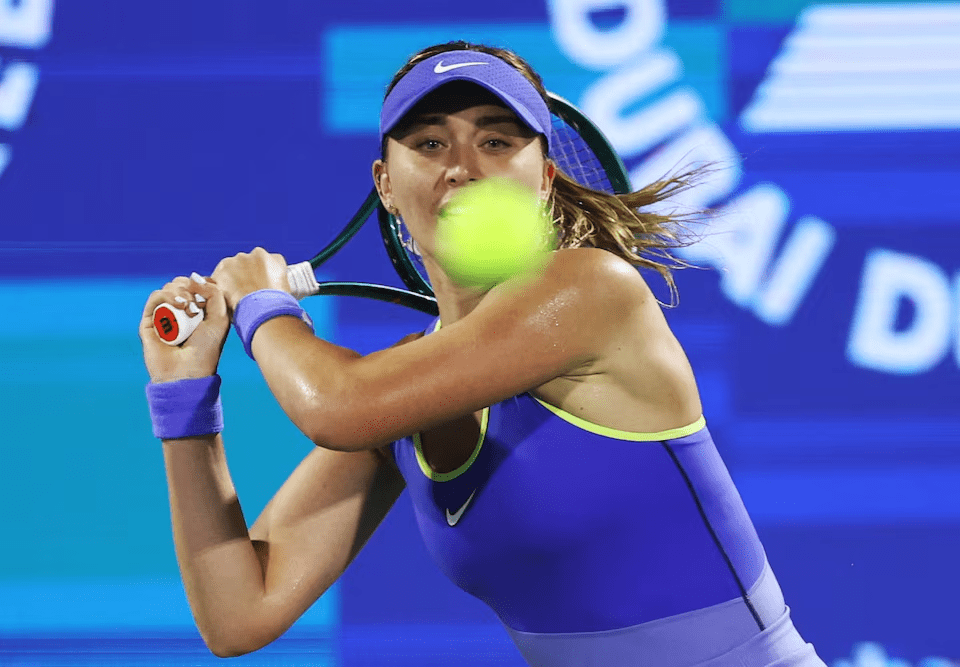
Paula Badosa, the fiery Spaniard who has battled injury setbacks throughout her career, didn’t hold back this week in responding to critics who questioned her commitment after she was forced to retire from her second-round match at the Dubai Tennis Championships.
The former world No. 2 was on the receiving end of a social media comment accusing her of being “disrespectful to the game” after a right thigh issue brought her contest against Elina Svitolina to an abrupt end. Instead of ignoring the barbs, Badosa addressed them head-on, offering a candid, emotional defence of her decision and a broader critique of the hostile online culture facing professional athletes.
A Tough Day in Dubai
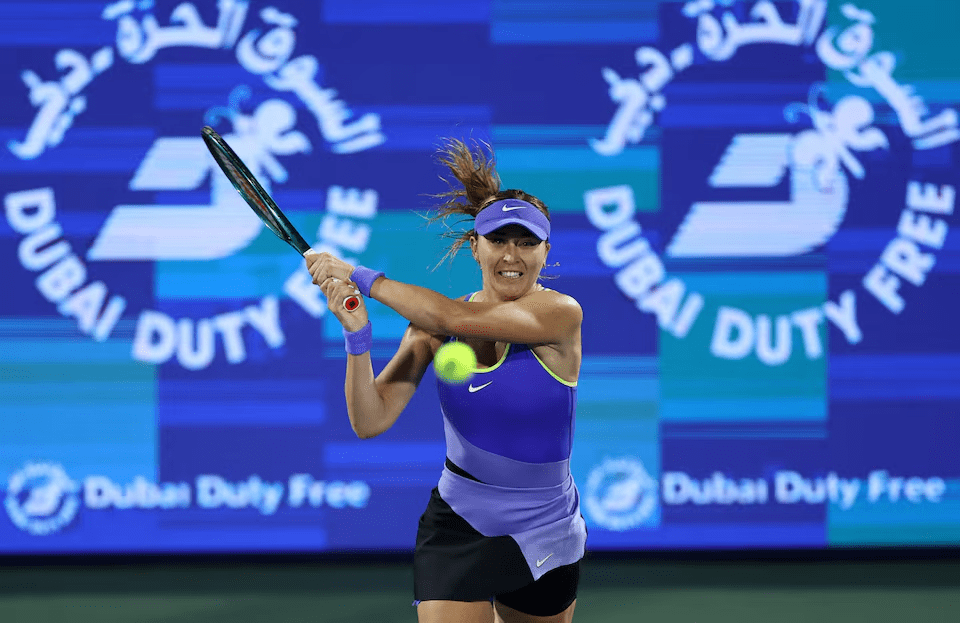
Badosa’s match against Svitolina had begun positively for the Spaniard. She seized an early 4-1 lead in the first set, showcasing the power and intensity that once propelled her into the top ranks of the women’s game. But as the set wore on, the effects of a nagging physical problem became apparent. Svitolina won five straight games to take the opening set 6-4, and Badosa, struggling with discomfort, eventually chose to retire rather than risk further injury.
It was another in a series of setbacks in a career that has been repeatedly interrupted by physical problems. Badosa, 28, has had a well-documented history of injuries, including chronic back problems that once prompted her to consider early retirement. Despite those challenges, she worked her way back into the world’s top 10 last season and has continued to fight for consistency amid the pain.
Yet a single tweet from a fan suggesting that she had shown “disrespect” by withdrawing from the match—struck a nerve, drawing a forthright response from one of the WTA’s most articulate players.
A Strong Rebuke on Social Media
Taking to X (formerly Twitter), Badosa didn’t mince her words.
“You have no idea what it’s like to live with a chronic injury and still choose to keep going,” she wrote, describing the relentless physical and mental battle she faces every day. “To wake up every day not knowing how your body will respond, searching for solutions, and fighting for something you love and give everything to even when it’s so difficult.”
Her message went beyond defending her retirement in Dubai. She spoke of “endless nightmares” in her quest to manage ongoing physical issues, emphasising the courage it takes to step on court when the body isn’t at its best.
“Trust me, I’m the first one suffering with pain and having endless nightmares to try to find solutions every single day,” Badosa added. “For me, after all, stepping on a tennis court makes it all worth it every time.”
In a message that resonated with many athletes across sports, she declared her intention to keep fighting. “So I’ll keep trying. Because it’s all about trying, and that won’t change. I’ll always try one more time,” she wrote, citing her passion for the game as her guiding force. Even if there’s only a “1% chance to keep going,” she said, she’ll pursue it.
Beyond One Comment: A Broader Debate
Badosa didn’t limit her remarks to one criticism. She used the moment to highlight a larger issue: the proliferation of toxic commentary online and its impact on players’ mental well-being.
“For me, the only disrespect here is to open social media and read messages like this,” she said, capturing the frustration many athletes feel. “Then we complain if we see players suffering and having mental health issues, but I’m not surprised with the amount of hate and ‘experts’ we have here.”
Her stance dovetails with growing concerns within professional tennis about verbal abuse hurled at players through digital channels. Officials from the Women’s Tennis Association (WTA) have repeatedly emphasised the need to protect competitors from online vilification—a problem that extends far beyond a single critical tweet.
WTA Voices Support
The WTA reiterated this week that safeguarding players from abusive online behaviour remains a top priority. In recent months, several players have come forward to speak about the psychological toll of social media harassment, with some reporting disturbing threats and offensive messages.
Destanee Aiava, an Australian player, recently announced her decision to retire from the sport, pointing to what she described as a “racist, misogynistic, homophobic and hostile” culture that permeates online platforms. Aiava said the negativity she encountered contributed to her decision to step away, shining a light on the emotional price athletes sometimes pay.
Similarly, Elina Svitolina, Badosa’s opponent in Dubai, has previously revealed that she received death threats after a match at the Canadian Open last season, blaming disgruntled bettors for much of the abuse.
The Toll of Chronic Injury
Badosa’s emotional response also underscores the broader struggle she faces as an elite athlete contending with recurring injuries. She has withdrawn from a number of matches over the years due to physical issues, and her battle with chronic pain has been a defining theme of her career.
These setbacks have diminished her ranking from a career-high near the top of the women’s game to a position well outside the elite tier—but have not extinguished her desire to compete. In her social media post, she indicated that she has no plans to quit, telling critics they are free to look elsewhere if they don’t appreciate her journey, a sentiment that reflects both defiance and pride.
Fan Reaction and Wider Conversations
Badosa’s forthright reply drew mixed reactions from the broader tennis community and fans. Some praised her honesty and applauded her willingness to speak candidly about the hardships of managing chronic injuries in a sport that demands peak physical performance. Others defended her right to rest and recover without enduring criticism for prioritising her health.
The episode has sparked fresh conversation about how fans and commentators engage with athletes, particularly on social platforms where anonymity can embolden harsh language. Several players and commentators have called for greater empathy and understanding, noting that it’s easy to judge from afar without appreciating the grind of life on tour.
A Fateful Stretch of the Season
The incident in Dubai marks another chapter in what has been a difficult period for Badosa. After a promising return to form last season, she has been striving to balance her competitive aspirations with the realistic limits of her body. Her decision to retire from the match was not taken lightly, she said, but was rooted in a desire to avoid worsening the injury an approach that, she stressed, should not be misconstrued as a lack of respect for tennis.
As the tour moves into the next phase of the season, Badosa’s experience will likely resonate with other players juggling performance goals with the realities of wear and tear. Her public stance against online disrespect may be one of the more memorable moments so far in 2026 an example of an athlete using her platform to challenge not just critics, but a culture that too often overlooks the human side of competition.