Baseball may look simple at first glance hit the ball, run the bases, score runs but beneath that simplicity lies a highly structured system of positions, roles, and responsibilities. Understanding baseball positions is one of the most important steps toward truly appreciating the game, whether you’re a beginner, a fan, or an aspiring player.
In this comprehensive guide, we’ll break down every baseball position, explain what each player does, and show how all nine positions work together to form a cohesive defensive unit.
The Basics of Baseball Positions
In baseball, each team fields nine defensive players at a time, each assigned to a specific position on the field.
These positions are divided into three main groups:
- The Battery (Pitcher and Catcher)
- Infielders (First base, Second base, Shortstop, Third base)
- Outfielders (Left field, Center field, Right field)
Each position has a defined area to cover and a unique role in preventing the opposing team from scoring runs.
Understanding the Defensive Objective
Before diving into each position, it’s important to understand the goal of the defense. When a team is fielding, their job is to:
- Record three outs to end the opposing team’s turn
- Prevent runners from advancing or scoring
- Control the tempo of the game
This is achieved through coordinated effort, positioning, and execution. Every player on the field contributes to this objective in different ways.
The Battery: Pitcher and Catcher
Pitcher (P)
The pitcher is the most important defensive player on the field and is often considered the “engine” of the team.
Primary responsibilities:
- Throw the ball toward home plate to start every play
- Attempt to strike out batters or induce weak contact
- Control the pace and rhythm of the game
Pitchers use a variety of pitches fastballs, curveballs, sliders, and changeups to deceive hitters and gain an advantage.
A great pitcher combines physical skill with strategy, constantly analyzing hitters and adjusting accordingly.
Catcher (C)
The catcher is positioned behind home plate and acts as the field general.
Key responsibilities:
- Catch pitches that the batter does not hit
- Call or signal pitches to the pitcher
- Prevent stolen bases by throwing out runners
- Coordinate defensive plays
Catchers require toughness, quick reflexes, and strong communication skills. They are the only players who face the entire field, giving them a unique perspective on the game.
The Infield: The Heart of Defensive Action
The infield consists of four players positioned around the bases. These players handle most of the action, especially ground balls.
First Baseman (1B)
Positioned near first base, the first baseman is a crucial target for throws from other infielders.
Responsibilities:
- Catch throws to record outs at first base
- Field ground balls hit toward the right side
- Provide a large, reliable target for teammates
First basemen are often tall and have excellent hand-eye coordination, helping them scoop difficult throws and prevent errors.
Second Baseman (2B)
The second baseman covers the area between first and second base.
Responsibilities:
- Field ground balls and line drives
- Turn double plays with the shortstop
- Cover second base on steals and force plays
Second basemen need quick feet, agility, and strong awareness. They are often among the fastest players on the field.
Shortstop (SS)
The shortstop is positioned between second and third base and is often considered the most skilled infielder.
Responsibilities:
- Field balls hit to the left side of the infield
- Make long throws to first base
- Serve as a defensive leader
Shortstops require a combination of speed, arm strength, and baseball intelligence. Many of the game’s best athletes play this position.
Third Baseman (3B)
Known as the “hot corner,” the third baseman plays close to the batter.
Responsibilities:
- Field hard-hit balls and line drives
- Throw quickly to first base
- Guard against bunts
Third basemen need lightning-fast reflexes and a strong arm, as they often have less time to react compared to other infielders.
The Outfield: Covering Ground and Preventing Big Plays
Outfielders are positioned farthest from home plate and are responsible for catching fly balls and limiting extra-base hits.
Left Fielder (LF)
Positioned on the left side of the outfield.
Responsibilities:
- Catch fly balls
- Field balls hit down the left-field line
- Relay throws back to the infield
Left fielders typically need good speed and solid fielding ability, though arm strength is slightly less critical compared to right field.
Center Fielder (CF)
The center fielder covers the most ground of any position.
Responsibilities:
- Track and catch deep fly balls
- Back up other outfielders
- Act as the leader of the outfield
Center fielders are usually the fastest players on the team, with excellent judgment and range.
Right Fielder (RF)
Positioned on the right side of the outfield.
Responsibilities:
- Catch fly balls and line drives
- Prevent runners from advancing
- Make long throws to third base or home
Right fielders often have the strongest arms among outfielders, as they frequently need to make long-distance throws.
Position Numbers and Scoring System
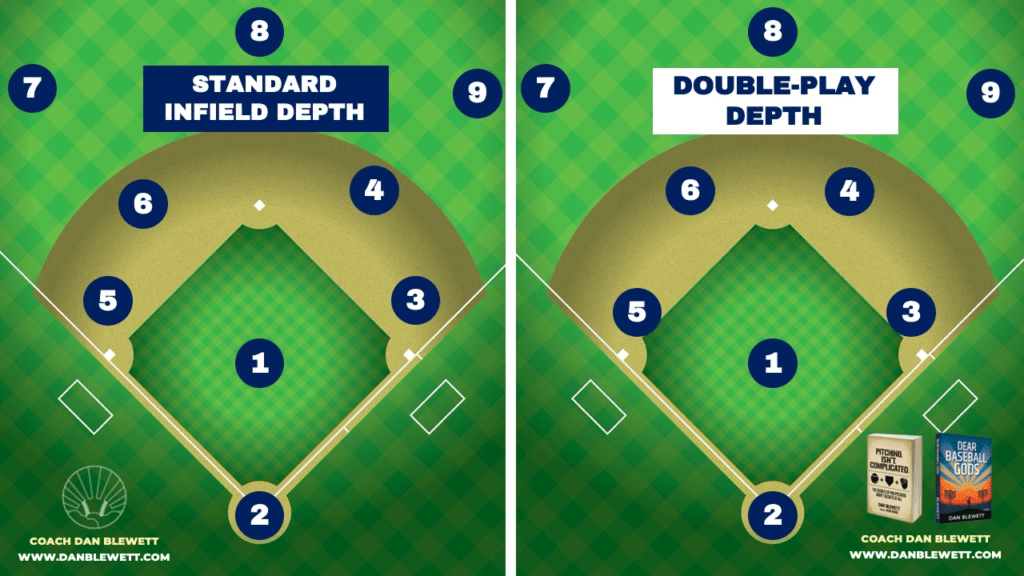
In baseball, each position is assigned a number used in scorekeeping:
1 – Pitcher
2 – Catcher
3 – First Baseman
4 – Second Baseman
5 – Third Baseman
6 – Shortstop
7 – Left Fielder
8 – Center Fielder
9 – Right Fielder
This numbering system helps record plays efficiently, such as a “6-4-3 double play” (shortstop to second baseman to first baseman).
Offensive Roles and the Designated Hitter
While positions are mainly discussed in terms of defense, players also contribute offensively.
Each team has a batting lineup of nine players, and in some leagues, a designated hitter (DH) bats in place of the pitcher.
Offensive responsibilities include:
- Hitting the ball into play
- Reaching base safely
- Advancing runners
- Scoring runs
Different positions often correlate with different offensive expectations. For example:
- First basemen and outfielders are often power hitters
- Middle infielders prioritize speed and contact
- Catchers focus more on defense than offense
How Positions Work Together
Baseball is not just about individual roles it’s about teamwork.
For example:
- A ground ball might involve the shortstop fielding, the second baseman covering, and the first baseman completing the play
- Outfielders back each other up to prevent extra bases
- The catcher and pitcher work as a unit to outsmart hitters
Every defensive play relies on coordination and communication.
Skills Required for Each Position
Each position demands specific physical and mental attributes:
- Pitcher: Accuracy, strategy, mental toughness
- Catcher: Leadership, durability, strong arm
- Infielders: Quick reflexes, agility, fast decision-making
- Outfielders: Speed, tracking ability, strong throwing arms
Managers must carefully assign players to positions based on these skills, balancing defense and offense throughout a long season.
Modern Baseball and Position Flexibility
In today’s game, versatility is increasingly valuable. Many players are capable of playing multiple positions, known as “utility players.”
This flexibility allows teams to:
- Adjust to injuries
- Optimize matchups
- Manage player fatigue
Despite this evolution, the core nine positions remain the foundation of the sport.
Why Understanding Positions Matters
Learning baseball positions enhances your experience in several ways:
- Better understanding of the game
- Improved appreciation of strategy
- Ability to follow plays more easily
- Insight into player roles and strengths
Whether you’re watching a game or playing one, knowing who does what makes everything clearer and more enjoyable.
Baseball positions are the backbone of the sport. Each of the nine players on the field has a clearly defined role, yet success depends on how well they work together as a unit.
From the pitcher’s precision to the catcher’s leadership, from the infield’s quick reactions to the outfield’s wide coverage, every position contributes to the ultimate goal: preventing runs and winning games.
Understanding these roles transforms baseball from a simple game into a strategic, dynamic sport full of nuance and excitement.
Once you grasp the positions, you don’t just watch baseball you truly understand it.