Basketball is a dynamic sport played by two teams of five players each. Every player on the court has a specific role, traditionally defined by their position. These positions help teams organize their offense, defense, and overall strategy. Although modern basketball has become more flexible, the traditional five-position system remains the foundation of the game.
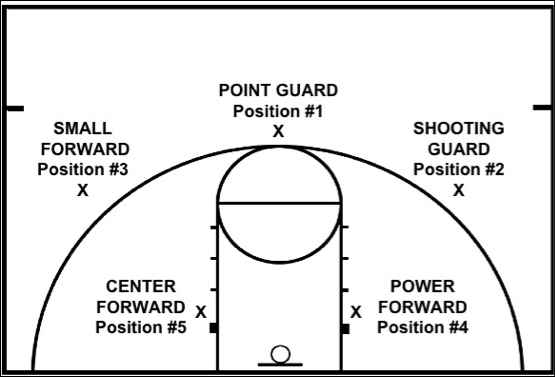
The five standard basketball positions are:
- Point Guard (PG) – Position 1
- Shooting Guard (SG) – Position 2
- Small Forward (SF) – Position 3
- Power Forward (PF) – Position 4
- Center (C) – Position 5
Each position has unique responsibilities, skill sets, and typical physical attributes. Understanding these roles helps players develop the right skills and allows fans to better appreciate how teams function on the court.
1. Point Guard (PG) – The Floor General
The point guard is often considered the leader of the team on the court. This player controls the tempo of the game, organizes offensive plays, and distributes the ball to teammates. Because of this responsibility, point guards are commonly called the “floor generals.”
Primary Responsibilities
- Bring the ball up the court after possession
- Initiate offensive plays
- Pass the ball to teammates in scoring positions
- Read the defense and make quick decisions
- Apply defensive pressure to opposing guards
Essential Skills
- Excellent ball handling
- Strong court vision
- Accurate passing
- Quick decision-making
- Leadership and communication
Point guards need a high basketball IQ because they essentially act as the team’s strategist during the game. Their ability to read defensive schemes and adjust plays can determine the success of an offensive possession.
Typical Physical Traits
Point guards are usually among the shortest and quickest players on the team, allowing them to move quickly and control the ball effectively.
Famous Point Guards
Some of the most legendary players in basketball history have played this role, including:
- Magic Johnson
- Stephen Curry
- Chris Paul
These players combine scoring ability with elite passing and leadership.
2. Shooting Guard (SG) – The Scoring Specialist
The shooting guard is typically the team’s best scorer from the perimeter. This player specializes in long-range shooting, mid-range jumpers, and driving to the basket.
Primary Responsibilities
- Score points through jump shots and drives
- Create scoring opportunities without the ball
- Assist the point guard in ball handling
- Guard the opposing team’s best perimeter player
Essential Skills
- Elite shooting ability
- Off-ball movement
- Quick release on jump shots
- Athleticism
- Defensive awareness
Shooting guards often run around screens to get open shots. Their ability to stretch the defense forces opponents to guard further away from the basket, creating space for teammates.
Typical Physical Traits
Shooting guards are usually taller than point guards but still possess strong speed and agility.
Famous Shooting Guards
Some iconic shooting guards include:
- Kobe Bryant
- Dwyane Wade
- Klay Thompson
These players are known for their scoring ability and clutch performances.
3. Small Forward (SF) – The Versatile All-Rounder
The small forward is often considered the most versatile player on the team. This position requires a balance of scoring, defense, rebounding, and playmaking.
Primary Responsibilities
- Score both inside and outside
- Rebound the basketball
- Guard multiple positions
- Support both guards and big men
- Drive to the basket and create plays
Small forwards must be adaptable because they frequently switch roles during a game. They may act as scorers, defenders, or playmakers depending on the team’s needs.
Essential Skills
- Balanced scoring ability
- Strength and athleticism
- Ball-handling skills
- Defensive versatility
- Ability to guard different positions
Typical Physical Traits
Small forwards usually have a combination of size, strength, and speed, making them capable of competing with both guards and bigger forwards.
Famous Small Forwards
Examples of elite small forwards include:
- LeBron James
- Kevin Durant
- Kawhi Leonard
These players excel at scoring, defense, and leadership.
4. Power Forward (PF) – The Physical Enforcer
The power forward operates primarily near the basket and is known for physical play, rebounding, and interior scoring.
Primary Responsibilities
- Score in the low post
- Grab offensive and defensive rebounds
- Set screens for guards
- Defend opposing forwards
- Block shots and protect the paint
Power forwards often play a tough and aggressive style. They battle for rebounds and frequently engage in physical contests near the basket.
Essential Skills
- Strength and toughness
- Rebounding ability
- Post moves
- Mid-range shooting
- Defensive positioning
In modern basketball, many power forwards have developed three-point shooting ability, allowing them to stretch the defense and create more spacing on offense.
Typical Physical Traits
Power forwards are usually tall, strong, and athletic, but slightly shorter than centers.
Famous Power Forwards
Notable players who excelled in this role include:
- Tim Duncan
- Giannis Antetokounmpo
- Kevin Garnett
5. Center (C) – The Defensive Anchor
The center is usually the tallest and strongest player on the team. This position plays closest to the basket and is responsible for protecting the rim and controlling rebounds.
Primary Responsibilities
- Block shots and protect the rim
- Grab rebounds
- Score near the basket
- Set screens
- Anchor the team’s defense
Centers often dominate the paint area. Their presence can discourage opponents from attacking the basket.
Essential Skills
- Shot-blocking ability
- Strength and physicality
- Post scoring
- Rebounding
- Interior defense
Typical Physical Traits
Centers are typically the tallest players on the team, often exceeding 6 feet 10 inches in professional leagues.
Famous Centers
Some legendary centers include:
- Shaquille O’Neal
- Hakeem Olajuwon
- Nikola Jokić
The Frontcourt vs Backcourt
Basketball positions are often grouped into two categories:
Backcourt
- Point Guard (PG)
- Shooting Guard (SG)
These players operate mainly around the perimeter and handle most ball-handling duties.
Frontcourt
- Small Forward (SF)
- Power Forward (PF)
- Center (C)
These players usually play closer to the basket and focus on rebounding, defense, and inside scoring.
Position Numbers in Basketball
Coaches often refer to positions by numbers for simplicity:
| Number | Position |
|---|---|
| 1 | Point Guard |
| 2 | Shooting Guard |
| 3 | Small Forward |
| 4 | Power Forward |
| 5 | Center |
These numbers are frequently used in play diagrams and coaching strategies.
Modern “Positionless” Basketball
In recent years, basketball has evolved into a more positionless style. Players today are more versatile than ever. For example:
- Centers can shoot three-pointers.
- Guards can rebound like forwards.
- Forwards may act as playmakers.
This evolution means players are no longer strictly limited to traditional roles. Instead, teams prioritize skill sets, versatility, and adaptability.
How Teams Build a Balanced Lineup
A strong basketball lineup typically includes a mix of skills:
- Playmaking from the point guard
- Scoring from guards and wings
- Versatility from small forwards
- Rebounding and defense from forwards and centers
When each position performs its role effectively, the team functions as a cohesive unit.
Basketball positions form the backbone of team structure and strategy. From the playmaking leadership of the point guard to the rim protection of the center, every role contributes to the team’s overall success.
Although the modern game continues to blur positional lines, understanding the traditional five positions point guard, shooting guard, small forward, power forward, and center remains essential for anyone learning the sport.
By mastering the skills associated with each role, players can better understand where they fit on the court and how they can contribute to their team’s success.