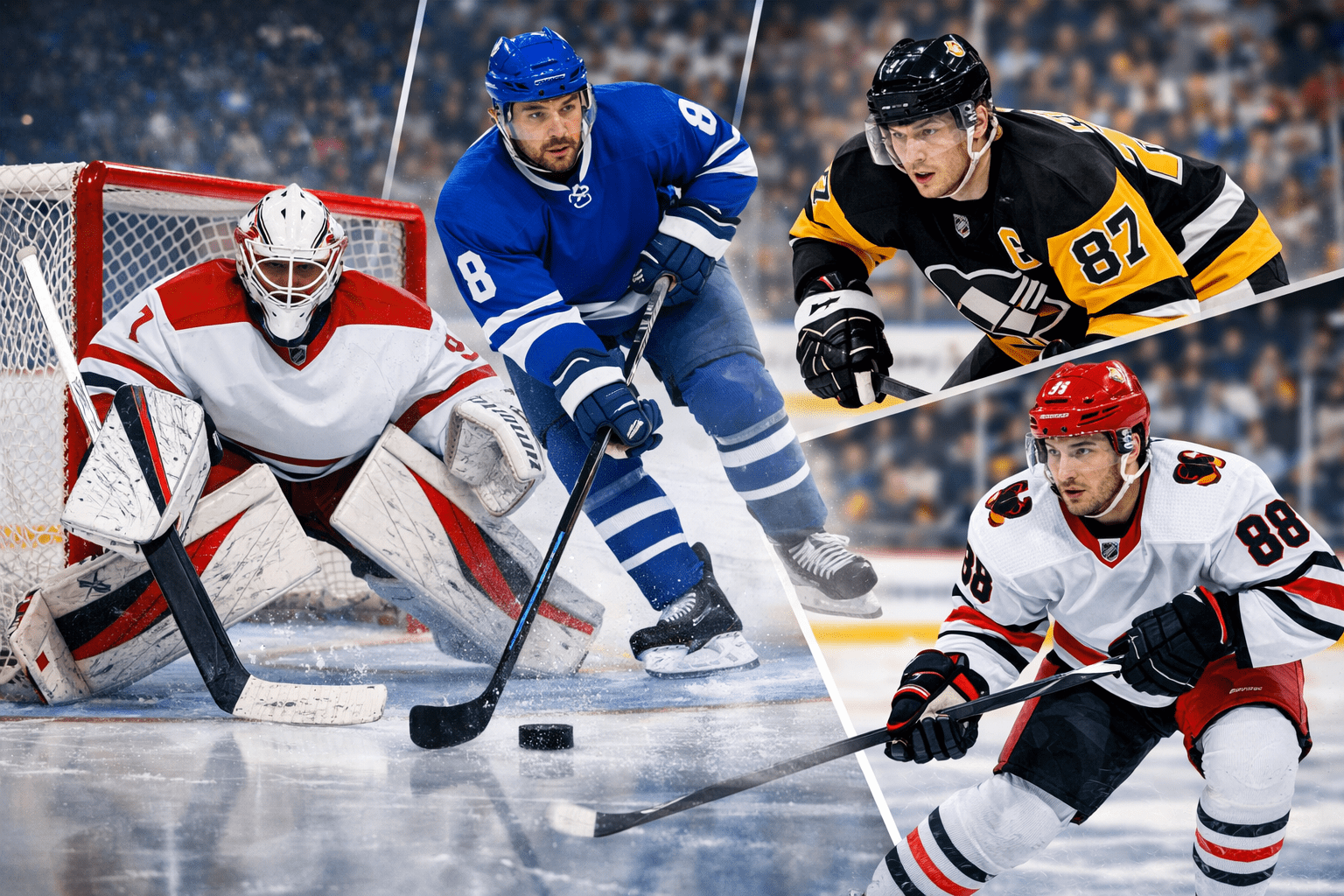
Ice hockey is one of the fastest and most tactical sports in the world, and understanding Ice Hockey positions is essential to appreciating how the game truly works. Whether you are watching the National Hockey League or just starting to learn the sport, every player on the ice has a defined role that contributes to the team’s overall structure.
From goal scorers to defensive anchors, Ice Hockey positions are built around balance, speed, and precision. This guide breaks down each position in detail, explaining responsibilities, skills, and how modern hockey has evolved these roles.
Ice Hockey Positions Overview: The Structure of a Team

A standard ice hockey team has six players on the ice at any given time:
- 1 Goaltender
- 2 Defensemen
- 3 Forwards (Left Wing, Center, Right Wing)
These Ice Hockey positions form the backbone of every lineup. While substitutions happen frequently during a game, this structure remains constant and defines how teams attack and defend.
Modern hockey has also introduced more fluidity, meaning players are expected to adapt and contribute in multiple phases of play.
Goaltender: The Last Line of Defense in Ice Hockey Positions

The goaltender is arguably the most critical of all Ice Hockey positions. Positioned in front of the net, their primary responsibility is to prevent the puck from crossing the goal line.
Key Responsibilities
- Stopping shots from all angles
- Controlling rebounds
- Communicating with defensemen
- Initiating plays with accurate passes
Essential Skills
- Lightning-fast reflexes
- Strong positional awareness
- Mental resilience under pressure
Great goalies often define championship teams. Legends like Patrick Roy revolutionized the position with aggressive, butterfly-style goaltending that is now standard in modern hockey.
Defensemen: The Backbone of Ice Hockey Positions
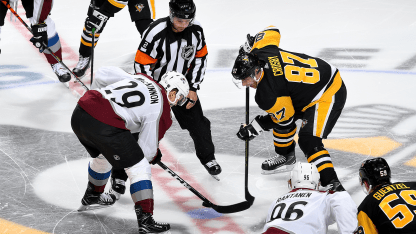
Defensemen play directly in front of the goaltender and are responsible for protecting their zone while also contributing to offensive transitions.
There are typically two types of defensemen:
Stay-at-Home Defensemen
These players focus on blocking shots, clearing the puck, and physical defending.
Offensive Defensemen
These players join attacks, control the blue line, and create scoring opportunities.
Key Responsibilities
- Breaking up opposition plays
- Winning puck battles along the boards
- Supporting offensive build-up
Modern Ice Hockey positions have blurred traditional roles, and defensemen are now expected to be mobile, skilled puck handlers. Players like Cale Makar represent this evolution perfectly.
Center: The Most Versatile Role in Ice Hockey Positions
The center is often considered the most complete player on the ice. Among all Ice Hockey positions, this role demands the highest level of versatility.
Key Responsibilities
- Taking faceoffs
- Supporting both defense and attack
- Controlling play through the middle
- Assisting wingers in scoring opportunities
Essential Skills
- High hockey IQ
- Strong skating ability
- Excellent passing vision
Centers are involved in nearly every phase of the game. Icons like Wayne Gretzky elevated this position, showing how dominant a center can be in shaping a game.
Wingers: Attacking Threats in Ice Hockey Positions
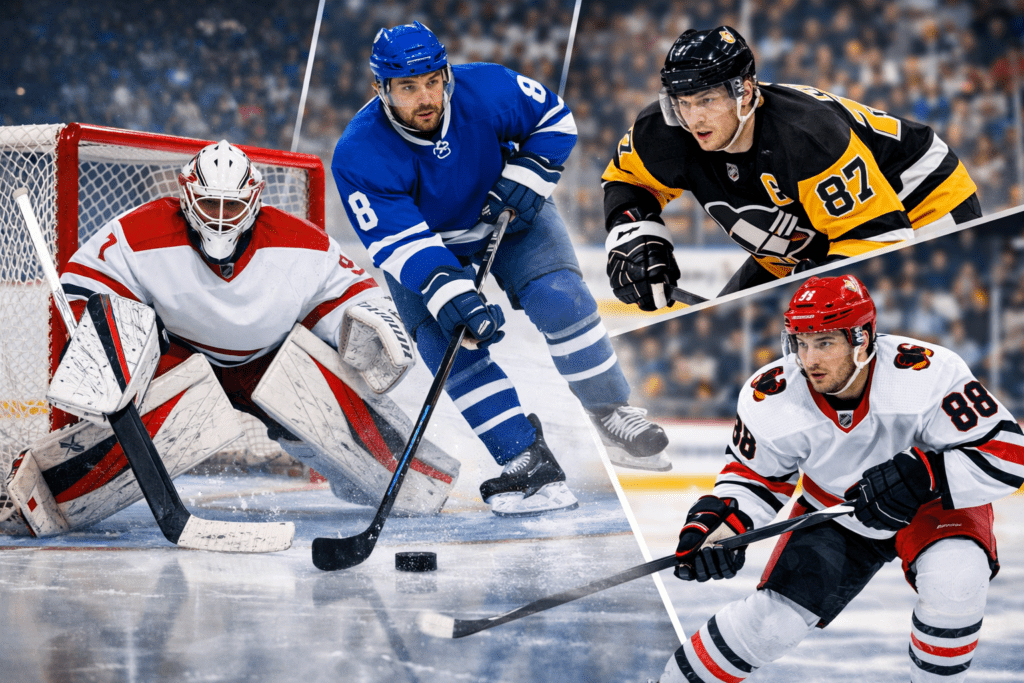
Wingers are primarily responsible for offensive play, operating along the sides of the ice. There are two types:
- Left Wing
- Right Wing
Key Responsibilities
- Scoring goals
- Creating chances
- Supporting defense along the boards
Essential Skills
- Speed and agility
- Shooting accuracy
- Off-the-puck movement
In modern Ice Hockey positions, wingers are no longer just attackers. They are expected to track back defensively and press opponents aggressively.
Players like Alexander Ovechkin have redefined the winger role with elite scoring ability combined with physical dominance.
Ice Hockey Positions and Line Combinations
One of the most unique aspects of Ice Hockey positions is the concept of “lines.” Teams deploy forwards in units of three and rotate them throughout the game.
Typical Forward Lines
- First Line: Best offensive players
- Second Line: Secondary scoring
- Third Line: Two-way players
- Fourth Line: Physical and defensive specialists
Defensive Pairings
- Top Pair: Faces strongest opponents
- Second Pair: Balanced play
- Third Pair: Depth and rotation
This system ensures high intensity throughout the game, as players spend short bursts on the ice before being substituted.
Special Teams: Ice Hockey Positions in Power Plays and Penalty Kills

Hockey positions take on new dimensions during special teams situations.
Power Play
When a team has a man advantage:
- More offensive positioning
- Defensemen act as playmakers
- Wingers move closer to scoring areas
Penalty Kill
When a team is shorthanded:
- Focus shifts to defense
- Players prioritize clearing the puck
- Compact formations are used
These moments often decide games, making tactical awareness of Ice Hockey positions even more important.
How Modern Hockey Has Changed Ice Hockey Positions
The evolution of hockey has significantly transformed traditional Ice Hockey positions.
Positionless Hockey
Modern systems emphasize flexibility. Players are expected to:
- Switch roles seamlessly
- Contribute offensively and defensively
- Maintain positional awareness without rigidity
Speed and Skill Emphasis
Today’s game prioritizes:
- Quick transitions
- High-speed skating
- Technical puck control
Data and Analytics
Teams now use analytics to optimize Ice Hockey positions, tracking:
- Player movement
- Shot quality
- Defensive efficiency
This has led to smarter positioning and more strategic gameplay.
Ice Hockey Positions: Key Traits for Each Role

To summarize, each position demands unique qualities:
- Goaltender: Reflexes, composure, positioning
- Defensemen: Strength, awareness, passing
- Center: Intelligence, versatility, leadership
- Wingers: Speed, finishing, creativity
Understanding these traits helps explain why certain players excel in specific roles.
Why Understanding Ice Hockey Positions Matters
Knowing Ice Hockey positions transforms how you watch and understand the game. It allows you to:
- Recognize tactical adjustments
- Appreciate player roles beyond scoring
- Understand team strategies
Final Thoughts
Ice hockey is more than just speed and physicality. It is a game of structure, intelligence, and coordination, all built around clearly defined yet evolving Ice Hockey positions.
From the composure of the goaltender to the creativity of the forwards, every role contributes to the flow of the game. As hockey continues to evolve, these positions will keep adapting, blending traditional responsibilities with modern demands.
For fans and beginners alike, mastering the basics of Ice Hockey positions is the first step toward truly understanding one of the most exciting sports in the world.
