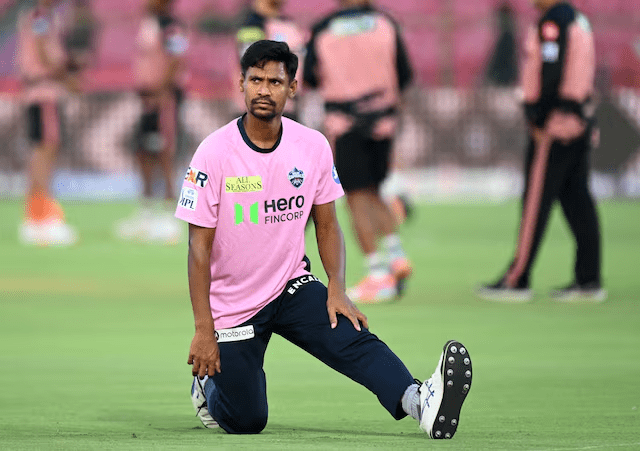
The Board of Control for Cricket in India (BCCI) has instructed Kolkata Knight Riders (KKR) to release Bangladesh fast bowler Mustafizur Rahman from their squad ahead of the Indian Premier League (IPL) 2026 season. This unprecedented directive has ignited debate across sporting, political, and social spheres — raising questions about the intersection of sport with public sentiment and geopolitics.
What Exactly Has Happened?
On January 3, 2026, the BCCI formally communicated to IPL franchise KKR that they must release Mustafizur Rahman — one of the most prominent Bangladeshi cricketers — from their roster before the upcoming IPL season. The board’s announcement, confirmed by multiple sources, was described as a response to “recent developments going on all across,” though the exact phrasing leaves room for interpretation.
The directive means that Mustafizur — who had been signed by KKR during the mini-auction for ₹9.20 crore — will not play in IPL 2026 under the purple and gold jersey. The franchise has also been informed that they may sign a replacement player if necessary, so that their competitive balance is preserved.
Who Is Mustafizur Rahman?
Mustafizur Rahman — affectionately known as “Fizz” — is a left-arm fast bowler from Bangladesh who has earned global recognition in limited-overs cricket. Since making his Indian Premier League debut in 2016, he has appeared for multiple franchises, including Sunrisers Hyderabad, Chennai Super Kings, Mumbai Indians, Delhi Capitals, and now, most recently, KKR. Regarded for his deceptive cutters and ability to contain runs, Mustafizur has been a valuable T20 asset over the last decade.
His acquisition by KKR was noteworthy not just for the price tag — making him the most expensive Bangladeshi signing in IPL history — but also for the attention it drew from cricket fans worldwide.
What Prompted the BCCI’s Decision?
Political & Diplomatic Undercurrents
According to multiple reports, including from leading media outlets, the BCCI’s intervention was influenced by rising political controversy and societal pressure surrounding Mustafizur’s inclusion in the IPL. Opposition to his participation grew after reports emerged of violence against minority communities in Bangladesh, particularly Hindus. This led to public criticism and demands from political leaders that Bangladeshi players not be featured in a high-profile Indian tournament.
While the BCCI stopped short of explicitly stating the exact reason behind its directive, its secretary Devajit Saikia cited “recent developments all across” as the basis for the decision. Critics argue that this phrase reflects political and social sensitivities rather than purely cricketing reasons.
Political Reactions Flood In
The reaction from political leaders has been swift and vocal.
Several figures from India’s ruling Bharatiya Janata Party (BJP) hailed the BCCI’s directive as a symbolic affirmation of national sentiment. Some even framed the move as a “victory” for cultural priorities, openly celebrating the removal of a foreign player amid heated debates about India–Bangladesh relations and cultural identity.
On the other side of the spectrum, opposition politicians have criticised the decision as a politicisation of sport. They argue that the IPL has traditionally stood as a platform where international talent is celebrated, and that sporting autonomy should be preserved without succumbing to political pressures.
KKR’s Position and What This Means for the Franchise
For Kolkata Knight Riders, the directive creates both a strategic and a reputational challenge.
KKR, co-owned by Bollywood icon Shah Rukh Khan, had invested heavily in Mustafizur, seeing him as a valuable overseas pacer capable of strengthening their bowling attack. Instead, the franchise now has to rethink its roster with only weeks to go before the IPL starts.
The financial implications of releasing a marquee player are also significant. While the BCCI has indicated that a replacement may be allowed, it remains unclear how the salaries and auction value will be managed in this unique situation. Analysts foresee that KKR may need to dig into the replacement pool, seek available domestic talent, or pursue another overseas pacer — all while scrambling to rebuild team balance.
The controversy has also placed Shah Rukh Khan under intense scrutiny, with some fan segments criticising him for signing a Bangladeshi player, while others defend cricket’s spirit of inclusivity. Regardless, KKR’s statement is expected to reflect compliance with the board’s directive, as the franchise navigates this complex episode with diplomacy and strategic recalibration.
Broader Implications for Cricket
This episode highlights a growing trend in global sport where cricketing decisions intersect with political realities. For decades, the IPL has been a melting pot of international talent, celebrated for bringing together players from diverse backgrounds. Mustafizur’s release marks a rare instance where non-sporting factors appear to have played a decisive role in team composition. (The Business Standard)
The impact of this decision goes beyond a single franchise. It raises important questions:
- Will other international players find themselves in similar situations?
- Can sports bodies maintain neutrality amid political pressure?
- Does the IPL risk losing its status as a truly global, merit-based competition?
Sports commentators and cricket purists are warning that such decisions could set challenging precedents for future seasons. They argue that athletic merit should drive participation — not geopolitical controversies — to safeguard the IPL’s integrity and global appeal.
Fan Reactions: Divided and Passionate
On social media, fans have reacted passionately from both sides. Some applaud the BCCI’s move, seeing it as respecting public sentiment and national identity. Others lament the decision as short-sighted and unfair to a player who has contributed significantly to the cricketing spectacle of the IPL.
Online discussions reflect a broader debate — one where sport, politics, and identity collide — making clear that the outcome of this decision will resonate well beyond the cricket pitch.
Conclusion
The BCCI’s decision to instruct KKR to release Mustafizur Rahman is arguably one of the most controversial administrative moves in recent IPL history. While it might satisfy certain political voices and align with segments of public opinion, it also raises serious questions about the future interface of politics and sport.
As the IPL 2026 season approaches, all eyes will be on how KKR responds, who replaces Mustafizur in the squad, and whether the IPL as a whole can navigate this complex blend of cricketing excellence and socio-political undercurrents.
Ultimately, the spirit of cricket — one that has long celebrated talent across borders — stands at a crossroads, and the reverberations of this decision will be felt by players, fans, and administrators alike.