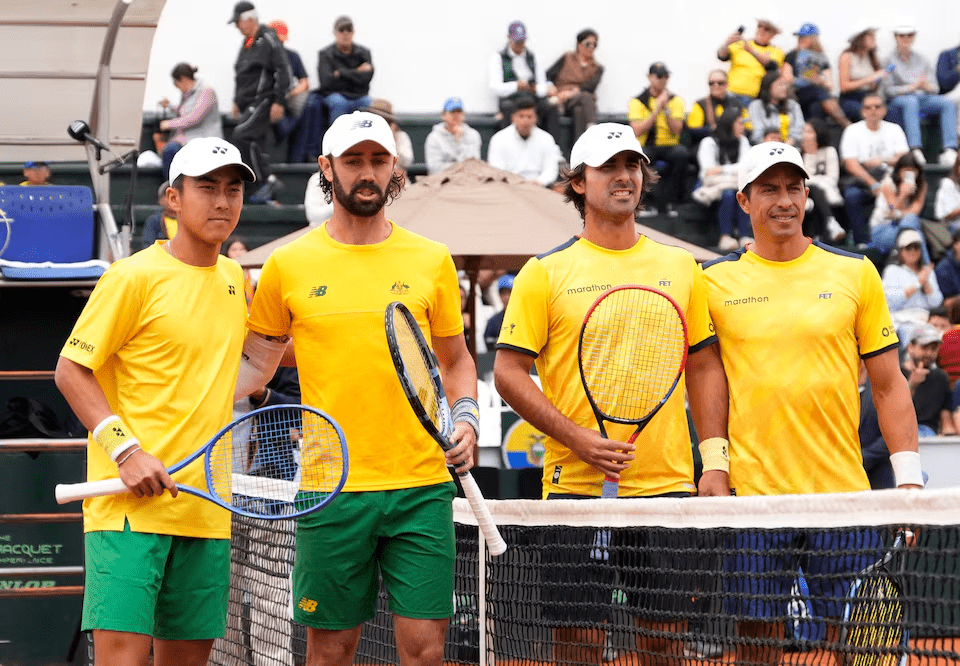
In one of the most startling upsets of the 2026 Davis Cup qualifying weekend, Ecuador stunned 28-time champions Australia with a 3-1 victory in Quito to end the Aussies’ run before it even properly began. The result, played out on the slow clay courts and thin air of Ecuador’s high-altitude capital, not only booked a rare place in the second qualifying round for the South Americans but also marked a sobering low point for Australia’s Davis Cup ambitions this season.
Australia arrived in Ecuador as clear favorites, despite fielding a team without their top player, Alex de Minaur, who opted out of the tie. With a deep Davis Cup pedigree and a squad normally expected to overpower nations well outside tennis’s elite, the Australians were tipped to advance comfortably — but those expectations would quickly unravel.
The tie began on Saturday with Ecuador announcing their intentions emphatically by claiming both singles rubbers. Álvaro Guillén Meza set the tone, outlasting Rinky Hijikata in three sets before 257th-ranked Andrés Andrade pulled off one of the weekend’s biggest shocks by coming back from a set down to beat Australia’s James Duckworth. Both wins were bolstered by an energized home crowd and conditions that played into Ecuador’s strengths.
By the time the decisive doubles match arrived on Sunday, the momentum was firmly with the hosts. Ecuador’s experienced pairing of Gonzalo Escobar and Diego Hidalgo took full advantage, edging out Rinky Hijikata and Jordan Thompson 7-6(5), 6-4 to seal the historic triumph. The result left the visiting team with just one consolation point and sent the former Davis Cup powerhouses packing at the first hurdle.
For Ecuador, the victory represents a landmark moment in their tennis history. It not only earns them a spot in the second round of qualifiers — where they will meet Great Britain in September — but also underscores a growing belief that they can compete at a higher level as a team, particularly on home soil.
The absence of De Minaur undoubtedly loomed large over Australia’s campaign. Without a player ranked in the ATP’s top 100, the Aussies were left to rely on grit and experience rather than firepower — a gamble that backfired spectacularly against an Ecuador side that played with rhythm, resilience, and opportunism.
Under long-time Davis Cup captain Lleyton Hewitt, Australia has enjoyed periods of success in recent years, including back-to-back Davis Cup finals in 2022 and 2023 and a semifinal appearance in 2024. However, the loss in Quito extends a worrying trend in recent Davis Cup campaigns and raises questions about selection, depth, and strategy moving forward.
Conversely, Ecuador’s performance in this tie will be celebrated throughout the nation. Playing at more than 2,800 meters above sea level, their players harnessed home-court advantage and atmospheric conditions to full effect, grinding down their opponents physically and mentally across two days of compelling, passionate tennis.
As Davis Cup action continues around the world, this result stands out not just for the surprise of the upset but for the manner in which it was achieved — a reminder that in team tennis, heart and tactical acuity can occasionally overturn even the longest of odds. Ecuador now looks ahead with confidence, while Australia returns home to regroup after an early and unexpected exit.