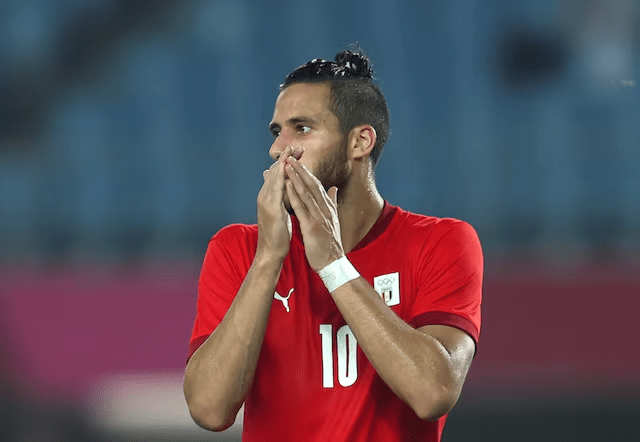
Egyptian football star Ramadan Sobhi has been sentenced to one year in prison in connection with an academic fraud case, according to local media reports and international news agencies. The 28-year-old midfielder, best known for his performances with Pyramids FC and his time in the English Premier League, now faces a significant legal setback in addition to ongoing sporting challenges.
Court Verdict and Charges
The Giza Criminal Court delivered its ruling on Tuesday, December 30, 2025, convicting Sobhi and a second defendant in a case involving the forgery of official academic documents. Prosecutors accused Sobhi of arranging for another person to sit exams on his behalf at a private tourism and hospitality institute in the Giza Governorate of central Egypt.
Sobhi and the individual who took the exams for him were both sentenced to one year in prison with labour. A third defendant in the case was acquitted, while a fourth — who was not present at the trial — was handed a 10-year prison sentence in absentia.
The court determined that the defendants had falsified official documents that purported to show Sobhi’s attendance and participation in the exams — an act classified under Egyptian law as fraud and forgery of official records.
Timeline of Events and Arrest
Sobhi was arrested in July 2025 after returning from a pre-season training camp in Turkey with Pyramids FC. The arrest followed accusations that he had used falsified documents and had arranged for someone else to sit his exams at the private institute in Giza.
These developments marked a dramatic turn in the forward’s career, coming shortly after a strong club season where he helped Pyramids FC secure its first-ever CAF Champions League title — a major achievement in Egyptian club football.
Career Background of Ramadan Sobhi
Ramadan Sobhi’s football journey spans multiple leagues and milestones. Born in Egypt, he began his professional career with Al-Ahly, one of Africa’s most storied clubs. His success at home earned him a move to England in 2016, where he joined Stoke City in the Premier League. He later played for Huddersfield Town before returning to Egypt to join Pyramids FC in 2020.
At Pyramids, Sobhi became an influential player, contributing significantly to the club’s historic triumph in the CAF Champions League, where they triumphed over South Africa’s Mamelodi Sundowns in the final. His performances also saw him earn numerous appearances for the Egypt national team, where he has featured prominently as an attacking midfielder and winger.
Legal and Sporting Consequences
In addition to the prison sentence handed down by the Egyptian court, Sobhi is also facing disciplinary action in the sporting world. In November 2025, the Court of Arbitration for Sport (CAS) confirmed that he violated anti-doping regulations, leading to a four-year suspension from football competition. This suspension has compounded the challenges Sobhi now faces in resuming his professional career.
The combination of a prison sentence and a lengthy sports ban places Sobhi in a difficult position both personally and professionally. For a player in the prime of his career, these penalties represent a major interruption that could have long-lasting implications for his future in football.
Reactions and Support from Teammates
The sentencing hearing drew attention from several of Sobhi’s teammates and colleagues at Pyramids FC. According to some reports, players including Sherif Ekramy, Ali Gabr and Mohamed Reda “Bobo” were present at the hearing, publicly showing support for their teammate and highlighting the personal toll of the legal proceedings.
His lawyer has indicated that an appeal is expected, though it remains unclear how long that process might take and whether it could alter the prison sentence. Legal appeals in Egypt can be lengthy, and the outcome is not guaranteed, leaving Sobhi’s future uncertain.
Understanding the Severity of the Case
Academic fraud cases of this nature are treated seriously under Egyptian law, especially when they involve falsification of official documents. In Sobhi’s case, the prosecution argued that the forgery — specifically arranging for someone to take exams on his behalf — undermined the integrity of the educational process and constituted criminal wrongdoing.
The inclusion of hard labour in the sentence reflects the court’s stance on the severity of misuse of official credentials. This is particularly noteworthy when viewed against the broader legal context in Egypt, where document forgery and fraud are prosecutable offenses with significant consequences.
Analysis: Impact on Egyptian Football
Sobhi’s sentencing has reverberated not just among his club and fans but throughout the wider football community. As a player with international experience in Europe and Africa, his case has drawn comparisons to other high-profile disciplinary and legal issues in the sport. The double setback of criminal conviction and extended suspension is rare among active professionals and has sparked debate about accountability and athlete conduct off the pitch.
There is also broader discussion within Egyptian football circles about the role of professional athletes in academic pursuits and the importance of transparency in matters that intersect with public trust and legal standards.
What’s Next for Ramadan Sobhi
As of now, Sobhi remains in legal custody in Egypt as he and his legal team prepare an appeal. It is not yet clear whether his prison sentence will be served immediately or whether there will be provisions allowing him to continue the appeals process before serving time. His suspension from football means that even if he were able to continue training or remain involved with the sport, he would be barred from competitive play for several years under the CAS ruling.
Supporters and commentators have reacted strongly online, with fans expressing a mix of shock, disappointment and concern for the player’s wellbeing and future prospects. Conversations about the case have also sparked wider debate about athletes’ responsibilities to uphold both legal and ethical standards away from the field.
Conclusion
The sentencing of Ramadan Sobhi to a one-year prison term in connection with academic fraud marks a dramatic and unfortunate turn in the career of a well-known Egyptian footballer. The conviction, combined with a four-year sporting suspension, presents a formidable challenge for Sobhi as he navigates legal appeals, personal setbacks, and the potential long-term impact on his professional life.
This case highlights how off-field matters can profoundly affect even the most accomplished athletes and underscores the consequences of legal and ethical lapses. The coming months will likely be critical in determining the outcome of Sobhi’s appeal and what lies ahead for the midfielder both on and off the pitch.