
With the 2026 FIFA World Cup just 100 days away, attention naturally turns to football’s most iconic symbol. Every four years, billions watch as captains lift the glittering FIFA World Cup trophy. But long before the modern design we know today, there was another prize, the Jules Rimet Trophy, and its story is far more fascinating and dramatic than most fans realize.
The Jules Rimet Trophy survived a world war hidden in a shoebox, was stolen months before England’s 1966 triumph, recovered by a dog named Pickles, awarded permanently to Brazil, and then vanished forever.
This is the forgotten long history of the Jules Rimet Trophy.
The Birth of the Jules Rimet Trophy
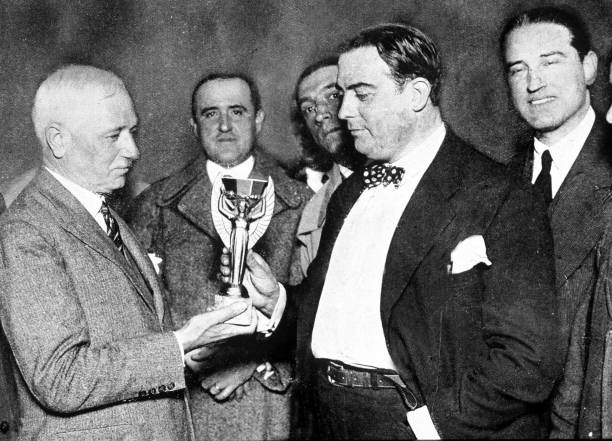
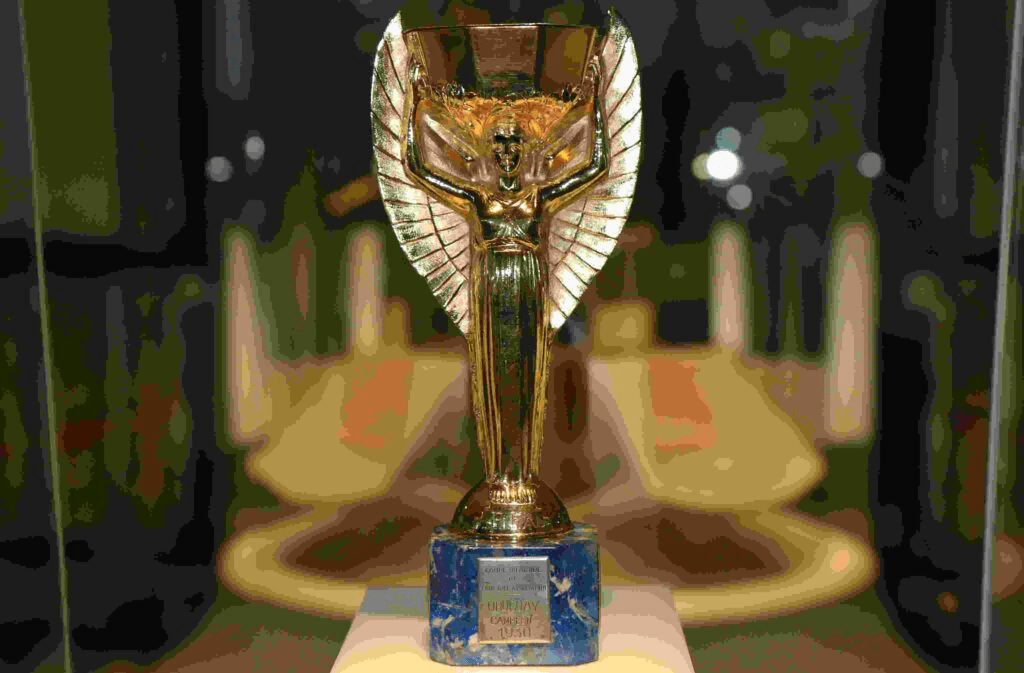
When FIFA president Jules Rimet launched the first World Cup in 1930, he understood the tournament needed a powerful symbol. French sculptor Abel Lafleur designed the original trophy, featuring Nike, the Greek goddess of victory, holding an octagonal cup.
Standing 35cm tall and weighing 3.8kg, the gold-plated sterling silver creation became football’s ultimate prize. Initially called “Victory,” it was renamed the Jules Rimet Trophy in 1946 to honor Rimet’s 25 years of service to FIFA.
First lifted following Uruguay’s triumph in 1930, and in Italy’s back-to-back victories in 1934 and 1938, the Jules Rimet Trophy quickly became the centrepiece of global football.
But its greatest test came off the pitch.
World War II and the Shoebox That Saved the Jules Rimet Trophy
After Italy won the 1938 World Cup, the Jules Rimet Trophy was stored in a bank vault in Rome. However, as World War II intensified and Nazi forces advanced across Europe, fears grew that the trophy could be seized and melted down.
Ottorino Barassi, FIFA vice-president and president of the Italian Football Federation, took a bold risk.
He secretly removed the trophy from the bank vault and smuggled it to his apartment. There, he placed it inside a simple shoebox and hid it under his bed.
For nearly the entire duration of the war, the Jules Rimet Trophy remained hidden in that shoebox. Nazi troops reportedly searched Barassi’s home for valuables, but the box went unnoticed.
Without that decision, the World Cup trophy history might have ended in 1940.
The 1966 Theft and Pickles the Hero
The survival of the Jules Rimet Trophy during wartime was only the beginning of its chaos.
In 1966, just months before England hosted the World Cup, the trophy was stolen from an exhibition at Westminster’s Central Hall in London. Thieves ignored other valuable items and took only the trophy.
A ransom note followed. Police arrested a suspect, but the trophy remained missing.
Then, in one of football’s most remarkable stories, a black-and-white collie named Pickles discovered a package wrapped in newspaper under a car in South London. Inside was the missing trophy.
Thanks to Pickles, Bobby Moore lifted the Jules Rimet Trophy at Wembley after England’s famous victory over West Germany.
Brazil’s Permanent Ownership and Final Disappearance
Under FIFA rules at the time, any nation that won the tournament three times would keep the trophy permanently. Brazil achieved that milestone in 1970.
The Jules Rimet Trophy was transferred to the Brazilian Football Confederation headquarters in Rio de Janeiro.
But in 1983, the trophy was stolen again.
This time, it was never recovered. The prevailing theory suggests the Jules Rimet Trophy was melted down for its gold content. Despite investigations, arrests and global attention, the original World Cup trophy disappeared forever.
From Jules Rimet Trophy to the Modern FIFA World Cup Trophy
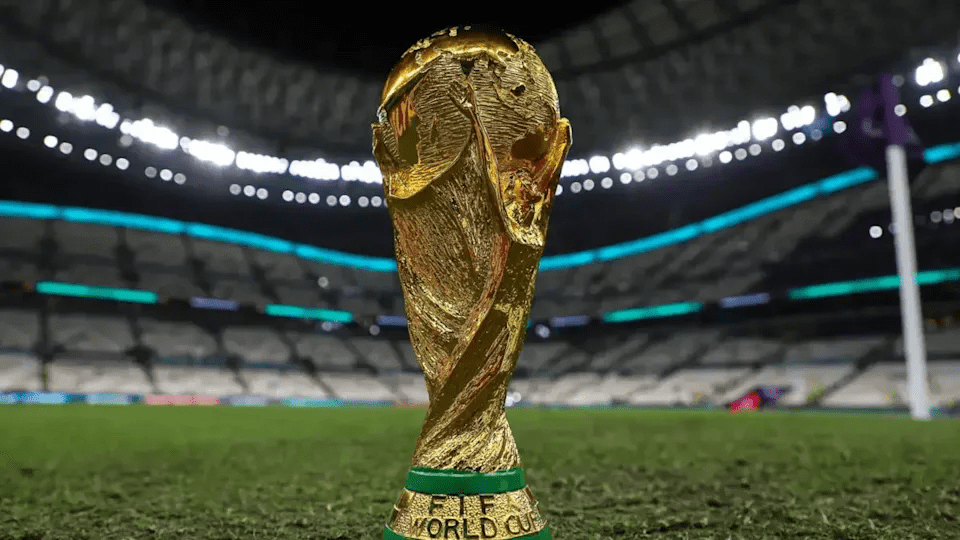
After Brazil claimed the original trophy, FIFA commissioned a new design in 1974. The current FIFA World Cup trophy, created by Italian sculptor Silvio Gazzaniga, features two human figures holding up the Earth.
Unlike the Jules Rimet Trophy, the modern trophy cannot be kept permanently. Winners receive a gold-plated replica, while the original remains under FIFA’s control.
FIFA had learnt its lesson from the turbulent history of the Jules Rimet Trophy as the body realized football’s greatest prize needed stronger protection.
The Significance of the Jules Rimet Trophy
The Jules Rimet Trophy represents more than footballing glory. It symbolizes resilience, wartime survival, criminal intrigue and global fascination.
From hiding in a shoebox during World War II to being found by a dog in London and ultimately vanishing in Brazil, no other sports trophy carries such a dramatic legacy.
As the 2026 FIFA World Cup approaches, fans will once again watch a captain lift the modern trophy.
But behind that golden moment lies the forgotten story of the Jules Rimet Trophy: the World Cup prize that survived war, theft and mystery before becoming football’s greatest lost treasure.
