
Understanding how football formations work is essential for anyone who wants to truly understand the tactical side of the game. While casual fans may focus on goals and highlights, managers and analysts know that formations shape every phase of play. From pressing structures to defensive stability and attacking fluidity, formations dictate how teams control space, build attacks, and respond to opponents.
This football formations guide explains the most important systems used in modern football, how they function tactically, and why coaches choose specific setups depending on players, opponents, and match situations.
To fully grasp formations, it is also helpful to understand player roles, which you can explore in our Complete Guide to Football Positions post, as well as how tactical positioning interacts with rules like the offside rule explained in our previous article.
Football Formations Guide: What Is a Football Formation?
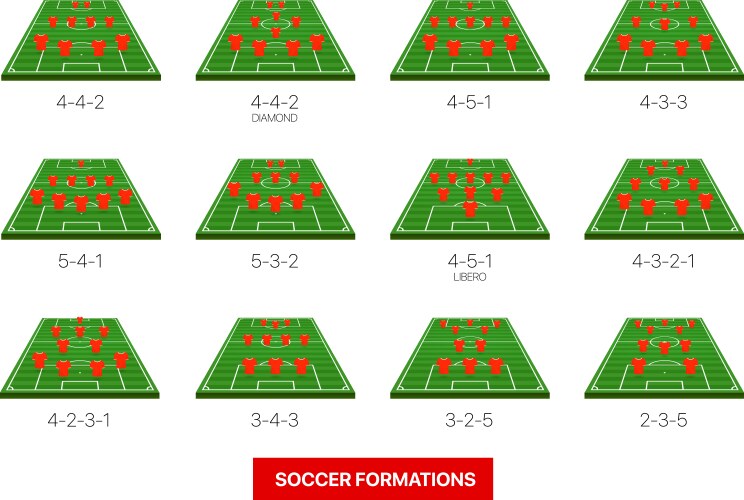
A football formation refers to how players are arranged on the pitch, typically described from defense to attack. For example, a 4-3-3 formation includes four defenders, three midfielders, three forwards. This formation is best for free following possession and attacking football. The wing-backs (RB/LB) provide width on the flanks often making overlapping runs while falling back to form the four-man defense.
The three midfield often has a DM (defensive midfielder) that sits just in front of the CBs, while the other midfielders (CMFs) join the attack.
Formations provide the structural framework for a team’s tactical identity. However, modern football is fluid, meaning formations often shift during different phases of play.
For example, a 4-3-3 in possession may become a 3-2-5 shape in attack, and 4-4-2 may turn into a 4-5-1 when defending.
This adaptability is why formations are best understood as starting points rather than rigid systems.
4-3-3 Formation: The Modern Attacking Blueprint

The 4-3-3 formation is arguably the most influential system in modern football. Popularized by Johan Cruyff’s Barcelona philosophy and later refined by Pep Guardiola and Jürgen Klopp, it balances attacking width with midfield control.
Tactical Structure
- Full-backs provide width in buildup
- A holding midfielder controls transitions
- Wingers stretch defenses horizontally
- A central striker occupies center-backs
Strengths
- Dominates possession through midfield triangles
- Allows high pressing
- Encourages dynamic wing play
Weaknesses
- Can leave space behind attacking full-backs
- Requires technically gifted midfielders
The 4-3-3 is particularly effective against teams that defend deep, as it enables sustained attacking pressure.
4-4-2 Formation: The Classic Balanced System
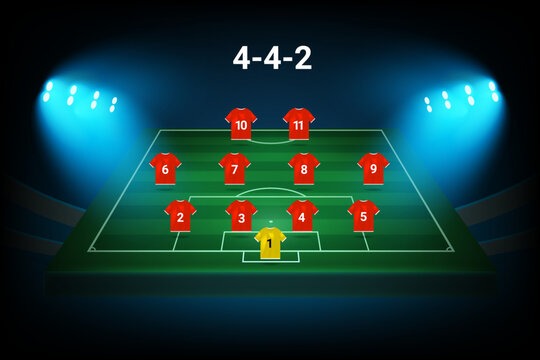
The 4-4-2 formation remains one of football’s most traditional setups. While less fashionable in elite possession-based teams, it is still widely used due to its defensive solidity and simplicity.
Tactical Structure
- Two banks of four create defensive compactness
- Two strikers press opposing center-backs
- Wide midfielders support both defense and attack
Strengths
- Strong defensive organization
- Effective counter-attacking shape
- Simple roles for players
Weaknesses
- Midfield can be outnumbered
- Limited central creativity
Variants like the 4-4-2 diamond address midfield issues by adding an attacking midfielder behind two forwards. This formation is often used by teams that prefer to soak in the pressure, wait behind the and play on the counter, most often long-ball counters. Unlike in the 4-3-3 formation, this formation makes less use of wingers, rather it makes use of more midfielders for quick transitions.
3-4-3 Formation: Width and Pressing Intensity

The 3-4-3 formation has become popular in recent years, particularly under coaches like Antonio Conte and Thomas Tuchel. Antonio Conte is famous for winning the Premier League with Chelsea, going on that historic 13-match winning streak en route to winning the league. He also won the FA Cup, and the Serie A using the formation.
Tactical Structure
- Three center-backs form a solid defensive base
- Wing-backs provide attacking width
- Two central midfielders dictate tempo
- A front three creates attacking overloads
Strengths
- Excellent width through wing-backs
- Strong pressing structure
- Flexibility between attack and defense
Weaknesses
- Wing-backs must cover enormous distances
- Vulnerable if wide defenders are isolated
This system often transitions into a 5-4-1 shape defensively, making it extremely difficult to break down.
4-2-3-1 Formation: The Modern Tactical Standard
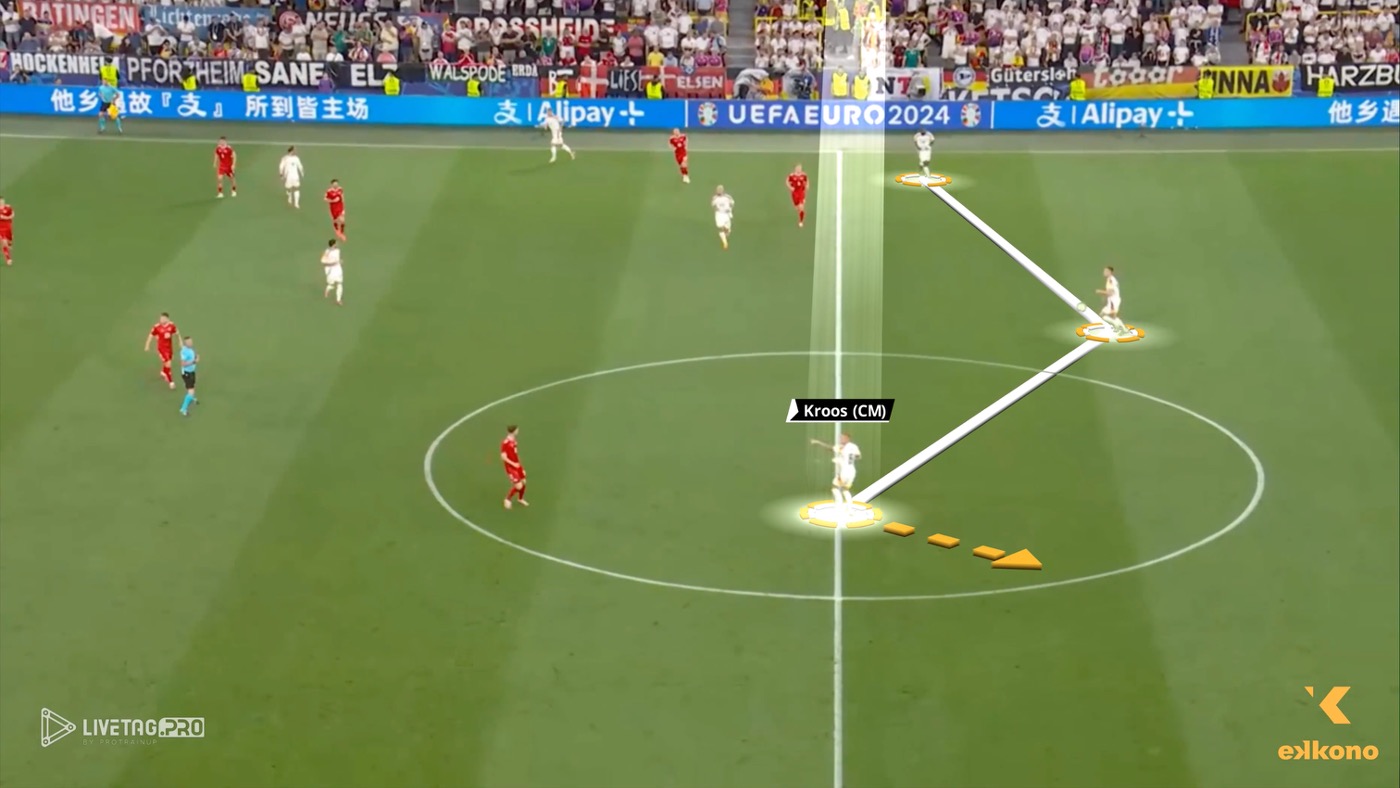
The 4-2-3-1 formation is arguably the most commonly used system in contemporary football.
Tactical Structure
- Two defensive midfielders provide balance
- Three attacking midfielders support a lone striker
- Full-backs contribute to overlapping attacks
Strengths
- Excellent defensive stability
- Creative attacking options
- Flexible pressing strategies
Weaknesses
- Can become too defensive if midfielders sit deep
- Lone striker may become isolated
This football formation is widely used because it adapts easily between possession and counter-attacking styles.
4-3-2-1 Formation: The “Christmas Tree” System
The 4-3-2-1 formation, often called the “Christmas Tree,” emphasizes midfield dominance and central creativity.
Tactical Structure
- Narrow attacking midfielders operate between lines
- Full-backs provide width
- A lone striker leads the attack
Strengths
- Strong central control
- Effective against possession-heavy opponents
- Creates numerical superiority in midfield
Weaknesses
- Limited natural width
- Requires tactically intelligent players
This formation was famously used by Carlo Ancelotti during his early managerial success.
Other Important Football Formations
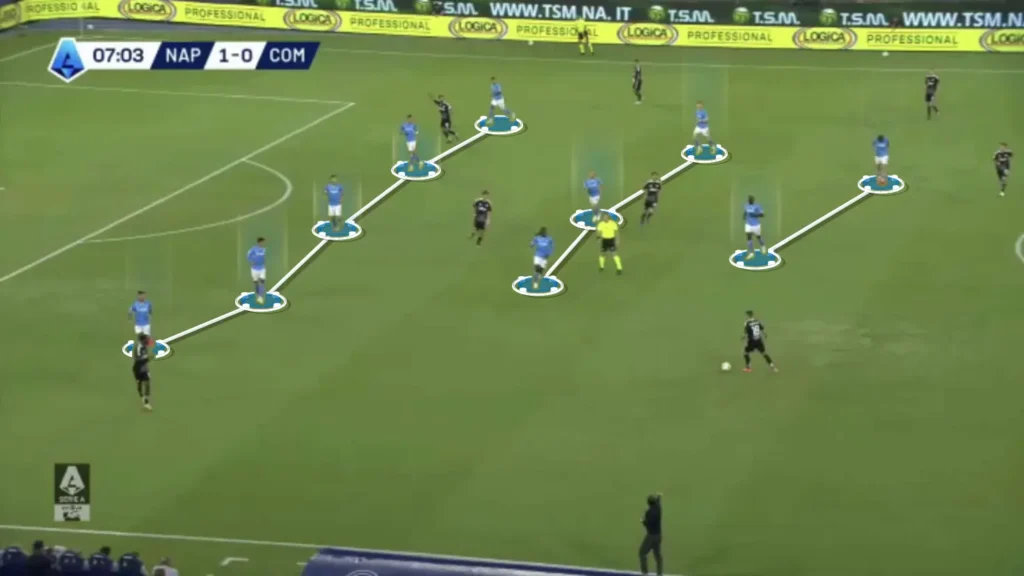
5-3-2 Formation
- Prioritizes defensive solidity
- Wing-backs provide width
- Useful against stronger attacking opponents
4-1-4-1 Formation
- Offers midfield control and defensive stability
- Suitable for teams focusing on positional discipline
3-5-2 Formation
- Creates central overloads
- Allows dynamic attacking combinations
Each formation reflects a coach’s philosophy and the specific strengths of their squad.
How Football Formations Interact with Modern Tactical Concepts
In modern football, formations are deeply connected to:
- Pressing structures
- Defensive transitions
- Positional play
- Offside traps
For example, understanding the offside rule is crucial in high defensive lines used in systems like the 4-3-3. Similarly, knowing specific player roles from our football positions guide helps clarify how formations function in real match situations.
Why Understanding Formations Matters
Football formations are the foundation of tactical strategy in modern soccer. While fans may focus on individual brilliance, it is often the collective structure that determines success.
From the attacking fluidity of the 4-3-3 to the defensive discipline of the 4-4-2 and the dynamic width of the 3-4-3, each system offers unique advantages and challenges. Coaches continuously adapt formations based on opponents, player strengths, and match contexts.
This football formations guide shows that formations are not static diagrams but evolving frameworks that shape how teams play. Understanding them enhances match analysis, deepens appreciation for tactical battles, and reveals the strategic complexity behind the world’s most popular sport.
