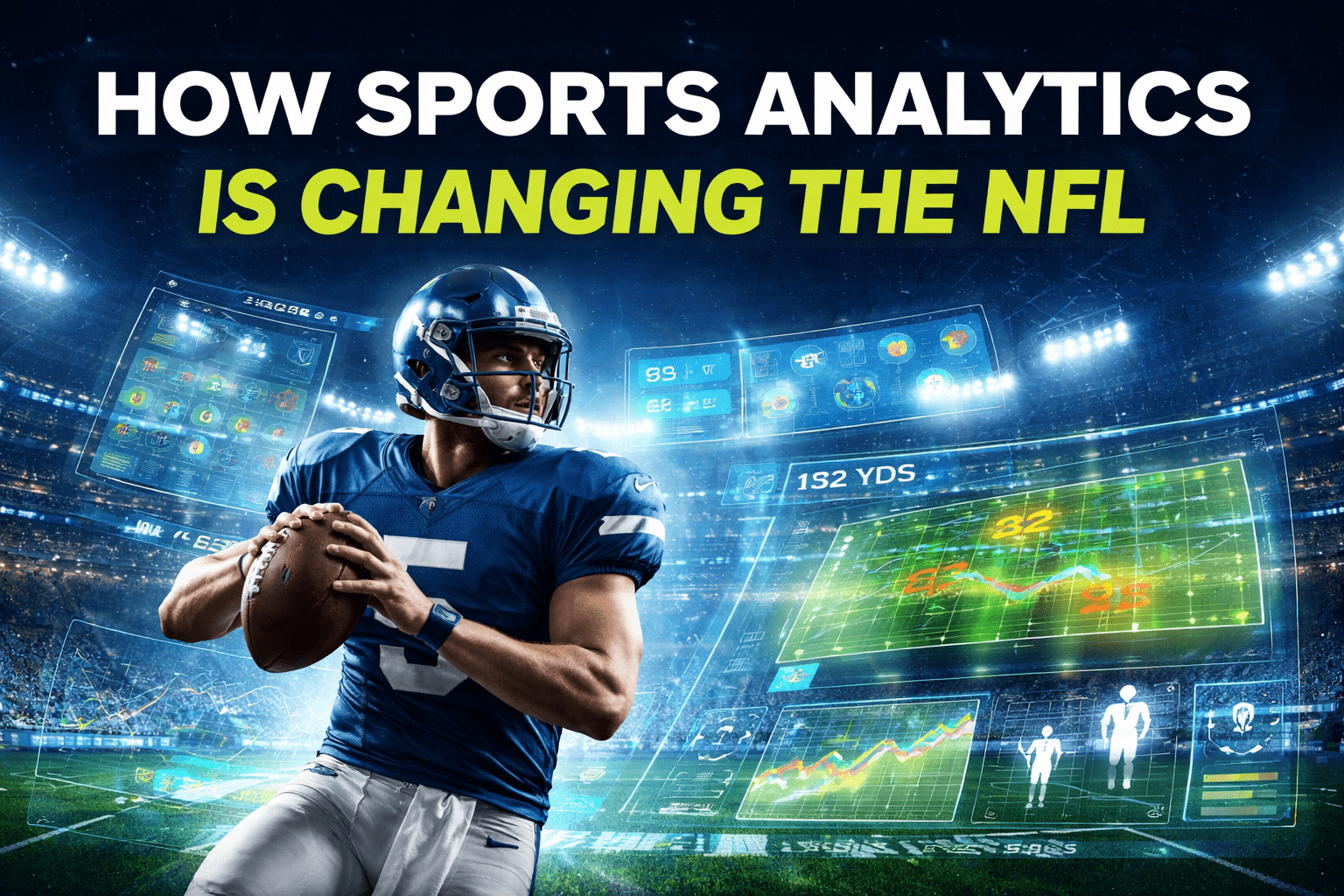
The modern National Football League is no longer driven by instinct alone. What used to be a league built on gut decisions, experience, and tradition is now deeply influenced by data. At the center of this transformation is sports analytics.
From player recruitment to in-game decision-making, sports analytics is reshaping how teams operate, compete, and win. The shift is not subtle. It is structural. And it is changing the identity of American football at every level.
What Is Sports Analytics in the NFL?
At its core, sports analytics refers to the use of data, statistics, and predictive modeling to inform decisions in sports. In the NFL, this includes everything from tracking player movement on the field to analyzing opponent tendencies and optimizing play calls.
Teams now rely on advanced metrics such as expected points added (EPA), win probability models, and player tracking data generated through RFID chips embedded in equipment. These tools provide insights that go far beyond traditional stats like yards gained or touchdowns scored.
Data Is Driving Smarter Decision-Making
One of the most visible ways sports analytics is changing the NFL is through in-game decisions.
In the past, coaches often relied on conservative strategies, especially on fourth down. Punting was the default. Today, analytics models frequently show that going for it on fourth down increases a team’s chances of winning, depending on field position and game context.
This shift has been embraced by several forward-thinking teams, including the Philadelphia Eagles and the Baltimore Ravens, who consistently rank among the most aggressive teams in fourth-down situations.
The result is a more dynamic and unpredictable game, where calculated risks are backed by data rather than avoided out of fear.
Player Evaluation Has Become More Precise
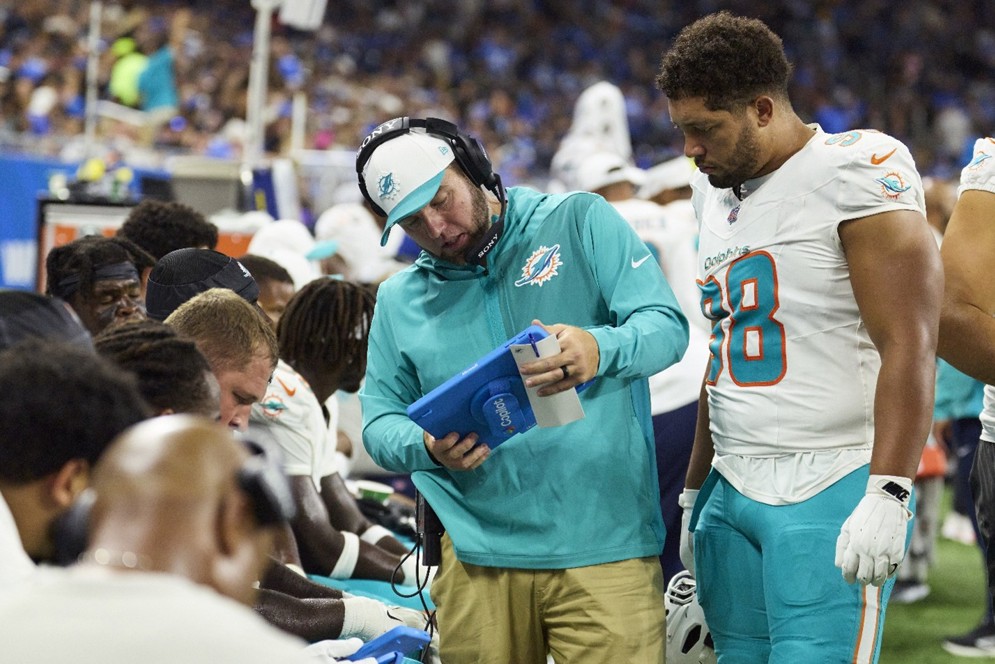
Sports analytics has also revolutionized how NFL teams evaluate talent.
Traditionally, scouting focused heavily on physical attributes and subjective assessments. While these still matter, teams now combine them with data-driven analysis to identify undervalued players.
For example, metrics can reveal how effective a wide receiver is at creating separation, or how quickly a quarterback releases the ball under pressure. These insights help teams make smarter draft picks and free agency decisions.
This approach has allowed franchises like the New England Patriots to consistently find value in players who might have been overlooked by more traditional scouting methods.
Player Tracking Is Changing How the Game Is Understood
The introduction of player tracking technology has taken sports analytics in the NFL to another level.
Using sensors, teams can now track:
- Player speed
- Acceleration
- Route efficiency
- Defensive coverage positioning
This data provides a deeper understanding of what actually happens on the field. Coaches can analyze not just outcomes, but the process behind those outcomes.
For instance, a quarterback’s decision can be evaluated based on how quickly receivers became open, rather than simply whether the pass was completed. This level of detail allows for more accurate coaching and development.
Injury Prevention and Player Health
Another major impact of sports analytics in the NFL is in injury prevention and player management.
By analyzing workload, movement patterns, and physical stress indicators, teams can predict when a player is at risk of injury. This allows coaching staff to adjust training intensity, manage playing time, and reduce long-term health risks.
This is particularly important in a physically demanding league like the NFL, where injuries can significantly impact both individual careers and team performance.
Teams are increasingly investing in data-driven health programs to ensure players remain available and effective throughout the season.
Game Preparation Has Become More Strategic

Sports analytics has transformed how teams prepare for opponents.
Instead of relying solely on film study, teams now use data to identify patterns in opposing offenses and defenses. For example, analytics can reveal:
- How often a team runs on specific downs
- Which formations are most effective
- Where defenses are most vulnerable
This information allows coaches to design game plans that exploit weaknesses with greater precision.
The Kansas City Chiefs, led by innovative coaching strategies, have been particularly effective in combining analytics with creative play-calling to stay ahead of opponents.
The Rise of Analytics Departments
To fully leverage sports analytics, NFL teams have built dedicated analytics departments.
These departments consist of data scientists, statisticians, and analysts who work alongside coaching staff and front offices. Their role is to translate complex data into actionable insights.
This collaboration ensures that analytics is not just theoretical but integrated into real football decisions.
However, the relationship between analytics and coaching is not always seamless. Some coaches embrace data-driven insights, while others remain skeptical. The most successful organizations are those that strike a balance between data and experience.
Changing the Way Fans Understand the Game
Sports analytics is not only transforming teams. It is also changing how fans engage with the NFL.
Broadcasts now include advanced statistics, win probability graphs, and deeper analysis of player performance. Fans are becoming more informed, and discussions around the game are increasingly data-driven.
This shift has elevated the intellectual side of football, making it more than just a physical contest. It is now also a strategic and analytical battle.
The Risks and Limitations of Sports Analytics

Despite its benefits, sports analytics is not without limitations.
Data cannot fully capture human factors such as:
- Player mentality
- Team chemistry
- Pressure situations
Over-reliance on analytics can lead to decisions that ignore context or intuition. Football remains an unpredictable sport, and not every situation can be reduced to numbers.
The challenge for NFL teams is to use analytics as a tool, not a replacement for experience and judgment.
The Future of Sports Analytics in the NFL
The role of sports analytics in the NFL will only continue to grow.
As technology advances, teams will have access to even more detailed data, including real-time analytics during games. Artificial intelligence and machine learning are expected to play a larger role in predicting outcomes and optimizing strategies.
The competitive advantage will increasingly belong to teams that can effectively integrate data into their decision-making processes.
Conclusion
Sports analytics has fundamentally changed the NFL. It has influenced how teams draft players, prepare for games, manage injuries, and make critical decisions on the field.
The league is no longer just about strength and skill. It is about information and interpretation.
As the NFL continues to evolve, one thing is clear: teams that ignore sports analytics risk falling behind, while those that embrace it are shaping the future of the game.
