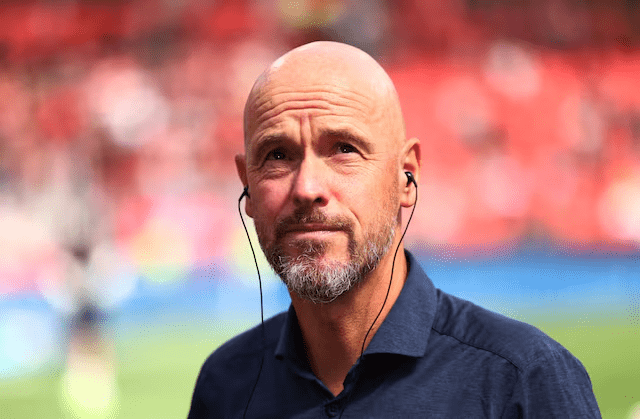
Erik ten Hag’s debut as Bayer Leverkusen’s head coach brought with it stark honesty and tempered expectations. Speaking after a shock 2-1 home defeat to Hoffenheim, he reminded everyone that even a coach with his pedigree cannot wave a magic wand and instantly rebuild a fractured squad. “I am no Harry Potter,” Ten Hag said—emphasising the need for hard work, time and patience.
The Dutchman has taken over following Xabi Alonso’s departure, during which the club secured an impressive domestic double in 2024. However, the new era comes alongside significant upheaval. Multiple key players—Lukas Hradecky, Florian Wirtz, Jeremie Frimpong, Amine Adli, Jonathan Tah and Granit Xhaka—have already exited the BayArena.
Their absence has left a sizable gap in both quality and cohesion. Reflecting on this, Ten Hag acknowledged, “Pressure is always there and we must win, that’s clear,” before adding his reminder of reality: “I am no Harry Potter. We will work to take a step forward.” The pointed analogy underscores that his approach is grounded in gradual development, not instant transformation.
Ten Hag’s remarks echo earlier remarks ahead of his first competitive match, where he warned against expecting miracles. “Nobody is Harry Potter,” he said in a similar vein—highlighting that constructing a successful team takes time, and cannot simply be conjured overnight.
Indeed, the squad’s troubles showed early in the season opener. Leverkusen struck first through Jarell Qansah, only to capitulate after Hoffenheim equalised and eventually took the lead. Ten Hag attributed the loss to a lack of spark and intensity—faults he’s determined to correct quickly.
Adding to the complexity is the unresolved transfer business. With the window closing September 1, Ten Hag hinted that more movement is likely: “In the final days or hours, anything can happen… On Tuesday we will know what the squad will look like.”
There’s a clear sense that the rebuild is ongoing but methodical. Ten Hag emphasises process—boosting performance and embedding intensity—rather than instant success. That perspective offers a more sustainable vision, even as fans await the tangible signs of progress on the pitch.
Looking ahead, Leverkusen face Werder Bremen with renewed intensity and a desire to show a different face. Ten Hag’s message is simple yet powerful: ambition shouldn’t overshadow reality. Teams are rebuilt, playing styles evolve, and culture is redefined, but none of that happens overnight—even under the name of magic.