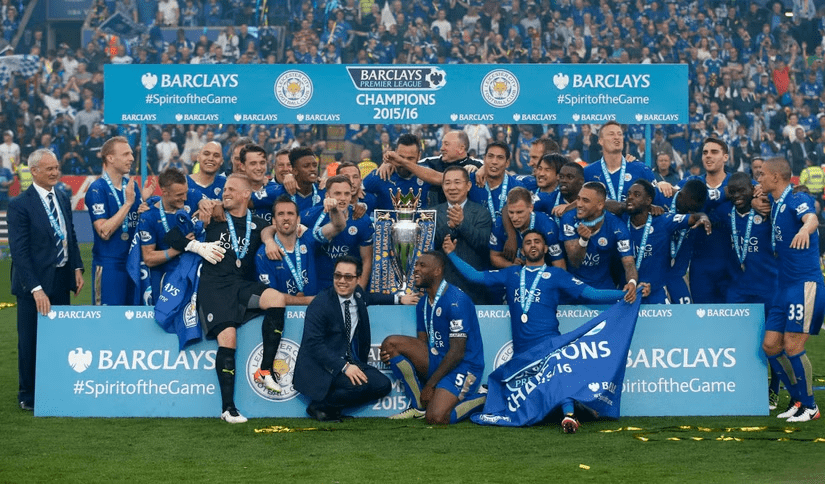
Ten years ago, Leicester City completed the most improbable triumph in Premier League history. On 2 May 2016, Claudio Ranieri’s side were crowned champions of England. A decade later, Leicester City relegation is no longer a distant scar from 2023. It is an ongoing crisis, now intensified by a Championship points deduction and the genuine threat of League One.
Instead of celebrating a fairytale, the Foxes are fighting for survival.
Leicester City Relegation: From Miracle to Miscalculation
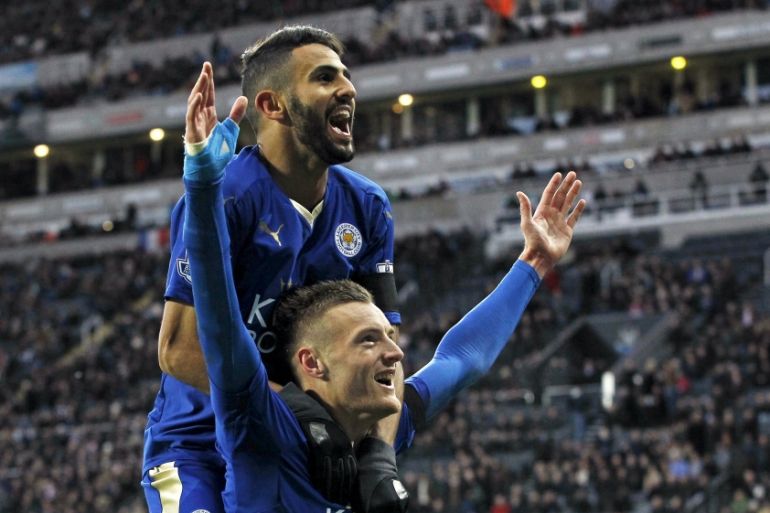
The 2016 title was not a one-season anomaly followed by immediate decline. Leicester reached the Champions League quarter-finals in 2017. They finished fifth in back-to-back seasons. In 2021, they won the FA Cup for the first time in their history.
For a moment, it felt sustainable. But success altered expectations. Back-to-back fifth-place finishes convinced decision-makers that Leicester belonged among England’s elite. Spending followed that belief.
Football finance expert Kieran Maguire explained the financial shift clearly:
“Everybody assumed that they would be a top-eight club. They effectively budgeted for that and didn’t take into consideration the potential downside.”
The downside arrived quickly.
The Wage Bill That Ignored Relegation Risk
Across the 2021–22 and 2022–23 seasons, Leicester spent just over £100 million on six players. The deeper issue was not transfer fees alone. It was contracts.
The club’s wage bill ballooned to £206 million. In the 2022–23 relegation season, Leicester were spending 116% of their income on wages. In 2023–24, it was 102%. Even in the Championship, their £107 million wage bill was described by Maguire as “unprecedented for a second-tier football club.”
Leeds spent £84 million. Southampton spent £80 million. The Championship median was £29 million.
More critically, Leicester reportedly failed to insert standard relegation clauses in several contracts. Maguire said the club ignored “the existential risk of relegation.”
“They had one bad season and they had no comeback in terms of relegation clauses,” he noted. “It does seem that these contracts were awarded in such a way that they ignored the existential risk of relegation.”
Less than 12 months after a UEFA Europa Conference League semi-final finish, Leicester relegated. Leicester City relegation in 2023 was not bad luck. It was their structural exposure finally catching up.
“We Tried to Play with the Big Boys”

The 2023 drop ended their Premier League stay. They bounced back immediately, winning the Championship in 2024. But the promotion masked unresolved financial damage, and like an incomplete story, another Leicester City relegation soon filled the headlines.
Lynn Wyeth, chair of the Foxes’ Trust, summarized the ambition that became overreach:
“We tried to play with the big boys and we couldn’t. It didn’t fit our model. It didn’t fit a club of our size. It didn’t fit our budget.”
She added:
“There weren’t enough safeguards in there for thinking what could go wrong. We were all saying, what if we get relegated? The fans could see them walking into it.”
Leicester returned to the Premier League in 2024–25. They were relegated again in April 2025 with games to spare, finishing 13 points adrift. Leicester City relegation had become a cycle.
Repeated drops crush planning, drain morale, and distort recruitment. Each relegation became more expensive and less coherent.
The Points Deduction That Deepened the Crisis
The latest blow came off the pitch. Leicester were docked six points for breaching Profit and Sustainability Rules, reportedly overspending by around £20.8 million across the relevant assessment window.
The deduction dragged them toward the Championship relegation zone, clinging on by goal difference. The club described the punishment as “disproportionate” and argued mitigating factors were overlooked. The commission, however, rejected claims of “exceptional co-operation.”
Supporters at the King Power Stadium seem tired of the structural set-up of their club and just want the legal fights to end.
“A lot of fans are saying do not appeal it,” Wyeth said. “For God’s sake, stop fighting and admit you’ve messed up. Take the hit and knuckle down and get out of relegation trouble.”
Leicester City relegation into League One would represent the lowest point of the post-2016 era.
Recruitment Drift and Identity Loss

Selling stars was never the sole issue. Leicester have always operated as a trading club. The problem was replacement quality and strategic drift.
Elite departures were not matched by consistently elite recruitment. It can be said that stars like Mahrez, Kante, Maguire, and the rest of the EPL winning squad were never rightly replaced. The squad increasingly looked like a patchwork of short-term fixes. Managerial instability compounded the confusion. Even the 2021 FA Cup win could not disguise the absence of a stable, long-term sporting plan.
Maguire warned of another trap: “If you keep selling your best players then that catches up with you.”
It has.
A Club at a Crossroads
Leicester City currently lack a permanent manager after Marti Cifuentes’ dismissal, no permanent chief executive, and no technical director. Supporter protests against King Power International Group are growing.
“Every game you go to, you think it can’t get any worse and then it does,” Wyeth said. “And that was before we got the points deduction.”
Jamie Vardy remains the symbol of 2016 glory, with 200 goals in 500 appearances. But nostalgia does not shield clubs from structural mistakes.
Leicester’s rise was built on smart recruitment and disciplined risk. Their fall has been shaped by financial overreach, contract complacency, and delayed correction.
Ten years after the greatest underdog story in Premier League history, Leicester City relegation defines the conversation. The next few months will determine whether the collapse stabilises in the Championship or spirals into League One.
The miracle of 2016 proved anything is possible.
The reckoning of 2026 proves nothing is permanent.
