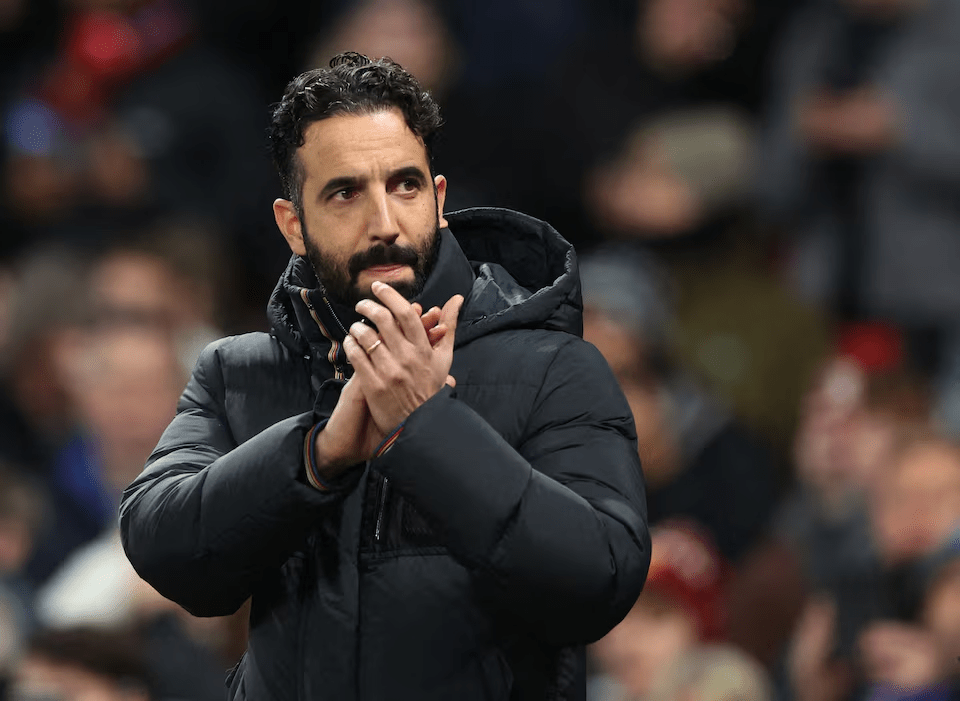
Manchester United have dismissed head coach Ruben Amorim, bringing an abrupt end to his controversial and under-performing spell in charge at Old Trafford. The announcement was made on Monday, January 5, 2026, following a 1-1 draw with Leeds United in the Premier League — a result that left United sixth in the table and well off the pace in the title race.
A Struggle from the Start
Amorim, 40, was appointed in November 2024, replacing Erik ten Hag, amid high hopes that he would reinvigorate Manchester United after a series of disappointing campaigns. However, his tenure proved fraught with challenges and inconsistent results, culminating in one of the club’s most difficult periods in recent memory.
Last season under his leadership, United finished 15th in the Premier League — their lowest league position since 1974 — and suffered defeat to Tottenham Hotspur in the Europa League final. Despite reaching that final, the overall performance was seen as underwhelming, especially given the quality of the squad and the investment made.
Internal Tensions and Public Outbursts
Off the pitch, Amorim’s relationship with the club hierarchy became increasingly strained. After the Leeds draw, he delivered a defiant press conference, insisting he came to Old Trafford “to be the manager, not just the coach” and emphasising his desire for full authority over footballing decisions — a message that was widely interpreted as a criticism of Manchester United’s leadership.
This public clash with the club’s sporting structure, including tensions with director of football Jason Wilcox, highlighted deeper disagreements over transfer strategy, squad control, and tactical direction — issues that appeared to have eroded confidence in Amorim’s vision.
Results That Didn’t Match Expectations
Across his 63 games in charge, Amorim oversaw 24 wins, 18 draws, and 21 defeats, a record that left United with a win percentage of around 38% — among the lowest in the club’s Premier League history. This underperformance, compounded by tactical inconsistency and defensive vulnerabilities, contributed significantly to the club’s decision to make a change.
Despite significant summer signings — including Benjamin Sesko, Bryan Mbeumo, and Matheus Cunha — United continued to struggle for consistency, particularly in midfield and at the back. The team’s inability to challenge for top-four positions or mount a credible title bid was a key factor in the board’s decision to pull the plug on Amorim’s tenure.
Interim Leadership and the Search for a New Manager
Following the sacking, former Manchester United midfielder Darren Fletcher has been named interim manager. Fletcher, who was recently managing the club’s U-18 side, will take charge of the senior team for their upcoming fixture against Burnley.
Manchester United also reiterated their intention to appoint a high-profile permanent manager, seeking to restore stability and competitive ambition after a period marked by frequent managerial changes. Since Sir Alex Ferguson’s retirement in 2013, the club has struggled to find a long-term successor capable of reviving its fortunes, with Amorim becoming yet another name on that list.
Fan and Media Reaction
Reaction from fans and pundits has been mixed. Some supporters believe that the decision to sack Amorim was necessary given the team’s poor results and tactical shortcomings, while others feel that the club’s leadership failed to provide him with sufficient backing or clarity of direction. Online fan discussions reveal frustration over continued managerial instability and the perceived inability of Manchester United’s ownership and sporting hierarchy to build a cohesive long-term plan.
Former players and commentators have also weighed in, with some critics arguing that Amorim lacked the experience for a job of this magnitude, while others point to systemic issues within the club that transcend any single head coach’s tenure.
What’s Next
With United currently sitting mid-table and aspirations of returning to Champions League qualification, the club’s next managerial appointment will be crucial. The board’s decision to act now — mid-season — underscores both the urgency and the high stakes involved in turning around one of English football’s most storied clubs.
For now, Fletcher’s interim stewardship offers a temporary bridge, but the search for a new leader capable of restoring Manchester United to its former glory is undoubtedly the club’s top priority in 2026.