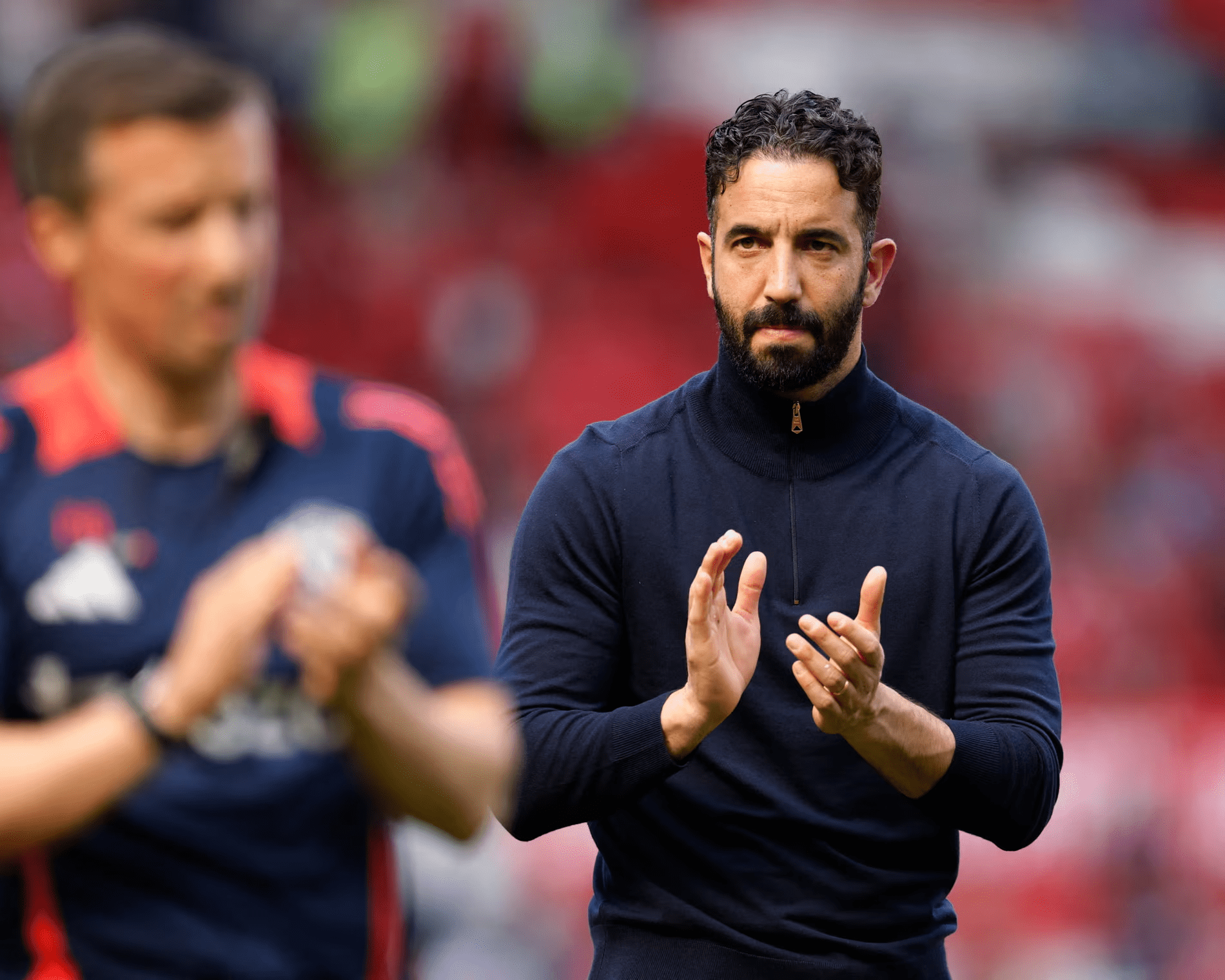
Despite a challenging domestic season, Manchester United have confirmed their commitment to head coach Ruben Amorim, stating he will remain at the helm regardless of the outcome of the upcoming UEFA Europa League final against Tottenham Hotspur on May 21, 2025.
A Season of Struggles
United’s Premier League campaign has been underwhelming, with the team currently positioned 16th and having suffered 17 losses—their worst record since the 1973–74 season. Early exits from both the FA Cup and League Cup have compounded the club’s woes, leaving the Europa League as their sole opportunity for silverware this season.
Amorim’s Vision for the Future
Appointed in November 2024, Amorim has consistently emphasized the importance of long-term development over immediate results. He has pointed to the need for cultural and mental shifts within the club, suggesting that winning the Europa League, while beneficial, is not a panacea for United’s deeper issues.
“There are more important things than lifting trophies,” Amorim stated, highlighting his focus on building a sustainable and successful future for the club.
Club’s Confidence in Amorim
The club’s leadership shares Amorim’s long-term perspective. Despite the disappointing league performance, they have expressed confidence in his vision and managerial approach, affirming that his position is secure regardless of the Europa League final result.
Strategic Planning and Potential Transfers
Looking ahead, Amorim is already planning for the next season. He has identified potential transfer targets, including Wolves’ Matheus Cunha and Ipswich’s Liam Delap, to strengthen the squad. However, financial constraints mean that player sales may be necessary to fund these acquisitions, with players like Marcus Rashford, Jadon Sancho, Antony, Casemiro, and Rasmus Højlund potentially on the departure list.
The Europa League Final: A Crucial Opportunity
The upcoming Europa League final against Tottenham Hotspur offers United a chance to salvage their season. A victory would not only secure a trophy but also guarantee qualification for the next season’s UEFA Champions League, providing a significant financial boost and enhancing the club’s appeal to prospective signings.
Despite the high stakes, Amorim maintains that the club’s long-term project remains the priority. “Winning the Europa League would not ‘save’ our season,” he remarked, reiterating his commitment to building a resilient and competitive team for the future.
Conclusion
Manchester United’s decision to retain Ruben Amorim, irrespective of the Europa League final outcome, underscores a strategic shift towards long-term planning and stability. While immediate results are important, the club’s leadership recognizes the value of a consistent vision and is prepared to support Amorim as he works to rebuild and rejuvenate the team.