Reigning Formula One world champion Lando Norris has expressed strong confidence that McLaren can still produce the fastest car on the grid in 2026, despite a difficult and inconsistent start to the season. His comments, made ahead of the Japanese Grand Prix, reflect both belief in the team’s long-term capabilities and a reminder of how quickly fortunes can change in Formula One.
The 2026 season has introduced sweeping regulation changes, affecting everything from aerodynamics to power units. These changes have reshuffled the competitive order, and McLaren dominant in the previous year has found itself playing catch-up early in the campaign. Yet Norris remains optimistic, pointing to the team’s recent history of overcoming adversity and delivering championship-winning performances.
At the center of this belief is the team’s new car, the McLaren MCL40, which was developed under new technical regulations. While the car has shown flashes of potential, it has also suffered from reliability issues and inconsistent performance in the opening races.
A Tough Start to Title Defence
For a team entering the season as defending champions, expectations were naturally high. McLaren had dominated the previous campaign, winning both the drivers’ and constructors’ championships. Norris himself emerged as the top driver in Formula One, solidifying his status among the elite.
However, the opening races of 2026 have been far from smooth. Norris managed a fifth-place finish in the season-opening race in Australia but faced setbacks in China, where both McLaren cars failed to start due to technical issues.
These early struggles have left McLaren trailing rivals like Mercedes and Ferrari in the standings.
Yet, despite the points deficit, Norris has urged patience. He believes the team understands its problems and is already working toward solutions. In Formula One, development is continuous, and the season is long meaning early setbacks do not necessarily define the final outcome.
Confidence Built on Past Comebacks
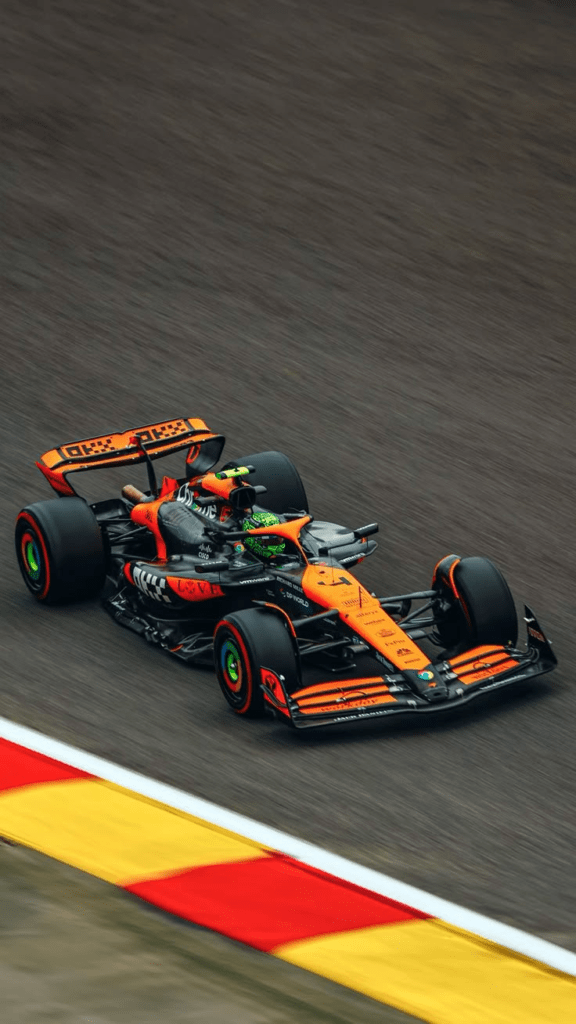
One of the key reasons behind Norris’ optimism is McLaren’s remarkable turnaround in recent seasons. In 2024, the team was reportedly more than 150 points behind its rivals at one stage, only to mount a dramatic comeback and win the constructors’ championship.
That experience has shaped the mindset within the team. It has proven that deficits can be overcome and that consistent development can transform a struggling car into a dominant one.
For Norris, this history is not just a memory it is a blueprint. He believes that the same resilience, innovation, and teamwork that powered McLaren’s previous success can be applied again in 2026.
His message is clear: the season is not decided in its opening races. Instead, it is a marathon defined by continuous improvement.
The Potential of the Car
Despite its early struggles, the McLaren MCL40 is not without promise. Norris has repeatedly emphasized that the car has “a lot of potential,” suggesting that its underlying design is strong enough to compete at the highest level once issues are resolved.
In modern Formula One, performance gains often come through incremental improvements. Teams introduce upgrades throughout the season, refining aerodynamics, improving reliability, and optimizing power unit performance.
McLaren’s collaboration with Mercedes High Performance Powertrains is also crucial. The partnership provides access to advanced engineering and technical expertise, which can play a key role in addressing early-season problems.
If these improvements materialize, Norris believes the team can once again challenge for race wins and potentially dominate the grid.
Rival Teams Set the Early Pace
While McLaren works to unlock its potential, rival teams have taken advantage of the early-season instability. Mercedes has emerged as a strong contender, while Ferrari has also shown consistent pace and reliability.
This shifting balance of power highlights the impact of the new regulations. In Formula One, rule changes often reset the competitive landscape, giving some teams an advantage while forcing others to adapt.
For McLaren, the challenge is not just to catch up but to surpass these rivals. Norris acknowledges the gap but remains confident that it can be closed.
The Role of Patience in Formula One
One of the most striking aspects of Norris’ comments is his emphasis on patience. In a sport driven by speed and immediate results, patience can seem counterintuitive. However, it is often a key ingredient in success.
Development cycles in Formula One take time. Engineers must analyze data, test solutions, and implement upgrades all while competing in races. This process requires a long-term perspective, especially in a season shaped by new technical rules.
Norris’ approach reflects maturity and experience. As a world champion, he understands that setbacks are part of the journey. What matters is how a team responds to those challenges.
Team Unity and Shared Belief
Norris is not alone in his optimism. His teammate Oscar Piastri has also expressed confidence in McLaren’s ability to return to the front of the grid. Both drivers share a belief that the team’s recent success has created a strong foundation for future achievements.
This shared mindset is crucial. Formula One is not just about individual talent it is about teamwork. Engineers, strategists, mechanics, and drivers must all work together to achieve success.
A unified belief within the team can drive motivation, foster innovation, and create the resilience needed to overcome challenges.
The Bigger Picture: A Season of Opportunity
While the early standings may not favor McLaren, the broader picture tells a different story. With many races still to come, there is ample opportunity for the team to recover and compete for victories.
Formula One seasons are often defined by momentum shifts. A successful upgrade package or a series of strong performances can quickly change the narrative.
For Norris, the goal is not just to defend his title but to reaffirm McLaren’s position as the top team in the sport. His confidence suggests that he sees this season not as a struggle, but as a challenge waiting to be conquered.
Lando Norris’ belief that McLaren can still produce the best car in 2026 is both bold and grounded in experience. Despite a difficult start, the team’s history, technical potential, and unified mindset provide reasons for optimism.
The season is still young, and Formula One is a sport where fortunes can change rapidly. If McLaren can resolve its early issues and unlock the full potential of the McLaren MCL40, Norris’ prediction may yet prove accurate.
For now, the message from the reigning champion is clear: patience, belief, and continuous improvement could once again turn McLaren into the team to beat.