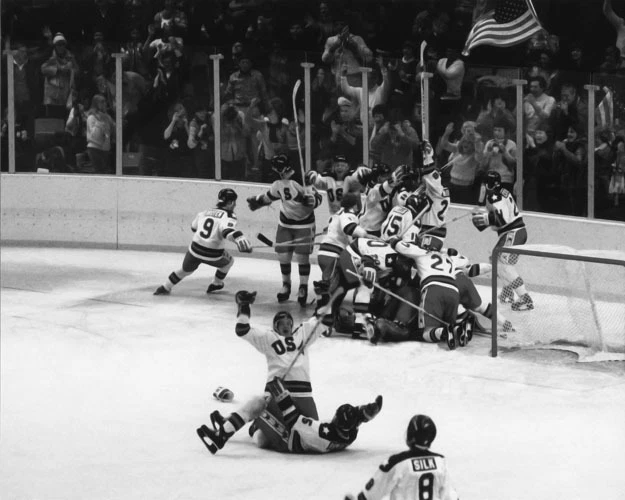
There are sporting upsets. There are championship moments. And then there is the miracle on ice. On February 22, 1980, inside a packed Olympic arena in Lake Placid, New York, a group of American college hockey players defeated the dominant Soviet Union 4–3 in what remains one of the most improbable victories in sports history. Two days later, they secured the gold medal by defeating Finland 4–2.
More than four decades later, USA emerged gold medal winners at the Olympic again, but the miracle on ice remains a defining moment not only in hockey but in American sporting identity.
To understand its impact, you have to begin long before the puck dropped.
The Miracle on Ice Began in a Cold War America
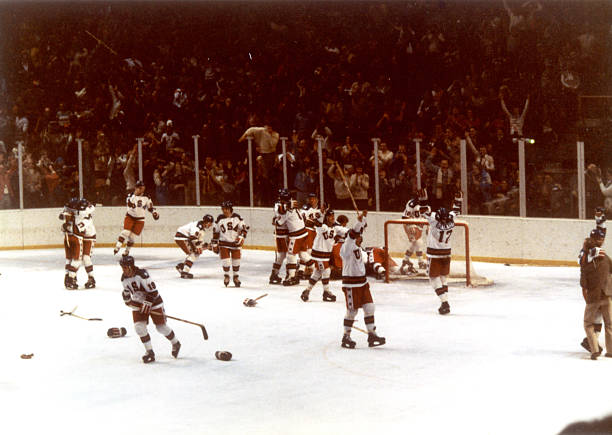
By 1980, the United States was in the middle of the Cold War. The Iranian hostage crisis dominated headlines. The Soviet Union had recently invaded Afghanistan. Political tension between the two superpowers was high.
In hockey, the Soviets were untouchable. The USSR had won four consecutive Olympic gold medals from 1964 to 1976. They were not amateurs in the traditional sense; they were seasoned, state-supported athletes who played together year-round. Entering the 1980 Winter Olympics, they had outscored their opponents 51–11.
By contrast, Team USA was composed primarily of college players. Most came from Minnesota and Massachusetts programs. They were talented, but inexperienced at the international level.
Few outside the locker room believed the miracle on ice was even remotely possible.
Herb Brooks and the Foundation of the Miracle on Ice
Head coach Herb Brooks was the architect of belief.
Brooks had been the last player cut from the 1960 U.S. Olympic team that won gold. That experience shaped him. When appointed head coach for 1980, he selected players not solely on reputation but on compatibility with his system.
He emphasized conditioning, discipline, and a hybrid style of play that blended North American physicality with European puck control.
The team played 61 exhibition games before the Olympics, finishing 42–16–3. Yet doubts remained. In their final pre-Olympic exhibition at Madison Square Garden, the Soviets defeated the United States 10–3. It was a sobering reminder of the gap between expectation and reality.
But Brooks saw something different. He saw a team capable of growth.
The Miracle on Ice: USA vs Soviet Union
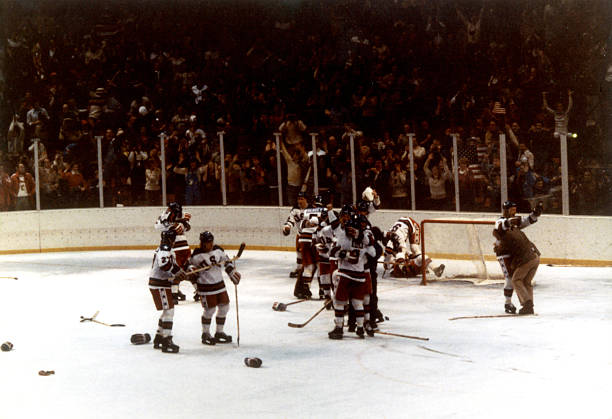
The Olympic format in 1980 featured round-robin play followed by a medal round. The United States had already tied Sweden and defeated Czechoslovakia, Norway, Romania, and West Germany to reach the medal round.
On February 22, they faced the Soviet Union. The game itself unfolded dramatically.
The Soviets struck first. The Americans responded. At the end of the first period, Mark Johnson scored with one second remaining to tie the game 2–2. In a surprising move, Soviet coach Viktor Tikhonov replaced legendary goaltender Vladislav Tretiak after the period.
The Soviets regained the lead in the second period and dominated possession. Entering the third, the United States trailed 3–2.
Johnson tied it again early in the third. Then, midway through the period, team captain Mike Eruzione scored what would become the most famous goal in American hockey history.
The United States led 4–3.
For the final ten minutes, goaltender Jim Craig withstood relentless Soviet pressure. When the clock expired, broadcaster Al Michaels delivered the call that forever defined the miracle on ice:
“Do you believe in miracles? Yes!”
The Miracle on Ice Was Not the Gold Medal Game
One of the most misunderstood elements of the miracle on ice is that it was not technically the gold medal game.
Under the Olympic format, the United States still needed to defeat Finland two days later to secure gold.
Finland led 2–1 entering the third period. Herb Brooks reminded his players what was at stake, famously warning that if they failed now, they would regret it forever.
The Americans scored three unanswered goals in the third period to win 4–2 and claim Olympic gold.
Only then was the miracle complete.
The Lasting Impact of the Miracle on Ice
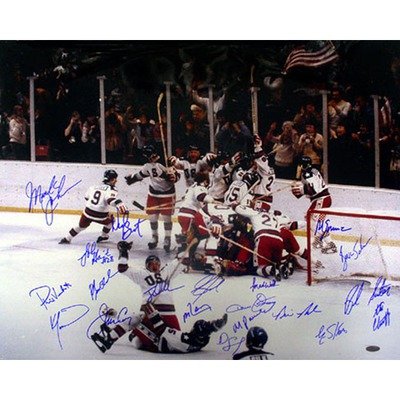
The impact of the miracle on ice extended far beyond Lake Placid.
The victory was widely celebrated as a symbol of American resilience during a difficult political period. Sports Illustrated later named the team its “Sportsmen of the Year,” and the game has frequently been ranked among the greatest moments in sports history.
In practical terms, the win accelerated the growth of hockey in the United States. Youth participation surged. American-born players increasingly entered the NHL. The event reshaped the sport’s national footprint.
In 2002, members of the 1980 team reunited to light the Olympic torch at the Salt Lake City Games, a reminder that the miracle on ice remains part of the country’s sporting DNA.
Why the Miracle on Ice Still Matters
Decades later, the reason the miracle on ice endures is not simply because an underdog won.
It endures because preparation met belief. Because a coach demanded more than comfort. Because young athletes confronted the most dominant team in the world and refused to be intimidated.
For those who witnessed it live, it was more than a hockey game. It was a moment when improbability gave way to possibility.
And that is why the miracle on ice remains one of the most powerful stories ever told in sports.
