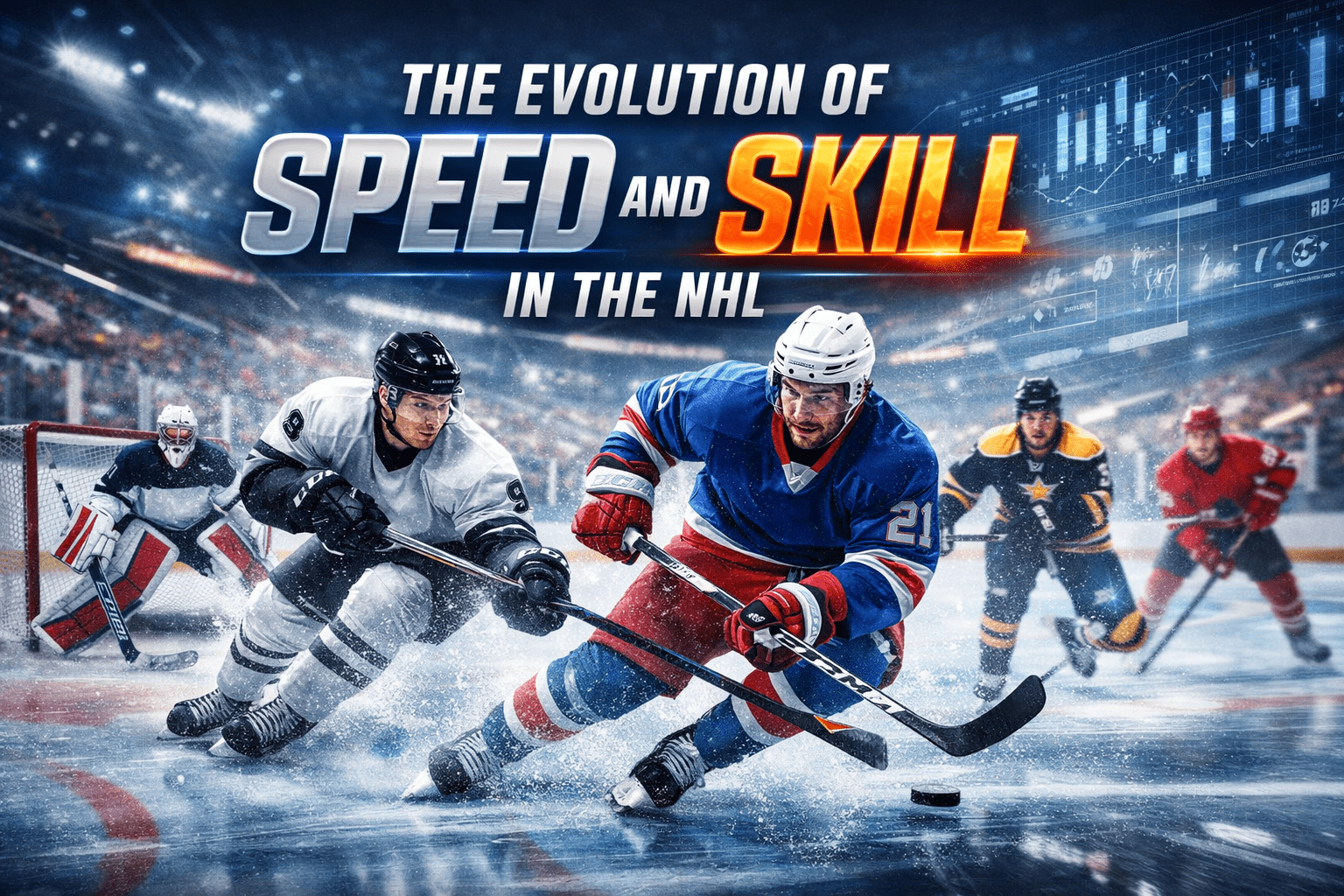
The modern NHL is almost unrecognizable from what it was two decades ago. The game has not just improved, it has transformed. Speed has become sharper, skill has become more refined, and the balance between both has redefined how hockey is played at the highest level.
What we are witnessing today is not accidental. The evolution of the NHL is the result of rule changes, player development, tactical innovation, and a complete shift in how the sport understands efficiency.
The NHL’s transition from physical dominance to speed-first hockey
There was a time when the NHL was defined primarily by physicality. Teams relied heavily on size, aggression, and grinding playstyles to control games. The neutral zone trap slowed matches down, and scoring chances were often limited.
That era began to fade in the mid-2000s.
Rule changes aimed at opening up the game changed everything. The removal of obstruction-heavy defending, stricter penalties on interference, and the elimination of the two-line pass rule created more space on the ice. Suddenly, speed was not just an advantage, it became a necessity.
Teams that adapted quickly thrived. Players who could skate faster and think quicker began to dominate. The modern NHL was born from that shift.
How skating became the foundation of the modern NHL
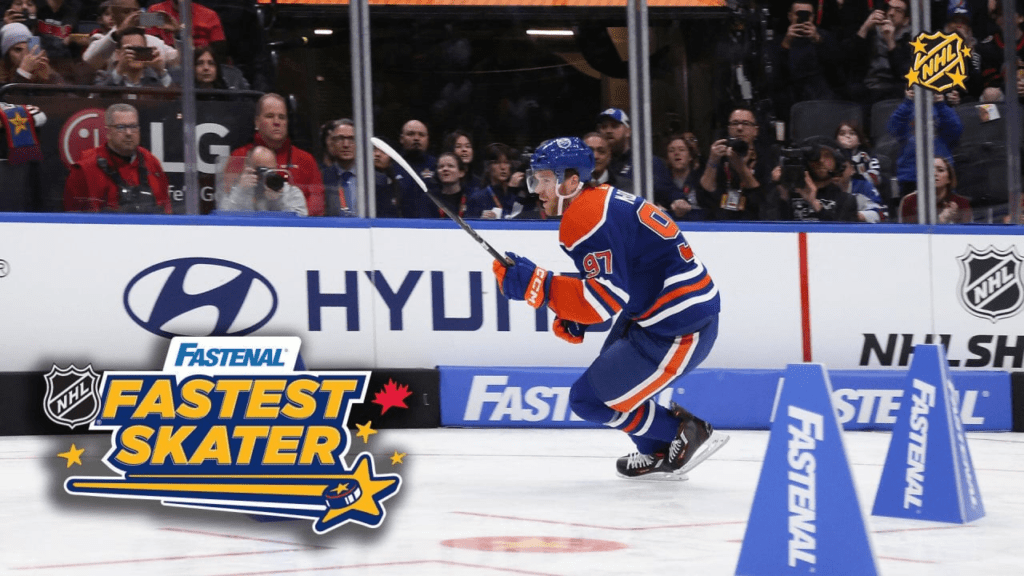
In today’s NHL, skating is the most important skill a player can possess. It is no longer enough to be fast in a straight line. Players must be explosive, agile, and capable of changing direction at high speed.
Edge work has become a defining factor. Players now glide, pivot, and accelerate with precision that was rarely seen in earlier eras. This allows them to create space even in tight defensive situations.
Training methods have evolved alongside this demand. Young players are now developed with skating-first philosophies, ensuring that by the time they reach the premier league, they are already elite movers on the ice.
The result is a league where pace is relentless and mistakes are punished instantly.
Skill revolution: stickhandling, creativity, and control

While speed defines the structure of the modern NHL, skill defines its beauty.
Stickhandling has reached new heights. Players now control the puck at full speed while executing complex moves that were once considered risky. The margin for error has shrunk, but the confidence of players has grown.
Creativity is no longer discouraged. It is expected.
From deceptive passes to no-look assists and intricate zone entries, the modern NHL celebrates players who can think beyond traditional systems. The game has become more expressive without losing its competitive edge.
This balance between creativity and discipline is what makes today’s NHL so compelling.
The influence of analytics on the NHL’s evolution
Another major driver of change in the NHL is analytics.
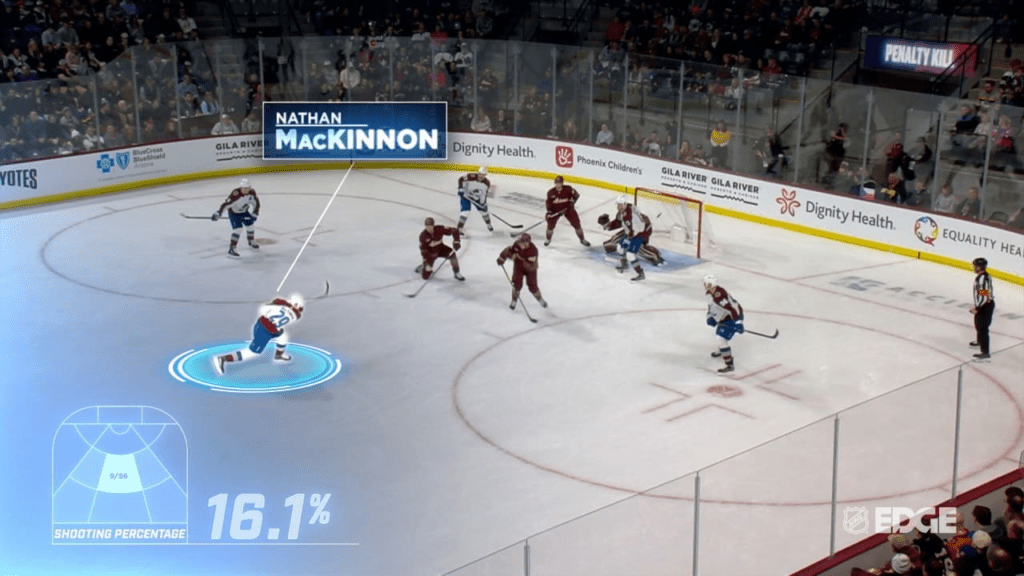
Teams now rely heavily on data to shape their strategies. Metrics such as expected goals, shot quality, and zone entries influence how teams attack and defend. This has led to more efficient hockey.
Players are encouraged to take higher-percentage shots, control possession, and create opportunities from dangerous areas on the ice. The result is a game that is not only faster but smarter.
Analytics has also influenced player roles. Versatility is now highly valued. Players who can contribute in multiple phases of the game are more valuable than specialists who excel in only one area.
The modern hockey is as much about decision-making as it is about execution.
Positionless hockey and tactical flexibility in the nhl
One of the most fascinating developments in the NHL is the move toward positionless hockey.
Traditional roles are becoming less rigid. Defensemen are expected to contribute offensively, while forwards are required to track back and defend aggressively. This fluidity creates unpredictability.
Teams now rotate positions during play, making it harder for opponents to maintain defensive structure. This tactical flexibility is a direct result of the increased speed and skill level across the league.
Coaches have adapted by designing systems that maximize movement and spacing. The modern National Hockey League is less about fixed formations and more about dynamic execution.
The role of youth development in shaping the NHL
The evolution of the NHL begins long before players reach the league.
Youth development programs now emphasize skill and skating from an early age. Players are taught to handle the puck confidently, make quick decisions, and adapt to high-pressure situations.
International influence has also played a role. European training systems, known for their focus on technical ability, have contributed to the global talent pool entering the league.
As a result, the league is filled with players who are not only physically prepared but also technically advanced. This has accelerated the overall evolution of the game.
Technology and training advancements in the nhl
Technology has quietly transformed the NHL.
From advanced video analysis to wearable performance trackers, teams now have access to detailed insights into player performance. This allows for more precise training and recovery strategies.
Players can refine specific aspects of their game with greater accuracy. Whether it is improving skating efficiency or enhancing shooting mechanics, technology has made development more targeted.
The impact is very clear. The modern NHL athlete is faster, stronger, and more skilled than ever before.
Why the NHL is more entertaining than ever
The combination of speed and skill has made the NHL one of the most exciting leagues in the world.
Games are faster, scoring chances are more frequent, and momentum can shift in seconds. The unpredictability keeps fans engaged from start to finish.
Every shift matters. Every mistake is costly. Every moment has the potential to change the outcome.
This intensity is what defines the modern NHL experience.
What the future holds for the NHL
The evolution of the NHL is far from complete.
As training methods continue to improve and new talents emerge, the game will keep pushing its limits. Speed may increase further, and skill levels may reach even greater heights.
There is also the possibility of further rule adjustments to enhance the flow of the game. The league has shown a willingness to adapt in the past, and that trend is likely to continue.
One thing is certain. The NHL will not stand still.
The perfect blend of speed and skill
The modern NHL represents the perfect balance between speed and skill.
It is a league that has learned from its past while embracing innovation. It has taken the physical foundation of hockey and layered it with intelligence, creativity, and precision.
The result is a sport that is faster, smarter, and more exciting than ever.
And as the game continues to evolve, the NHL will remain at the forefront of that transformation.
