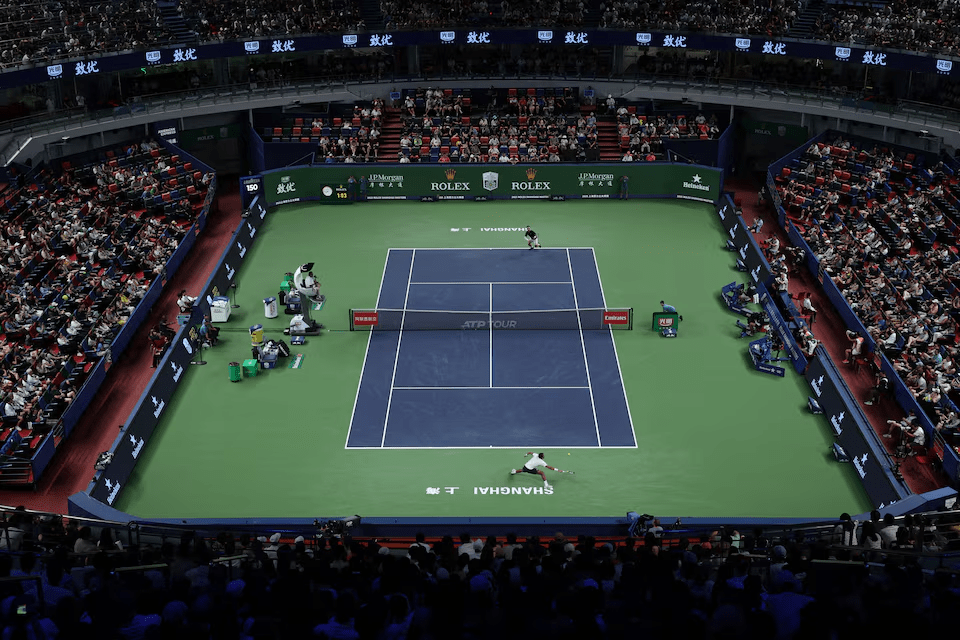
Lorenzo Musetti’s run at the Shanghai Masters was overshadowed by a clash with the crowd—literally. After issuing a public apology for remarks he made in Beijing, the Italian found himself frustrated again in Shanghai when spectators appeared to cough deliberately during his serves. The confrontation highlights both the tension elite athletes face in hostile environments and the delicate balance between expressing frustration and maintaining diplomacy.
What happened in Beijing
At the China Open in Beijing, Musetti lost his temper during a match against Giovanni Mpetshi Perricard after repeated disruptions from the crowd. While serving, he mimicked someone clearing their throat and muttered in Italian, “They cough every three seconds.” Local press even accused him of mouthing “damn Chinese” in the heat of the moment.
The backlash was swift. Musetti took to Instagram and issued an apology, emphasizing that his comments were directed only at a few disruptive individuals, not the Chinese people as a whole. He acknowledged that stress and frustration were no excuse for his choice of words.
The Shanghai incident
Fast forward to the Shanghai Masters, in a fourth-round match against Felix Auger-Aliassime, and Musetti again found himself battling more than his opponent. During the second set, numerous coughs erupted from the crowd, seemingly aimed at disturbing his concentration during serves.
Musetti appealed to chair umpire Adel Nour:
“Come on, (it happens on) every point … this is not possible every point. It’s too much. Say something.”
He dropped the serve and later lost the match 6–4, 6–2.
Given the recent controversy in Beijing, the episode took on greater significance. It wasn’t just another frustrated exchange—it was seen as nearly a continuation of an earlier conflict with Chinese fans.
How Musetti responded afterward
Musetti did not shy away from owning his part. In interviews, he admitted that the atmosphere in China had become “unfavourable” for him after the Beijing incident. He said he never felt entirely comfortable afterward and conceded that some of the tension stemmed from what he himself had stirred up.
He also recognized that by making comments previously, he had shifted perceptions and heightened scrutiny. While he defended that he targeted only a few disruptive individuals, he expressed regret for how his words had been interpreted or generalized.
Broader issues at play
This incident—and the fallout from Beijing—spotlights several underlying tensions in high-level tennis abroad:
- Crowd behaviour and gamesmanship: In some environments, spectators may feel empowered to affect matches, whether by noise, coughing, or other distractions. For a player, every interruption is a mental obstacle as much as a physical one.
- Cultural sensitivity and perception: When a player complains about fan behaviour, especially in a foreign country, wording matters. Even if one intends to criticize a small subset, it can be interpreted as blanket criticism. For Musetti, that nuance was lost in translation in Chinese media.
- Mental pressure and self-fulfilling cycles: Musetti himself admitted that the Beijing episode unsettled him. Once a narrative is established (that he’s already “on edge”), every subsequent disruption is magnified in the player’s mind. That can make the pressure harder to manage.
- Apology and reconciliation: His public apology was a necessary gesture to try to reset relations. But apologies alone may not suffice if subsequent actions reinforce earlier perceptions.
What it means going forward
For Musetti:
- He will need to rebuild trust with Chinese fans and broader audiences, demonstrating respect, consistency, and restraint.
- On court, mastering composure under distraction is vital. Matches in high-pressure locations demand mental resilience.
- He must be cautious with public remarks, especially when addressing crowd behaviour in culturally sensitive settings.
For tournament organizers:
- Maintaining fair spectator conduct is key. Umpires and officials may need clearer protocols for addressing deliberate disruptions such as coughing or intentional noise.
- Ensuring that fan behaviour does not cross into gamesmanship is also important for the sport’s integrity.
For the broader tennis community:
- This serves as a reminder that elite athletes are subject to more than just their opponent—they fight environments, perceptions, and pressure.
- How they handle moments of conflict can define public reputation as much as their wins and losses.