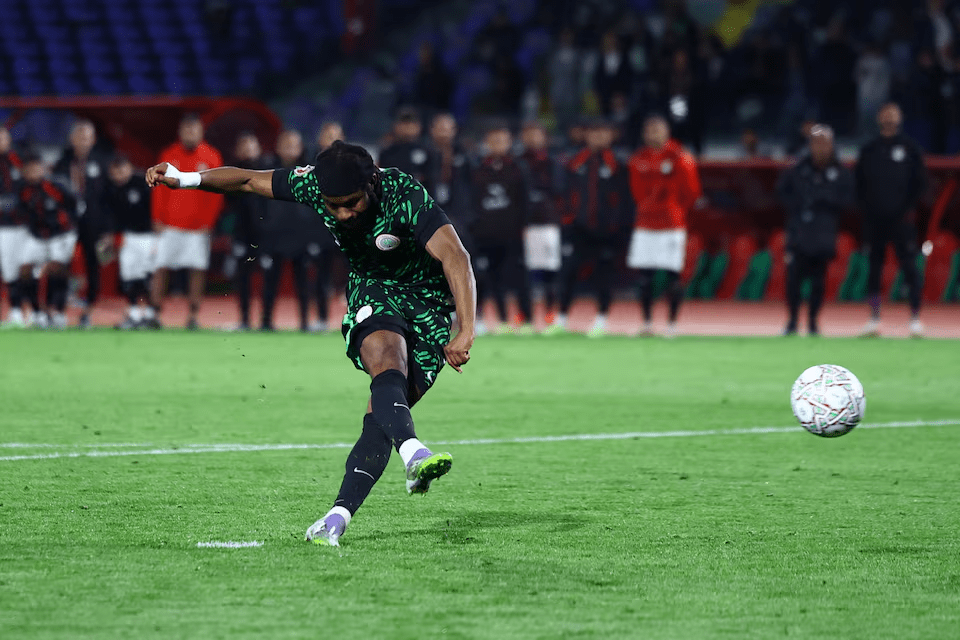
In a tense and cagey Africa Cup of Nations third-place playoff, the Super Eagles of Nigeria held their nerve to defeat Egypt 4-2 on penalties after a goalless 90 minutes in Casablanca on Saturday, extending their proud record in bronze medal matches at the continental showpiece.
The match at Stade Mohammed V never quite lived up to the attacking promise of earlier rounds, with both sides unable to find a breakthrough despite early pressure and tactical adjustments. As the clock ticked down, it became clear that the outcome would be decided from the penalty spot — and Nigeria emerged victorious in the shoot-out, thanks to composure under pressure and heroics from goalkeeper Stanley Nwabali.
A Cautious Opening and Tense First Half
From the opening whistle, the match was characterised by cautious play and tight defending. Both teams showed respect for one another’s quality, and as a result, genuine scoring opportunities were few and far between. Nigeria’s usually potent attack was kept largely in check by a disciplined Egyptian defence, while Egypt struggled to create clear openings despite featuring the experienced Mohamed Salah among their front-line options.
The closest either side came to breaking the deadlock in the first half came when Nigeria thought they had taken the lead. A well-timed header from Paul Onuachu appeared to beat Egyptian goalkeeper Mostafa Shobeir, but after a VAR review it was ruled out for a foul in the build-up. This decision — controversial at the time — preserved the level scoreline and dashed early hopes of a breakthrough.
Second Half Drama and Another Disallowed Goal
After halftime, both teams made tactical tweaks, introducing attacking substitutions in search of a decisive goal. Nigeria’s Ademola Lookman tested the Egyptian defence early in the second half and even found the back of the net — only for offside to be called against him. The replayed decision highlighted how tight the match’s margins were.
Throughout the remainder of regulation time, neither squad could mount a sustained attacking threat. Egypt had a handful of half-chances but lacked the final-third precision needed to trouble the Nigerian backline, which was marshalled well and limited opportunities with disciplined defensive shape. Nigeria’s determination was evident, but the Egyptians matched their opponents’ intensity in a high-stakes but low-clear-cut occasion.
Penalties Decide the Bronze Medal
With the match still tied at 0-0 after 90 minutes, the outcome was left to penalties — a method that has brought both heartbreak and triumph in recent Nigerian football history. In the shoot-out, Nigeria kicked first and kept their cool. Goalkeeper Stanley Nwabali was the undeniable hero, producing crucial saves that swung momentum in the Super Eagles’ favour. Nwabali denied two of Egypt’s early spot kicks — including a tame attempt from Salah and another by Omar Marmoush — setting the tone for Nigeria’s success.
Nigeria converted four of their penalties with clinical precision. Akor Adams, Moses Simon, Alex Iwobi and Ademola Lookman held their nerve to ensure Nigeria sealed a 4-2 victory from the spot. In contrast, Egypt could only score twice, their hopes dented by their misses and Nwabali’s timely saves. Lookman’s final, emphatic strike sealed the bronze medal for Nigeria.
Historical Significance of the Victory
The win continues Nigeria’s remarkable tradition in Africa Cup of Nations third-place matches. The Super Eagles have now finished third nine times in AFCON history — and crucially, they have never lost a bronze medal match at the Nations Cup. That unbeaten record in third-place playoffs underscores Nigeria’s consistency and ability to compete for honours even after falling short of the final. ([turn0search20])
For Egypt, the result was frustratingly familiar. Despite reaching the last four — and with a proud continental history — they were unable to overturn their penalty woes in a match that offered precious little in open play. The defeat prolongs their wait for another top-three finish at the tournament, with their last bronze medal coming decades ago.
Nwabali’s Penalty Heroics and Key Performers
Nwabali’s performance between the posts was a defining element of Nigeria’s victory. His two penalty saves — against Salah and Marmoush — were the sort of defining moments that can shift the balance of high-pressure shootouts. His calmness and reflexes gave Nigeria a psychological edge that they never relinquished.
On the field, Nigeria’s squad showed resilience and fighting spirit throughout the 90 minutes, absorbing pressure and maintaining focus despite intermittent Egyptian attacks. Iwobi’s composed penalty, along with Simon’s and Adams’ efforts, demonstrated Nigeria’s confidence in crucial moments. Meanwhile, Lookman’s decisive strike showed his readiness under pressure — and provided a fitting culmination to Nigeria’s campaign.
Egypt’s campaign featured moments of promise, but missed opportunities and penalty shootout shortcomings proved costly. Salah — widely regarded as one of the continent’s great talents — was kept quiet throughout normal play and failed to convert his spot kick, a rare outcome for the Liverpool star on this stage. Omar Marmoush also saw his attempt saved, compounding Egypt’s shootout woes.
Tactical and Emotional Assessment
Tactically, the match lacked the fluid attacking play often seen in earlier rounds of the Africa Cup of Nations. Both teams were cautious, wary of conceding early goals and aiming to avoid errors that could prove decisive in such a slim margins game. Nigeria’s approach, however, emphasised patience and defensive organisation, while Egypt looked to exploit transition moments but couldn’t unlock the defence.
Emotionally, the penalty shootout added a dramatic climax to a match that few expected to be decided so tightly. For Nigerian fans, the bronze medal was a moment of celebration and vindication — a positive end to a campaign that saw them fall just short of the final after a narrow penalty loss to hosts Morocco. Egypt’s supporters, on the other hand, faced disappointment but could still reflect on a relatively strong tournament run.
What’s Next After AFCON
With the Nations Cup final yet to be played between Senegal and Morocco, the third-place playoff now concludes Nigeria’s involvement in the tournament. The Super Eagles can leave Casablanca with their heads held high after extending their remarkable record at this stage, and with confidence boosted ahead of future international competitions. ([turn0news2], [turn0search20])
For Egypt, the campaign ends with lessons to be learned — especially from the penalty shootout and deadlock in normal play. Their next competitive matches will be opportunities to build on their positives and turn near misses into opportunities for success.
Conclusion
Nigeria’s 4-2 penalty shootout win over Egypt in the Africa Cup of Nations third-place playoff was a testament to their resilience, composure and historic consistency at the Nations Cup. In a match defined by tight margins and tactical caution, it was the mental strength in the penalty shootout — led by goalkeeper Stanley Nwabali — that ultimately separated the teams and secured bronze for the Super Eagles.
Nigeria now extend their unique unbeaten record in AFCON third-place matches and depart Morocco with pride, while Egypt will reflect on missed opportunities and the narrow margins that define tournament football.