47
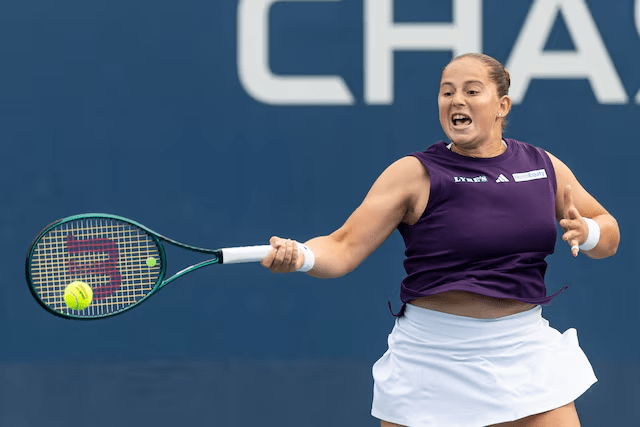
At the 2025 U.S. Open, Jelena Ostapenko issued a public apology after a heated post-match exchange with American player Taylor Townsend, during which she accused Townsend of lacking “class” and having “no education.”
What happened
- The controversy unfolded after Townsend knocked out Ostapenko in the second round with a 7-5, 6-1 win.
- Ostapenko was upset over two things: Townsend hadn’t apologized for winning a point via a net-cord (a gesture of sportsmanship in tennis), and she began warming up at the net instead of the baseline—unusual, but not unheard of.
- In frustration, she confronted Townsend at the net and said she had “no class” and “no education.” The remarks were immediately met with backlash, with concerns over potential racial undertones. Naomi Osaka described calling a Black tennis player “uneducated” as “one of the worst things you could say.”
The apology and reaction
- On Saturday, Ostapenko took to Instagram and apologized, explaining that English is not her first language, and that by saying “education” she intended to refer to tennis etiquette—not personal intellect. She acknowledged that her choice of words “could have offended many people beyond the tennis court.”
- Townsend responded with grace, describing the apology as “nice” and “cool,” emphasizing that it should serve as a learning moment for Ostapenko—not a moment of blame.
- Townsend did not believe the remarks were intentionally racist, but highlighted how hurtful and offensive they were and remarked, “you can’t push your expectations on other people.”
- Several fellow players, including Coco Gauff, rallied in support of Townsend.
Summary
Ostapenko’s remarks following her loss to Townsend led to swift backlash amid concerns they carried racial overtones. She later apologized publicly, explaining language barriers and clarifying her intent. While Townsend accepted the apology, she used the moment as an opportunity to remind others that personal expectations shouldn’t be imposed on opponents. The incident underscores the importance of mindful communication, especially in multicultural, high-pressure contexts like professional sport.