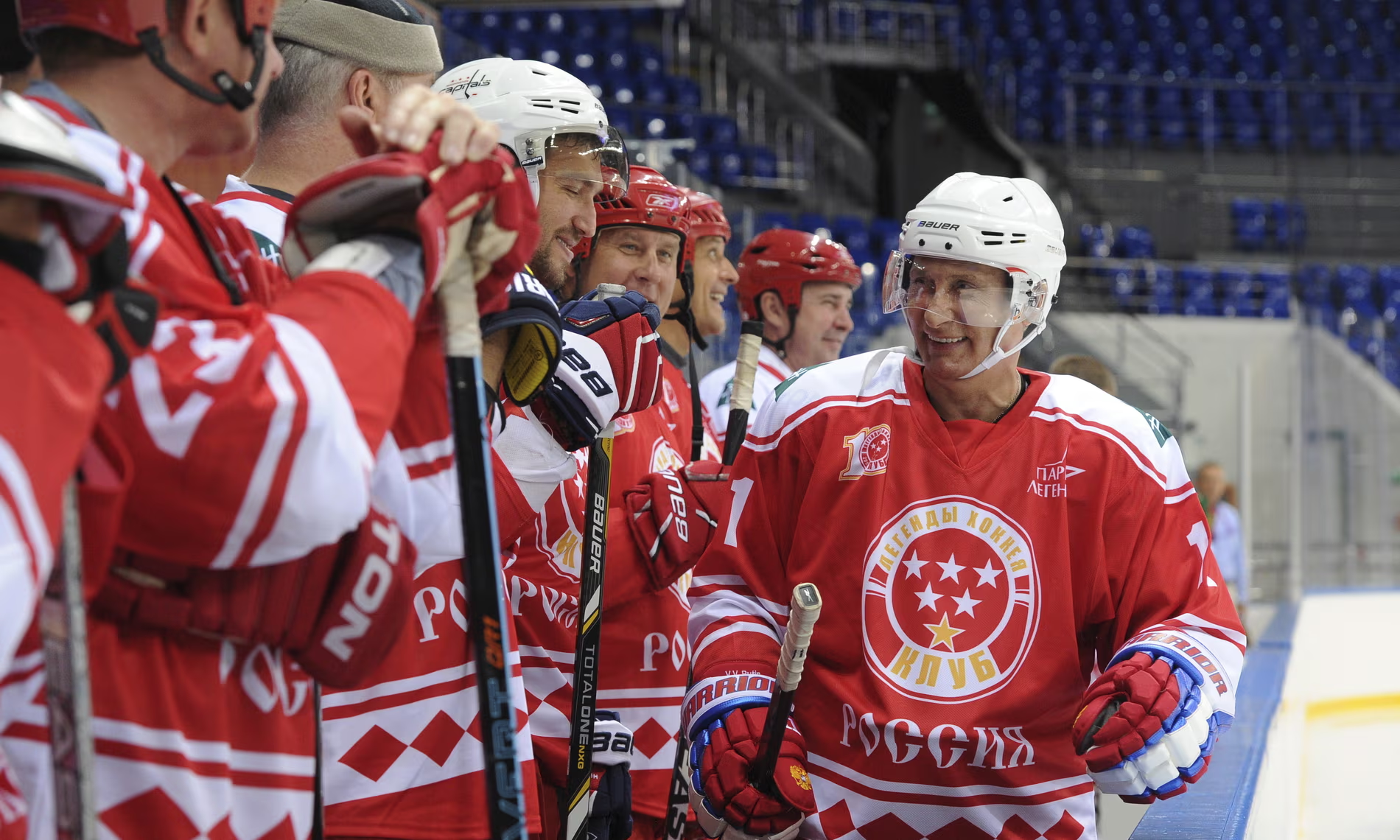
Amid the ongoing geopolitical tensions between the United States and Russia, a surprising decision emerged from a recent Donald Trump and Vladimir Putin conversation: the resumption of US-Russia ice hockey games. This decision came after the two leaders discussed halting attacks on energy infrastructure, only for Russia to immediately bomb Ukraine’s energy sector—adding another layer of complexity to their diplomatic talks. While this development raised several eyebrows, one deal between the two countries stood out as clear: the return of ice hockey games between US and Russian players.
Though the idea of organizing international ice hockey matches between the two nations might appear innocent on the surface, this diplomatic gesture held deeper implications. It was, at its core, another concession from Trump to Putin—a decision that reflects soft power at play. Unlike Trump’s previous diplomatic actions, which included pre-emptively allowing Russia to retain illegally occupied territories in Ukraine, refusing to provide security guarantees to Ukraine, and hinting at lifting US sanctions against Russia, this move was subtler, wrapped in the guise of a shared sports event.
Putin’s Longstanding Passion for Hockey and Its Geopolitical Symbolism
Vladimir Putin, the Russian President, has always been a huge fan of hockey, even playing the sport himself. Known for his love of physical activities, Putin has regularly demonstrated his prowess on the ice, though his opponents are often perceived as unwilling to challenge him too hard. Hockey is an essential part of Russian culture, and the country has been a global powerhouse in the sport for decades.
However, the dominance of Russian hockey players in international leagues, particularly in the National Hockey League (NHL), has often caused a dilemma for Putin. The top Russian players are drawn to the NHL, where they can earn larger salaries and achieve greater fame. This migration of talent has been one of the significant blows to Russia’s national pride. Furthermore, Russia’s expulsion from international competitions following its invasion of Ukraine only added to Putin’s frustration, making the need for geopolitical victories through sports even more significant.
Hockey and Politics: The Soviet Union’s Military Legacy in Sports
Hockey has always been more than just a game in Russia—it has been deeply tied to the country’s political landscape. The Soviet Union used its hockey teams as instruments of soft power, blending athletic competition with military might. Soviet hockey players were not only skilled athletes but also soldiers, with their coach often holding a military rank. The training camps were held in military barracks, and the players spent the majority of the year on the ice under strict military supervision.
During the Cold War, Soviet hockey teams became key players in the ideological battles between the East and the West. The games between Soviet and North American teams were not just about sportsmanship; they were about proving the superiority of one political system over another. The Soviets were raised in a collective system, emphasizing teamwork and collective effort. On the other hand, North American players, particularly Canadians and Americans, were raised with a focus on individual skill and self-reliance—values that often led to aggressive and sometimes violent play on the ice.
The historic rivalry reached its peak with iconic matches like the 1972 Summit Series, where a Canadian team of rugged players narrowly defeated the Soviet Red Army team, and the 1980 Lake Placid Olympics, when a group of American amateurs shocked the world by defeating the heavily favored Soviet team in what came to be known as the “Miracle on Ice.” The game captured the attention of millions worldwide and became a significant symbolic victory for the United States during the height of the Cold War.
Russia’s Return to International Hockey: A Diplomatic Triumph for Putin
Fast forward to today, and Russia’s exclusion from international ice hockey competitions after its invasion of Ukraine was a direct result of its growing geopolitical tensions with the West. For Putin, this was a significant blow to Russia’s national pride, further symbolizing the West’s rejection of Russia as a global power. The ban from international competitions stung, especially since hockey has always played such an important role in Russian identity.
Returning to the ice rink would not only restore Russia’s place in global hockey but also serve as a symbolic triumph for Putin in the realm of soft power. Trump’s decision to resume these games could be seen as a diplomatic gesture aimed at rekindling the relationship between the two nations—albeit through the innocent medium of sport. As Alexander Ovechkin, the greatest Russian hockey player of all time, prepares to surpass Wayne Gretzky’s NHL goal record, the moment is all the more significant. Ovechkin’s achievement, along with his known admiration for Putin, serves as a reminder of the deeper links between Russian sports and its political regime.
The Role of Sport in Soft Power and Geopolitics
Sport has long been used as a form of soft power, a strategy for influencing global perceptions and creating diplomatic openings. Just as Saudi Arabia has used Formula 1 and golf to boost its international image, Russia sees its return to international ice hockey as an opportunity to reclaim its influence on the global stage. For Putin, this resumption could serve as a moment of victory—a chance to demonstrate that Russia can still dominate in areas traditionally associated with international respect and recognition.
The Four Nations competition in hockey has already demonstrated the power of sports diplomacy. By including Canada, the US, and Sweden in the competition, the event became much more than a showcase of skill—it became a symbol of the deep-rooted political tensions that often underlie international sporting events. Russia’s exclusion from such tournaments has clearly not been lost on Putin, who views the ban as another manifestation of the West’s rejection of his country. The return of Russia to international hockey could, therefore, be a much-needed diplomatic victory for the Russian President.
Trump and Putin’s Relationship: Hockey as a Metaphor for Power and Diplomacy
For Donald Trump, the world of ice hockey might not carry the same level of importance as for Putin. To Trump, who has consistently regarded Putin not as an adversary but as an equal, the concept of sport as diplomacy may seem trivial. Trump has long held the view that the world’s great powers, like the US and Russia, should engage in cooperative actions, and his willingness to engage in this ice hockey deal reflects his broader worldview of great men leading great nations.
As the two leaders continue their diplomatic talks, it is likely that the resumption of ice hockey games will become a point of symbolic engagement—a reflection of Putin’s personal pride and his efforts to reassert Russia’s global standing. In a world dominated by harsh geopolitics, sometimes it’s on the ice rink that such subtle forms of influence are exercised most powerfully.
Key Notes:
- Donald Trump and Vladimir Putin have agreed to resume US-Russia ice hockey games as a soft power gesture.
- Putin’s passion for hockey is not only about sports; it symbolizes Russia’s broader geopolitical ambitions.
- The Cold War-era rivalry between Soviet and North American hockey teams set the stage for today’s competition.
- The exclusion of Russia from international hockey following the Ukraine invasion has been a significant blow to Putin.
- Alexander Ovechkin’s pursuit of Wayne Gretzky’s NHL goal record adds personal significance to Russia’s return to hockey.
- Sport, particularly ice hockey, has become an important diplomatic tool for Russia to reclaim global influence.