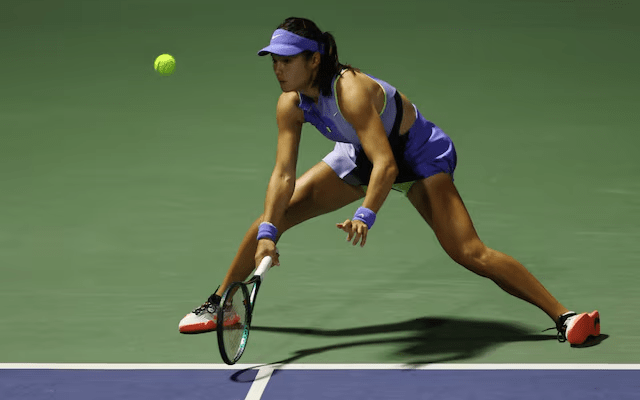
The 2026 tennis season was expected to be a year of renewed momentum for Emma Raducanu, but her recent withdrawal from the Miami Open due to illness has once again disrupted her progress. For fans and analysts alike, the news is both disappointing and familiar a reminder of the fragile balance between talent and physical resilience in elite sport.
Raducanu’s absence from Miami is more than just a missed tournament. It reflects broader themes that have come to define her career since her meteoric rise in 2021: promise, pressure, and persistent interruptions caused by health and fitness challenges.
A Promising Start Halted by Illness
Raducanu entered the 2026 Miami Open as one of the seeded players, having earned a bye into the second round. That position suggested both respect from the rankings and a relatively favorable path into the tournament. However, her withdrawal before even stepping onto the court underscores the seriousness of her condition.
Reports indicate that the British No. 1 has been dealing with lingering post-viral symptoms stemming from an illness she contracted earlier in the season. Rather than risk worsening her health, Raducanu opted to step away early a decision that reflects increasing maturity in managing her body, even if it comes at a competitive cost.
This is not an isolated incident. Illnesses and injuries have repeatedly interrupted her rhythm, forcing her to withdraw or underperform at crucial points. In a sport where consistency is everything, such disruptions can be particularly damaging.
The Significance of the Miami Open

The Miami Open is one of the most prestigious events on the WTA calendar, categorized as a WTA 1000 tournament. For players outside the top 10, it represents a major opportunity to gain ranking points and build momentum against elite competition.
Raducanu, in particular, had strong reasons to compete. In 2025, she reached the quarter-finals in Miami one of her best performances at a high-level event. That run not only boosted her ranking but also signaled a potential return to form after earlier struggles.
By skipping the 2026 edition, she forfeits the chance to defend those ranking points, which could result in a drop in the standings. In the highly competitive WTA rankings, even a small slip can significantly alter a player’s seeding and future matchups.
A Difficult 2026 Season So Far
Raducanu’s withdrawal from Miami fits into a broader narrative of a challenging season. Her performances in early 2026 have been inconsistent, marked by early exits and difficulty stringing together consecutive wins.
She has competed in tournaments such as Doha and Dubai but struggled to advance beyond the early rounds. While she did reach the final of a WTA 250 event in Cluj, that success has not translated into sustained form at higher-tier competitions.
A win-loss record hovering around .500 reflects this inconsistency. For a player once ranked inside the world’s top 10, such results highlight the gap between potential and current performance.
The Lingering Impact of Injuries and Fitness Issues
Since her historic triumph at the 2021 US Open, Raducanu has faced a series of physical setbacks. From wrist surgeries to foot injuries and now viral illnesses, her body has often struggled to cope with the demands of the professional tour.
The 2026 season began under difficult circumstances, with Raducanu still recovering from a foot injury sustained during the off-season. This limited her preparation and left her undercooked heading into early tournaments.
In elite tennis, where margins are razor-thin, even minor physical limitations can have major consequences. A slight dip in fitness can affect movement, endurance, and confidence—all crucial elements for success.
Coaching Instability and Its Effects
Another factor contributing to Raducanu’s uneven progress is her lack of a stable coaching setup. Since turning professional, she has worked with multiple coaches, often for short periods.
Most recently, she parted ways with coach Francisco Roig after the Australian Open, leaving her without a permanent guide during a critical phase of the season.
Frequent coaching changes can disrupt a player’s development. Each coach brings a different philosophy, training style, and tactical approach. Without continuity, it becomes difficult to build a long-term strategy or refine specific aspects of the game.
For a young player like Raducanu, who is still evolving, stability in coaching could be a key ingredient for future success.
Mental and Emotional Challenges
Beyond the physical and tactical aspects, Raducanu’s journey also highlights the mental challenges of professional sport. Her rapid rise to famev winning a Grand Slam as a teenager brought immense expectations.
Managing those expectations while dealing with injuries and inconsistent results is no easy task. Every withdrawal or early exit is scrutinized, adding pressure to an already demanding environment.
However, her decision to prioritize health over immediate competition suggests a growing awareness of the importance of long-term well-being. In the modern game, where careers can span over a decade, such decisions are increasingly seen as wise rather than cautious.
What This Means for Her Ranking
One of the immediate consequences of skipping the Miami Open is the potential impact on Raducanu’s ranking. With points from last year’s quarter-final run at stake, her withdrawal could see her slide down the rankings.
This, in turn, affects her seeding in future tournaments. Lower seeding often means tougher early-round opponents, creating a cycle that can make it harder to regain form and confidence.
For Raducanu, maintaining a position within the top 30—or climbing back toward the top 20 will depend on her ability to stay healthy and perform consistently in upcoming events.
What’s Next: The Clay-Court Season
Despite the setback, there is a silver lining. Raducanu is expected to return during the clay-court season, which begins shortly after the Miami Open.
Clay presents a different set of challenges compared to hard courts. Matches are typically longer, requiring greater physical endurance and tactical patience. For a player recovering from illness, this could be both a test and an opportunity.
If she can regain full fitness, the clay season offers a chance to reset her campaign and build momentum ahead of the French Open and the summer tournaments.
The Bigger Picture: Talent vs. Consistency
Raducanu’s career so far is a study in contrasts. On one hand, she possesses undeniable talent, highlighted by her US Open victory and flashes of brilliance in subsequent tournaments. On the other hand, her inability to maintain consistent participation and performance has limited her progress.
The withdrawal from the Miami Open is another chapter in this ongoing story. It raises questions about how she—and her team—can better manage her schedule, fitness, and development.
Many players have faced similar challenges early in their careers and gone on to achieve sustained success. The key often lies in finding the right balance between competition and recovery, as well as building a strong support system.
Conclusion: A Pause, Not an End
Emma Raducanu’s decision to skip the Miami Open due to illness is undoubtedly a setback, but it is not a defining moment in her career. Instead, it serves as a reminder of the unpredictable nature of professional sport and the importance of health above all else.
For fans, the disappointment of not seeing her compete in Miami is tempered by the hope that she will return stronger in the coming months. For Raducanu herself, this period could be an opportunity to reset, recover, and refocus.
In the long run, her success will depend not just on her talent, but on her ability to stay fit, maintain consistency, and navigate the challenges that come with life at the top level of tennis. The Miami Open may be a missed opportunity, but the season and her career still holds plenty of promise.