
The history of the National Hockey League is defined by eras of dominance by some NHL dynasties. While many teams have experienced success, only a select few have built sustained winning cultures that reshaped the sport. These NHL dynasties did more than collect trophies. They set tactical standards, produced generational stars, and influenced how hockey is played today.
From the relentless machine of the Montreal Canadiens to the offensive revolution sparked by the Edmonton Oilers, dynastic teams have always defined hockey’s golden ages. What separates a great team from a dynasty is longevity, cultural impact, and the ability to dominate across multiple seasons or even decades.
24sportsarena ranks the top NHL dynasties based on Stanley Cup success, statistical dominance, roster strength, and historical influence on the sport.
10. New Jersey Devils (1995–2003)

The Devils redefined defensive hockey during the late 1990s and early 2000s. Their disciplined neutral-zone trap system frustrated opponents and changed the strategic landscape of the NHL. With Martin Brodeur anchoring the goal, New Jersey won three Stanley Cups in nine seasons.
Their dominance was built on structure rather than flair. Scott Stevens’ physical leadership and Scott Niedermayer’s mobility provided balance, while Brodeur delivered historic goaltending consistency. This dynasty proved that defensive excellence could win championships in a rapidly evolving league, and it comes tenth on our top NHL dynasties list.
9. Tampa Bay Lightning (2020–2022)

On ninth is Tampa Bay Lightning. The Lightning’s modern dynasty reflected the evolution of hockey analytics, skill depth, and roster management. Winning back-to-back Stanley Cups during a pandemic-affected era highlighted their adaptability and depth.
Led by Nikita Kucherov, Steven Stamkos, Victor Hedman, and Andrei Vasilevskiy, Tampa Bay showcased one of the most complete rosters of the salary-cap era. Their dominance was not only about trophies but also about redefining how elite teams build sustainable success in modern hockey.
8. Chicago Blackhawks (2010–2015)
The Chicago Blackhawks are eighth on our top ten NHL dynasties list. Chicago’s three Stanley Cups in six seasons marked the return of Original Six dominance in the modern NHL. Their puck-possession system, driven by Jonathan Toews and Patrick Kane, blended speed with elite skill.
The Blackhawks dynasty represented a shift toward dynamic offensive systems and mobile defensemen. Duncan Keith’s two-way excellence and Corey Crawford’s timely performances in goal ensured sustained success during one of the league’s most competitive eras.
7. Pittsburgh Penguins (1991–1992)
The early-1990s Penguins dynasty was powered by offensive brilliance. Mario Lemieux and Jaromir Jagr formed one of the most electrifying duos in hockey history, leading Pittsburgh to consecutive Stanley Cups.
Their impact extended beyond championships. The Penguins helped popularize skill-based, high-tempo hockey during a transitional era. Lemieux’s comeback narrative and leadership also cemented this dynasty’s cultural significance. The Penguins are deserved seventh.
6. Detroit Red Wings (1997–2008)

Detroit’s sustained excellence across more than a decade defines one of the longest competitive NHL dynasties in modern hockey. With four Stanley Cups during this span, the Red Wings blended European finesse with North American physicality.
Nicklas Lidström’s defensive mastery, Steve Yzerman’s leadership, and Pavel Datsyuk’s creativity formed the backbone of a franchise that dominated both tactically and culturally. Their success influenced international scouting and player development models.
5. Boston Bruins (1970–1972)
The Bruins’ early-1970s dynasty was short but intensely dominant. Bobby Orr revolutionized the defenseman role by combining elite skating with offensive production, fundamentally altering hockey strategy.
Boston’s two Stanley Cups were supported by a powerhouse roster including Phil Esposito. Their aggressive, high-scoring style helped increase the league’s popularity and set new standards for offensive defensemen.
4. New York Islanders (1980–1983)
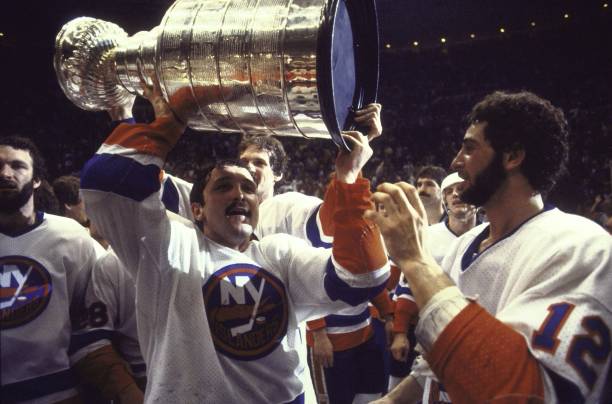
Winning four consecutive Stanley Cups, the Islanders established one of the most disciplined and mentally resilient NHL dynasties in history. Their ability to perform under pressure was unmatched.
Led by Mike Bossy, Bryan Trottier, and Denis Potvin, New York dominated a transitional era of hockey. Their dynasty bridged the gap between the physical 1970s and the skill-driven 1980s, maintaining consistency against increasingly competitive opposition.
3. Edmonton Oilers (1984–1990)
Few NHL dynasties matched the offensive explosiveness of the Edmonton Oilers. With Wayne Gretzky at the helm, the Oilers won five Stanley Cups and revolutionized attacking hockey.
Gretzky’s vision, Mark Messier’s leadership, and Paul Coffey’s skating brilliance made Edmonton nearly unstoppable. Their fast-paced, high-scoring system influenced offensive tactics across the league and remains one of hockey’s most iconic eras.
2. Montreal Canadiens (1956–1960)
The Canadiens’ five consecutive Stanley Cups remain one of the most extraordinary achievements in professional sports. This dynasty combined technical excellence with unmatched depth.
Jean Béliveau and Maurice Richard embodied leadership and skill, while the franchise’s development pipeline ensured continuity. Montreal’s dominance helped establish hockey as Canada’s defining cultural sport.
1. Montreal Canadiens (1976–1979)

The greatest dynasty in NHL history is Montreal’s late-1970s powerhouse. Winning four consecutive Stanley Cups while compiling one of the best regular-season records ever, this team epitomized perfection.
With Guy Lafleur, Ken Dryden, and Larry Robinson, the Canadiens showcased balance, speed, and tactical superiority. Their legacy extends beyond championships. They set benchmarks for organizational excellence, scouting, and sustained dominance that remain unmatched.
Why NHL Dynasties Define Hockey History
The concept of NHL dynasties goes beyond trophy counts. These teams influenced playing styles, shaped fan culture, and elevated the league’s global reputation. From defensive systems to offensive revolutions, each dynasty introduced innovations that transformed hockey’s evolution.
As the NHL continues to evolve in the salary-cap era, sustained dominance has become increasingly difficult. This makes historic dynasties even more significant, as they represent eras when excellence was not fleeting but sustained.
Ultimately, dynasties remind fans that greatness in hockey is measured not just in championships, but in the lasting impact on how the sport is played and remembered.
