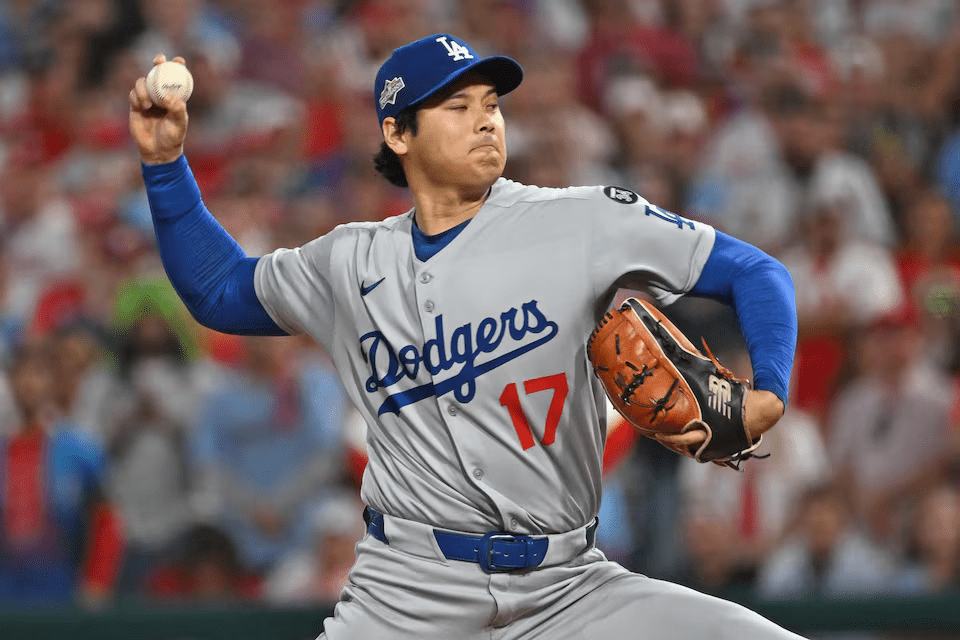
In the Dodgers’ Game 1 win over the Phillies in the National League Division Series, Shohei Ohtani delivered a masterful pitching performance but struggled at the plate — a trade-off that manager Dave Roberts suggested might stem from Ohtani’s singular concentration on his mound responsibilities.
Ohtani struck out four times during his plate appearances, an unusual outcome for one of the game’s most feared hitters. At the same time, he tossed six strong innings, striking out nine batters and helping guide Los Angeles to a 5-3 victory.
Roberts acknowledged the tension inherent in Ohtani’s dual role. “On days that Shohei pitches, a large amount of the focus is on the pitching,” he told reporters, adding that in this outing, the effort required to weather a tough second inning might have “bled in” to his batting.
Ohtani had allowed three runs in that second frame, but regained control, executing a combination of pitches to keep the Phillies off balance. Roberts praised his command, particularly his ability to mix locations and effectively use the curveball.
That said, Ohtani’s struggles at the plate were stark: striking out four times in a postseason at-bat sequence is rare for a hitter of his calibre. But in this case, the spotlight may have shifted. Roberts’ theory is that the mental and physical investment required to pitch well in a high-stakes game can detract from batting performance.
Still, the fact that Ohtani could compartmentalize — separate his day as a pitcher from his performance as a batter — speaks to his skill and mental resilience. Roberts described the feat as nearly superhuman, given that Ohtani had to juggle both high-pressure duties in the same game.
It’s a balancing act Ohtani has faced before. His ability to be a two-way player is what makes him unique, but it also imposes challenges. On days when he doesn’t pitch, he can devote full attention to hitting. On days like this one, he must divide his focus, a fact that Roberts clearly believes may have had consequences.
As the series continues, it will be intriguing to see whether Ohtani’s offensive output changes when he isn’t on the mound, and how the Dodgers manage his workload in high leverage situations. For now, his pitching dominance secured the win — even if it meant a quieter night at the plate.

2 comments
Who knew striking out four times could be considered unusual for Shohei? Roberts theory about focus bleeding over is pretty funny – its like hes a human Jenga tower, trying to balance pitching AND hitting without toppling over! Calling his ability nearly superhuman is rosy; its more like hes juggling fireballs with a bat. I love that theyre already analyzing whether his hitting changes *when hes off the mound*. Meanwhile, the real hero today was clearly the curveball, keeping the Phillies off balance while Shohei took a mental break at the plate. Its a unique challenge, for sure – imagine having to switch between peak pitcher and peak slacker hitter in the same game! Roberts clearly believes dividing focus has consequences, which is probably why we have managers. Still, that win feels secure, even if Shohei decided to save his energy for… maybe tomorrow? #OhtaniLife #FocusBleed #PitcherOrHitterđếm ngược ngày
Its a classic Ohtani conundrum! Pitching a gem only to strike out like a rookie is like being a superhero who forgot his powers sometimes. Dave Roberts mental energy bleed-over theory is plausible, though I bet Shoheis brain just went, Nah, hitting is hard today, focus on striking people out from the mound. Still, separating pitcher mode from hitter mode is almost superhuman – like juggling chainsaws while riding a unicycle. Its impressive, maybe a touch exhausting, and perfectly showcases why two-way players are unique anomalies in baseball. Lets hope his hitting isnt bleeding into his pitching next time, unless thats the new hidden ability!marketing poster ai generator