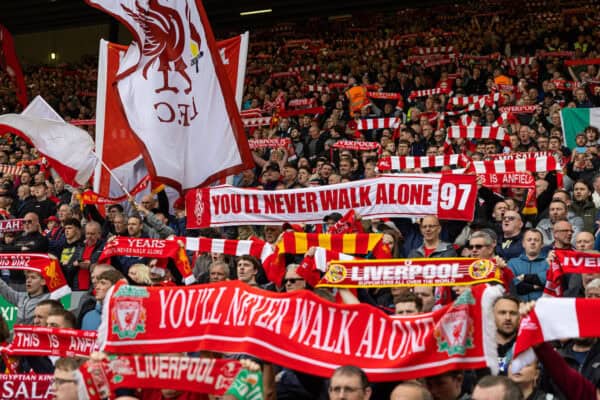
The Fields of Anfield Road has grown to become more than a terrace anthem for the Kops, and stands just behind You’ll Never Walk Alone on the list of Liverpool songs. It is a living archive of Liverpool Football Club’s identity, sung with defiance, nostalgia and unity by generations of supporters inside Anfield. Adapted from the Irish folk ballad The Fields of Athenry by Pete St. John, the Fields of Anfield Road has evolved into one of English football’s most emotionally charged tributes to history, tragedy and enduring loyalty.
On matchdays, particularly from the Kop, the Fields of Anfield Road echoes across the stadium in full voice, along with other historic chants like Alez Alez Alez. Some Kopites now see it is ritual.
The Origins of the Fields of Anfield Road
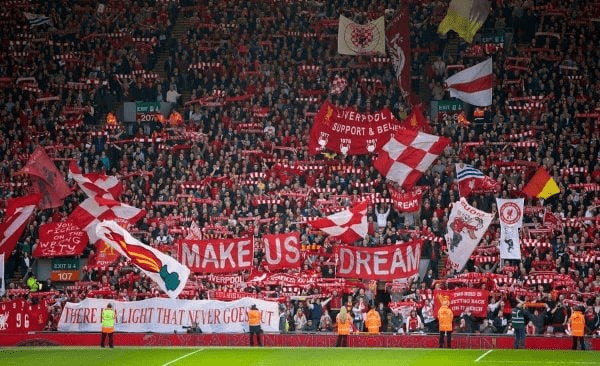
The melody of the Fields of Anfield Road comes directly from The Fields of Athenry, a song rooted in Irish famine history. Liverpool, with its deep Irish heritage, found resonance in that tune.
The lyrics were rewritten by Liverpool supporter Gary “Fergo” Ferguson from Huyton. The adaptation shifted the narrative from Irish hardship to football immortality, anchoring the song in Liverpool’s golden eras and its towering figures.
The first two verses honour Bill Shankly and Bob Paisley. Both men reshaped Liverpool Football Club into a European powerhouse. The chorus references Anfield Road and iconic players such as Kenny Dalglish and Steve Heighway, celebrating a time when Liverpool dominated domestically and in Europe.
The anthem grew organically among fans before becoming a staple on the Kop, and its emotional pull lying in collective memory rather than commercial packaging.
Fields of Anfield Road and the Legacy of Shankly and Paisley
To understand the Fields of Anfield Road, one must understand Bill Shankly. Appointed in 1959, Shankly rebuilt Liverpool from Second Division obscurity into league champions and FA Cup winners. He laid the foundations of a dynasty built on discipline, belief and unity.
The reference to “the great eleven” reflects the teams he assembled, most notably the 1960s sides that restored Liverpool’s dominance.
Bob Paisley, his successor, elevated that legacy further. Under Paisley, Liverpool won three European Cups in 1977, 1978 and 1981. The lyric “Back in Rome in ’77” refers to Liverpool’s first European Cup triumph against Borussia Mönchengladbach in Rome. Paisley remains one of the most successful managers in European football history.
The Fields of Anfield Road has immortalized both men, and they ever will live on the tongues of Liverpool supporters, and blossom in the echoes of their reverberating voices.
The Hillsborough Verse in the Fields of Anfield Road
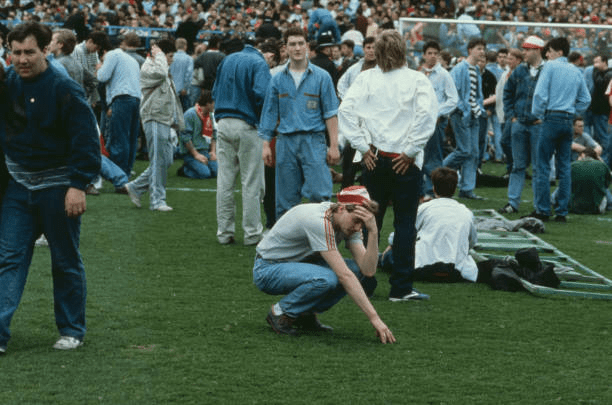
In 2009, marking 20 years since the Hillsborough disaster, a third verse was added to the Fields of Anfield Road. Co-written by John Power of the band Cast, this addition transformed the song from celebration to remembrance.
The Hillsborough tragedy in 1989 claimed 97 lives. The verse referencing the Hillsborough Flame acknowledges grief and resilience. The lyric “Justice has never been done” identifies the decades-long legal battle pursued by families.
The recorded version by the Liverpool Collective featuring the Kop Choir reached number 14 on the UK Singles Chart and number one in Scotland. Yet its true power remains in live performance at Anfield.
What the Fields of Anfield Road Means to Liverpool Supporters
The Fields of Anfield Road functions as collective memory. It bridges eras, linking Shankly’s revolution, Paisley’s European conquests, Dalglish’s brilliance and the sorrow of Hillsborough.
Unlike choreographed stadium anthems, this song belongs to the supporters. It is sung in full voice before kick-off and often again during emotionally charged moments. George Sephton, known as the “Voice of Anfield,” frequently plays it over the public address system at half-time, showing its ritual status.
https://24sportsarena.com/category/football/What endures is the meaning. The Fields of Anfield Road represents unity in triumph and solidarity in tragedy. It is nostalgia without sentimentality and remembrance without surrender. At Anfield, it is not merely a song. It is a declaration that Liverpool’s past remains inseparable from its present.
