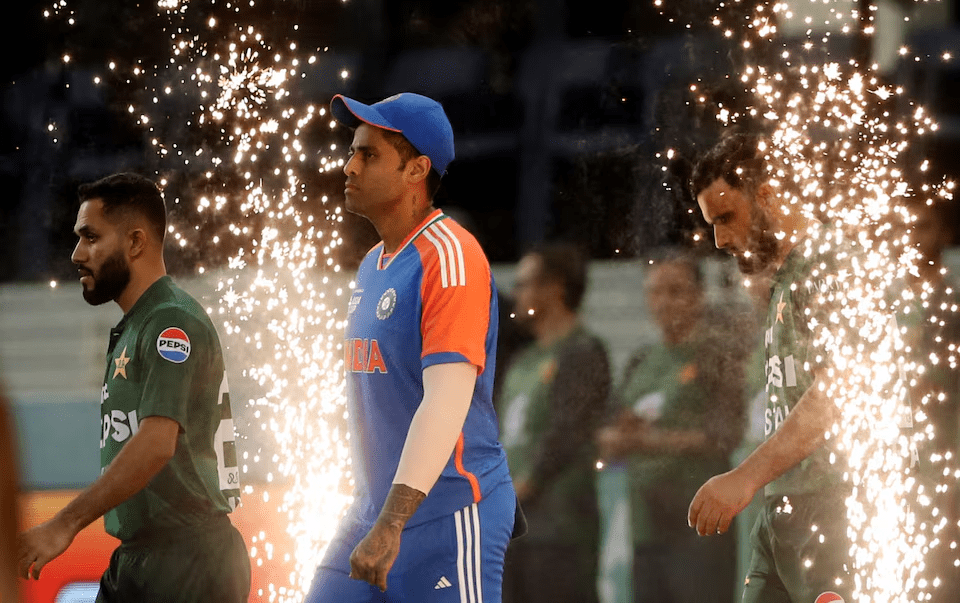
India’s victory over Pakistan in the 2025 Asia Cup final was marred by controversy when the Indian captain, Suryakumar Yadav, claimed that his team was “denied” the opportunity to receive the trophy that they had fought so hard to win. The dramatic finish on the field was eclipsed by confusion and tension off it, raising questions about politics, sportsmanship, and the role of governing bodies in high-stakes contests.
India defeated Pakistan by five wickets in the final at the Dubai International Cricket Stadium, chasing down a target of 147 with just two balls to spare. Tilak Varma anchored the run chase with an unbeaten 69, helping India secure their ninth Asia Cup title.
But what should have been a triumphant moment turned uneasy during the trophy presentation ceremony. According to reports, the proceedings were delayed by more than an hour and then abruptly halted just before the winner’s trophy could be handed to the Indian team. The Indian players, it emerged, had declined to accept the trophy from Mohsin Naqvi, who is both the Asian Cricket Council (ACC) President and Pakistan’s Interior Minister, and also holds the position of chairman of the Pakistan Cricket Board (PCB).
In his post-match remarks, Suryakumar Yadav said, “I think this is one thing which I’ve never seen since I started playing cricket … that a champion team is denied a trophy, and that too a hard-earned one.” He asserted that his side deserved the trophy and insisted that no external pressure had compelled them to refuse it. “My trophies are sitting in the dressing room, all the 14 guys with me, the support staff — those are the real trophies throughout this journey in the Asia Cup,” he added.
According to Indian media accounts, the decision to decline the trophy was in line with their earlier refusal to shake hands with the Pakistan team during the tournament, and part of a broader protest. The BCCI (Board of Control for Cricket in India) confirmed that their players had refused to take the trophy from Naqvi, and stated that they would pursue formal action to recover the trophy and the medals.
From the Pakistan side, captain Salman Agha criticized India’s conduct, claiming that it disrespected cricket. He argued that not shaking hands and refusing the trophy went beyond politics and undermined the spirit of the game.
The whole episode throws into sharp relief how geopolitical tensions can intrude on sport, especially in the India-Pakistan rivalry. Earlier in the tournament, the Indian team’s refusal to shake hands with their rivals had already stirred debate about sportsmanship and decorum. India’s decision not to accept the trophy added a new dimension — one that goes beyond rivalry on the field and reverberates through diplomacy, symbolism, and governance.
At the end of it all, Suryakumar insisted that what mattered most was that India were champions. He pointed to the display on the big screen — “Asia Cup 2025 Champions” — as validation and said that memories of the campaign would endure. But the absence of a formal trophy presentation will be difficult to forget, especially for those who believe that sport’s rituals matter as much as its outcomes.