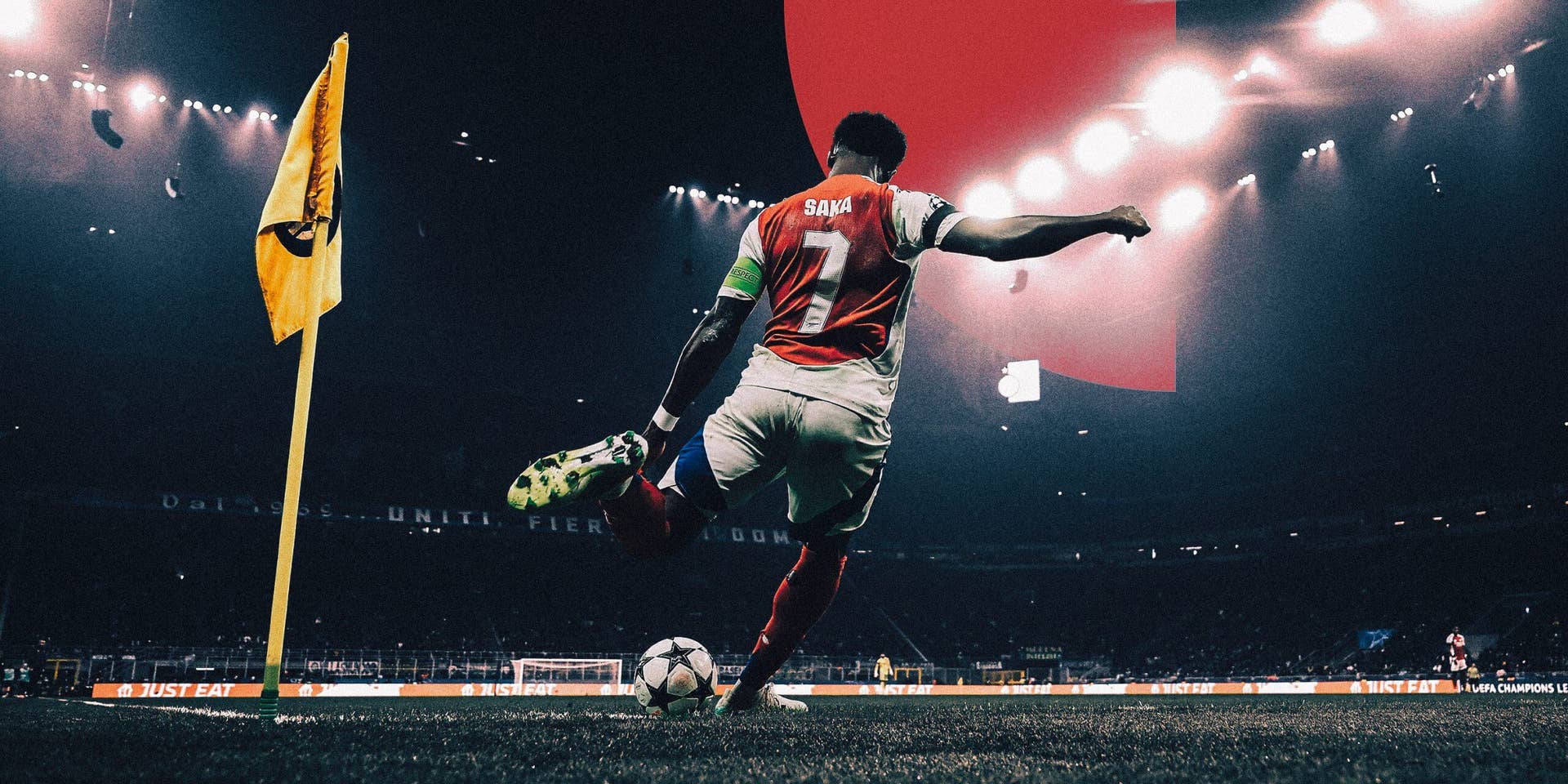
Football spent a decade preaching patience, possession, and “controlling the game”, only to wake up in 2026 and remember its first love: set-piece football. Corners are treated like penalty kicks, throw-ins are launched like mortars, and aerial duels have become the sport’s newest love language. The modern game still wears designer boots and talks about principles, but it is increasingly playing like it has rediscovered a dusty VHS titled Kick n’ Follow.
The Premier League itself has reported a sharp rise in long throws this season, with long throws into the penalty area almost doubling year on year and becoming a clear tactical trend. And if anyone is shocked, the ball is not even in play for the full 90 anyway. The league’s own analysis has put average in-play time at 58 minutes, 37 seconds, which means a large chunk of a match is already living in stoppages, restarts, and arguments.
Set-piece football Revival: the Beautiful Game Has Rediscovered the Ugly Arts
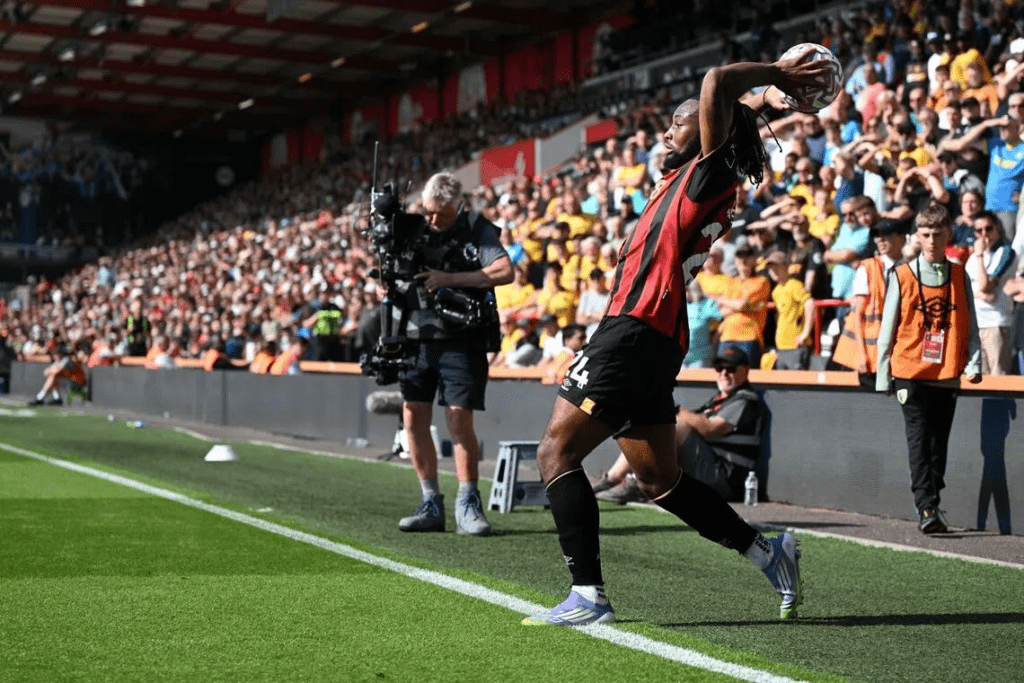
The set-piece football has turned every dead ball into a well cut-out plan. Corners now come with choreography. Free-kicks come with rehearsed runs. Throw-ins arrive with the intensity of a military exercise. Premier League reporting shows that in the opening weeks of this season, all 20 teams attempted multiple long throws aimed into the box, and the league’s average long throws per match spiked sharply compared with last season.
So yes, football’s future is currently being delivered from the touchline by a full-back who looks like he warms up by tossing refrigerators.
And the funniest part is that it works. Not because it is beautiful, not because it is artistic, but because it is efficient. If a team can generate chaos with a throw, force panic, win a second ball, and score, it does not need a 47-pass move to prove anything. The table does not give extra points for aesthetics.
Set-piece Football Revival: Arsenal’s Chaotic Corners and the New Copycat Model
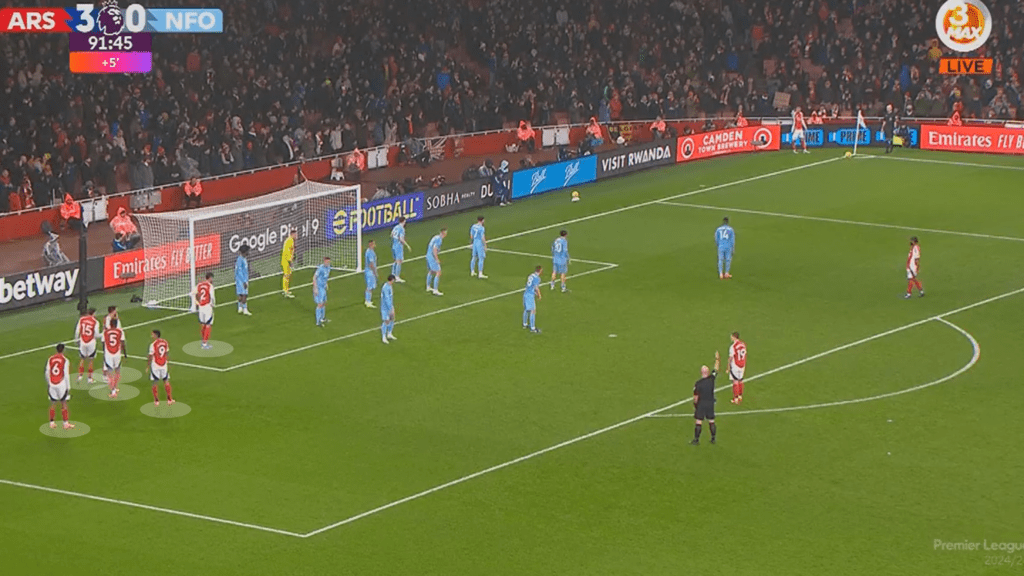
If modern football needs a headline act for the set-piece football revival, Arsenal have volunteered. Their set-piece output has been widely noted this season, with reporting highlighting how their efficiency from dead balls has become a defining weapon. One recent report even framed Arsenal’s rise as “set-piece precision” driving results at the top end of the Premier League.
Once one top team proves you can win big games with corners and rehearsed routines, the rest of the league responds like students copying the smartest kid’s homework, except the handwriting is like a chicken’s and the teacher is a centre-back with a headache.
Smaller sides, especially, have embraced long throws and set plays as an equaliser. The league’s own trend pieces shows that long throws are back in fashion and increasingly dangerous. The idea is simple, if you cannot outplay the giants, outlaunch them.
The Ball Barely Stays on the Grass Anymore
There is a quiet statistic that makes the set-piece football revival feel less like a trend and more like a logical conclusion. The Premier League’s own in play data has shown that the ball is live for under 60 minutes on average, even before accounting for the added time era.
So modern teams have adapted like true professionals. If the ball is going to spend large portions of the match being restarted, then clubs will treat those restarts like they are open-play attacks. Football did not become more direct by accident. It became more direct because the game keeps stopping, and teams have decided to turn every stop into a scoring chance.
It is also why the obsession with “tiki-taka purity” now feels slightly nostalgic. Possession is still useful, but it is no longer treated as morality. The new religion is pressure, restarts, and a well-aimed delivery into a crowded box.
A Twist: Modern Coaches Have Repackaged Old Football as Innovation
The set-piece football revival would be less hilarious if it was not sold as modern. Clubs have not admitted they are returning to the old ways. They have rebranded them.
A long throw is no longer a long throw. A hopeful cross is no longer hopeful. A clearance is “vertical progression”. The football is old, the language is new, and everyone pretends this is not exactly what their fathers were doing, just with better cameras and more analyst laptops.
Even the league’s own tactical trend reporting has shown how direct play and long throws are shaping matches this season. The evidence is there. The irony is also there.
What this Means for the Season
The set-piece football joke is not one that will disappear next week. It is a competitive advantage, and competitive advantages get copied until defenders adjust or rule changes intervene.
Expect more rehearsed routines. Expect more throw-ins aimed at the penalty area. Expect more games decided by second balls and chaos moments. Expect pundits to argue about “football heritage” while secretly applauding the efficiency.
Football has not abandoned possession entirely. It has simply remembered that beauty is optional, points are mandatory, and a well-drilled corner can be worth more than a thousand pretty passes.
And so the modern teams have spoken, loudly, with the ball mostly in the air: sew for us the old days, our fathers, so we may wear them under our new garments.
