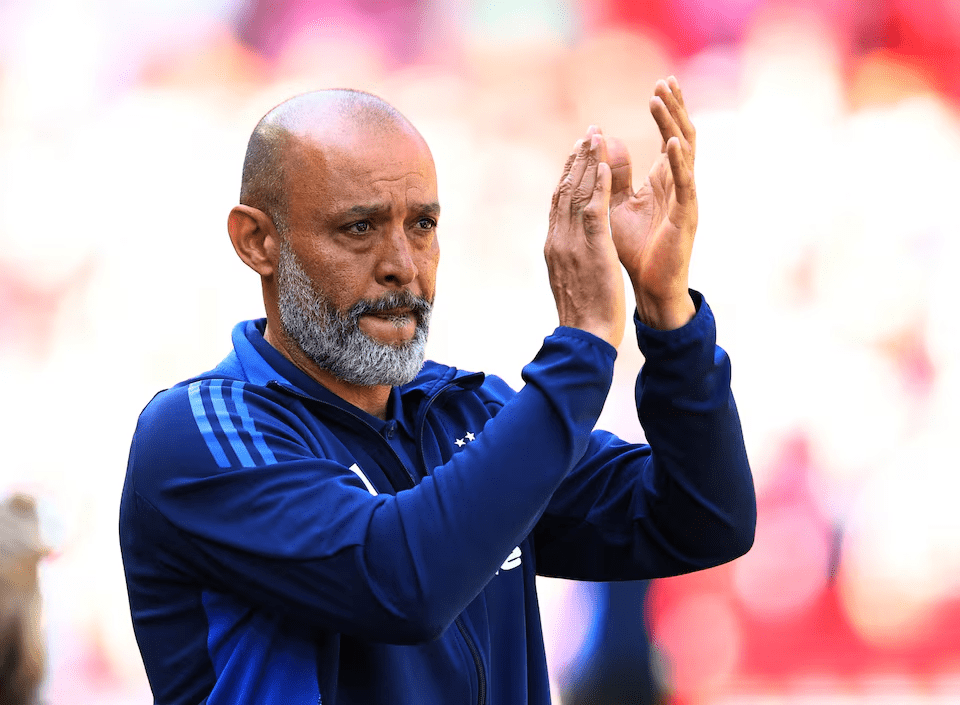
West Ham United have confirmed the appointment of Nuno Espirito Santo as their new head coach on a three-year contract, following the dismissal of Graham Potter after a turbulent start to the 2025-26 season.
Potter’s tenure had been under pressure ever since he replaced Julen Lopetegui in January. Under his leadership, West Ham struggled to establish consistency, finishing 14th in the previous season with just five Premier League victories after his arrival. The 2025-26 season began even more disastrously. In the first five league matches, West Ham conceded 13 goals, recording heavy defeats and sliding toward the bottom of the table. A 2-1 loss at home to Crystal Palace marked the final straw.
The club’s board issued a statement indicating that “results and performances over the course of the second half of last season and the start of the 2025-26 season have not matched expectations,” and that a managerial change was necessary to arrest the slide. Potter and his entire coaching staff (including assistant Bruno Saltor, first team coaches Billy Reid and Narcis Pelach, and goalkeeper coaches Casper Ankergren and Linus Kandolin) departed with immediate effect.
Espirito Santo arrives at West Ham only weeks after being let go by Nottingham Forest, where he had been lauded for guiding them through a relegation fight and later into European qualification. His exit from Forest was reportedly due to a breakdown in relations with the club’s ownership rather than purely performance issues.
At West Ham, Espirito Santo inherits a squad in disarray, with defensive fragility exposed and morale under strain. His opening test comes immediately: he will take charge in a Premier League away fixture at Everton.
The choice of Espirito Santo suggests West Ham’s hierarchy is hoping for a coach capable of stabilizing the defence, restoring structure, and recuperating the club’s Premier League status. Comments accompanying his signing emphasised that “the work has already started” and he is determined “to get the very best from the team and ensure that we are as competitive as we possibly can be.”
That said, his arrival will not be without challenges. The squad has some limitations; whether Espirito Santo’s tactical methods and man-management style will suit the existing roster is an open question. Questions remain over how quickly he can instill his ideas, address glaring defensive issues, and win the trust of the players and supporters amid a pressure-cooker environment.
Potter, in his farewell message, expressed disappointment but acknowledged that results had not been sufficient. He also thanked the club, staff and fans, though many felt the timing and manner of his dismissal were abrupt and lacking in sensitivity.
For West Ham, the appointment of Espirito Santo signals a shift to a more pragmatic outlook. The board seems to be backing a manager with experience in crisis environments—someone who can be judged more on immediate stabilization than on ambitious long-term project building in the short term.
In the weeks ahead, all eyes will be on how Espirito Santo manages his debut matches, whether he can stem the leak of goals, and whether the players respond to his leadership. The stakes are high: West Ham must avoid slipping into a relegation scrap and seek to reestablish momentum. Whether Espirito Santo can arrest the decline and turn this season’s narrative around remains to be seen.