Few clubs in modern football have experienced a rise and fall as dramatic as Chelsea. From European dominance to internal instability, the story of Chelsea over the past two decades is one of transformation, success, disruption, and uncertainty. Understanding where it all began is essential to explaining where things stand today.
The Abramovich Era: When Chelsea Became a Global Power

The modern identity of CFC was largely shaped in 2003 when Roman Abramovich purchased the club. His arrival marked a turning point not just in Chelsea’s history but in the financial landscape of European football. Massive investment in world-class players, infrastructure, and managerial talent turned the Blues from a competitive English side into a consistent domestic and continental powerhouse.
Under Abramovich, the Club won multiple Premier League titles, domestic cups, and two UEFA Champions League trophies. The club developed a culture of winning, built a global brand, and established itself as a heavyweight capable of competing with the biggest teams in Europe. While managerial turnover was frequent, results often justified the ruthless approach. Stability at board level and clear sporting ambition ensured Chelsea remained among football’s elite.
Sanctions and the Forced Sale: A Sudden Turning Point for Chelsea
The Russia–Ukraine war in 2022 fundamentally altered Chelsea’s trajectory. The UK government imposed sanctions on Abramovich due to his alleged links with the Russian state, forcing him to sell the club. This moment marked the end of an era defined by decisive leadership and financial backing.
The subsequent sale to a consortium led by Todd Boehly and Clearlake Capital was widely seen as a necessary transition rather than a strategic football decision. While the new ownership promised continuity and growth, the circumstances surrounding the sale created uncertainty. The London side were transitioning from a proven ownership model to an untested one during a period of geopolitical crisis.
This change coincided with the club’s recent success under Thomas Tuchel, including the Champions League triumph and the FIFA Club World Cup victory. Chelsea were not a club in decline when Abramovich was forced to sell. Instead, they were still operating as a European giant with a clear identity and tactical structure.
The Clearlake Vision: Rebuilding or Reinventing Chelsea?
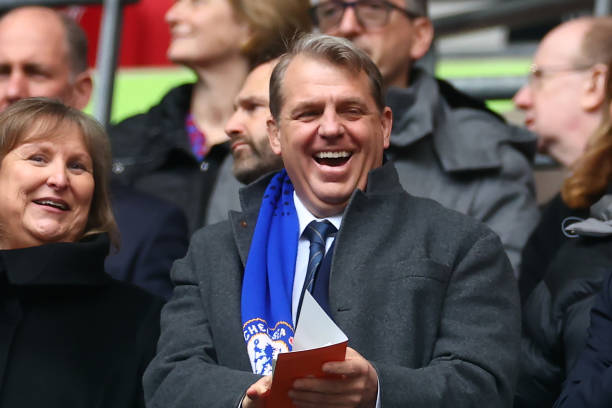
The new ownership arrived with an ambitious long-term project centered on youth development, data-driven recruitment, and financial sustainability. This approach represented a stark contrast to the Abramovich era, which prioritized immediate success.
One of the earliest and most controversial decisions was the dismissal of Thomas Tuchel early in the season. Replacing him with Graham Potter, and paying Brighton a significant compensation fee, signaled a commitment to a long-term managerial project. However, Potter’s tenure lasted only a few months despite a multi-year contract, highlighting the contradictions within Chelsea’s new strategy.
At the same time, the departure of key executives such as Marina Granovskaia removed institutional knowledge that had been central to the Blue’s success. Recruitment strategy also appeared inconsistent, with Boehly himself admitting that Chelsea often pursued players targeted by rival clubs. Signings such as Marc Cucurella and Mykhailo Mudryk reflected this reactive approach rather than a coherent sporting vision.
The Pochettino Reset and the Illusion of Stability
After further instability, Mauricio Pochettino was brought in to restore structure. His tenure, following Frank Lampard’s interim spell, offered glimpses of progress. Chelsea began to show tactical cohesion, and the squad started to develop a collective identity.
This period was reinforced by success on the continental stage, including the UEFA Conference League title and another Club World Cup triumph. Under Pochettino and later Enzo Maresca, they appeared to be rebuilding their reputation as a competitive European force.
Vice-captain Enzo Fernández publicly acknowledged that Chelsea were developing a clear identity, and optimism began to return among supporters. For the first time since the ownership transition, there was a sense that the long-term project might be working.
January 2026: The Decision That Reignited the Chelsea Crisis

On January 1, 2026, Chelsea released a statement confirming the departure of Enzo Maresca. The decision shocked the fanbase, particularly given the club’s relatively strong league position and progress in competitions.
Maresca had reportedly requested key reinforcements, especially a central defender to cover for injuries to Levi Colwill. The board’s refusal to sanction these signings became a defining moment in Chelsea’s recent struggles. A subsequent poor run of form, with only two wins in nine matches, intensified pressure on both the squad and the management.
Despite this dip, Chelsea remained within reach of Champions League qualification. The decision to part ways with Maresca raised questions about the ownership’s commitment to long-term planning.
The Rosenior Gamble: Project or Panic?
Chelsea’s appointment of Liam Rosenior from Strasbourg on a six-and-a-half-year contract was framed as a continuation of the long-term project. Initially, results appeared promising, with four wins in his first five matches.
However, momentum quickly faded. Defeats to Arsenal in the Carabao Cup semi-finals and a humiliating 8–2 aggregate loss to Paris Saint-Germain in the Champions League represented significant setbacks. Chelsea’s inability to score in multiple matches and a winless run compounded concerns about tactical direction and squad quality.
The Rosenior appointment highlighted the risks associated with prioritizing managerial potential over proven experience at a club with Chelsea’s expectations.
Recruitment Strategy and Wage Structure: A New Identity Crisis

Another major factor in Chelsea’s decline has been the shift toward signing young, unproven players on long-term contracts. While this model aims to create financial sustainability and future value, it has often resulted in a lack of immediate competitiveness.
The wage structure, designed to limit financial risk, has also created challenges in attracting elite, established players. Combined with an inexperienced board navigating complex football governance, Chelsea’s decision-making has frequently appeared reactive rather than strategic.
So, Where Did It Go Wrong for Chelsea?
The crisis at Chelsea cannot be attributed to a single moment. Instead, it reflects a combination of structural, strategic, and cultural changes.
It may have begun with the forced sale that removed a proven ownership model. It may have intensified with the selection of Clearlake over other bidders. It could also be traced to the dismissal of Tuchel, the instability under Potter, or the failure to back Maresca at a crucial stage.
Ultimately, Chelsea’s struggles appear to stem from a clash between long-term ambition and short-term expectations. The club’s identity, once built on decisive leadership and competitive success, has been replaced by an ongoing experiment in football management.
As results continue to fluctuate, the central question remains unresolved. Is Chelsea undergoing a necessary transition, or have critical missteps fundamentally altered the trajectory of one of Europe’s most successful clubs?
Until a consistent sporting vision emerges, the debate will continue. And for Chelsea supporters, the search for answers will remain as urgent as ever.
