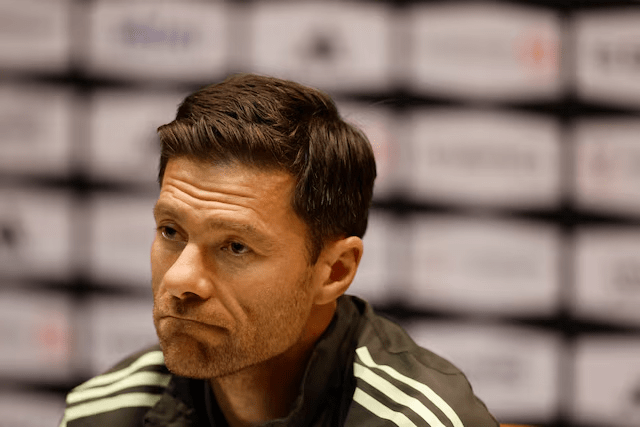
Real Madrid and Xabi Alonso have formally agreed to part ways, bringing an end to a short and turbulent managerial tenure that lasted just seven months. The club announced the decision on Monday, shortly after Los Blancos’ 3–2 defeat to Barcelona in the Spanish Super Cup final in Jeddah, Saudi Arabia — a result that effectively crystallized ongoing frustrations and performance issues during the Spanish giants’ 2025-26 campaign.
In a statement released by the club, Real Madrid confirmed that “by mutual agreement between the club and Xabi Alonso, it has been decided to bring his time as first-team coach to an end.” The club also expressed its heartfelt appreciation for Alonso’s service and reaffirmed that he “will always have the affection and admiration of all Madrid fans” because he is a club legend who represented the team’s values both as a player and coach.
Alonso’s Appointment: A Return to the Bernabéu
The appointment of Xabi Alonso as head coach in May 2025 was met with enthusiasm from fans and pundits alike. Alonso had earned widespread acclaim through his managerial work, particularly at Bayer Leverkusen, where he led the German club to an unbeaten Bundesliga title and impressive domestic and European performances — a rare achievement that established him as one of Europe’s most promising young coaches.
Real Madrid announced Alonso’s hiring on a three-year deal, positioning him as the successor to veteran coach Carlo Ancelotti. The decision followed a period of speculation linking Alonso with other top jobs across Europe, including Liverpool, and was widely seen as a bold move by Real’s hierarchy to usher in a new tactical era at the Santiago Bernabéu.
Early Success and Rising Expectations
Initially, Alonso’s tenure appeared to justify the club’s faith. Real Madrid enjoyed a strong start in La Liga, with a series of convincing performances that kept them high in the title race. The team also recorded noteworthy victories, including a Clásico win over Barcelona early in the season.
Fans noted Alonso’s tactical imprint on the team — a blend of disciplined structure, modern pressing transitions, and positional play influenced by contemporary coaching trends. He earned plaudits for fostering intensity in training and encouraging a more cohesive defensive approach.
Challenges on Multiple Fronts
Despite a promising start, cracks began to show as the season progressed. Real Madrid’s performance in major competitions became inconsistent. The team suffered heavy defeats on the European stage, including losses to Liverpool and Manchester City in the Champions League, and inconsistent form in La Liga allowed rivals Barcelona to overtake Madrid in the standings.
Many within the club and the footballing community felt that, while Real remained highly competitive, results did not match the lofty expectations that accompany managing one of the world’s most decorated clubs. Even an impressive overall win percentage did not immunize Alonso from scrutiny, as expectations at Real Madrid are rarely measured by percentages alone.
Internal Dynamics and Locker Room Tension
One of the recurring narratives during Alonso’s tenure was the reported tension between the coach and some senior players. Various reports suggested that certain members of Madrid’s squad had difficulty adapting to Alonso’s methods, with disagreements arising over training intensity, tactical roles, and squad hierarchy.
Critics argued this discord may have contributed to a lack of cohesion on the pitch, particularly in key matches, including those against city rivals and top European sides. Some fans and commentators interpreted the situation as a deeper cultural issue within the dressing room — one that challenged Alonso’s authority and his ability to unify the squad effectively.
The Final Straw: Supercopa Defeat
The defining moment for the end of Alonso’s tenure came in the Spanish Super Cup final against Barcelona, where Real Madrid suffered a 3–2 loss. While not disastrous on its own, the defeat nonetheless symbolized the story of a season marked by near-misses and unrealized potential — particularly given the rivalry between the two clubs and the heightened importance placed on silverware at Real Madrid.
Many observers saw this loss as the catalyst for decisive action, prompting both the club and Alonso to reassess the direction of their partnership. The mutual agreement to part ways signaled a recognition that, despite strong efforts, both parties might be better served by new leadership.
Álvaro Arbeloa: The New Man in Charge
Immediately following Alonso’s departure, Real Madrid confirmed the appointment of Álvaro Arbeloa as the new head coach of the first team. Arbeloa — a former Madrid defender with extensive experience in the club’s academy and youth coaching system — had been managing Real Madrid Castilla prior to his promotion.
As a player, Arbeloa enjoyed a successful career with Los Blancos, featuring in over 200 matches, winning numerous domestic and European titles including two UEFA Champions League trophies. His experience with both Madrid’s senior squad and youth development system positions him as a figure capable of bridging the demands of elite competition with the club’s traditions and player development ethos.
Arbeloa’s first major assignment as head coach is a Copa del Rey match against Albacete, providing an early test of his ability to steady the team and regain momentum in domestic competition.
Legacy and Future Prospects
Xabi Alonso’s departure from Real Madrid marks one of the most unexpected coaching exits in recent memory — a reminder of the intense pressure and little margin for error that defines elite football management. His time in charge was a fusion of tactical promise and transitional challenges, leaving fans and analysts to debate what might have been had circumstances differed.
For Alonso himself, the future remains open. His coaching reputation remains strong, and several top clubs in Europe may consider him for managerial roles depending on vacancies and timing. Supporters and pundits alike will watch closely to see where his next chapter unfolds.
On the other side, Real Madrid enters a new tactical chapter with Arbeloa at the helm — a coach rooted deeply in the club’s culture and history, tasked with reigniting Madrid’s title ambitions on domestic and European stages.