Football has produced countless great teams, but few have captured the imagination quite like Brazil at the 1982 World Cup.
They were artists disguised as footballers. Their matches felt less like sporting contests and more like performances. With Zico pulling the strings, Sócrates dictating the tempo, Falcão controlling midfield, and Júnior charging down the flank, Brazil seemed destined to win the tournament.
Many still consider them the greatest team never to lift the World Cup.
Then came Paolo Rossi.
In one unforgettable afternoon in Barcelona, the dream died. The beauty remained. The memories endured. But the trophy slipped away.
The story of the 1982 World Cup cannot be told without revisiting one of football’s most painful and brilliant matches.
Brazil’s Magical Team at the 1982 World Cup
The Brazil squad that arrived in Spain for the 1982 World Cup was unlike any other.
Modern football often values structure, athleticism, and efficiency. This Brazilian team valued creativity above all else.
Their football was breathtaking.
Coach Telê Santana encouraged freedom of expression. Players were trusted to improvise, attack, and entertain. The result was a side packed with technical brilliance.
The Stars of Brazil’s Golden Generation
- Zico
- Sócrates
- Falcão
- Júnior
- Éder
Together, they produced some of the finest football ever seen on a World Cup stage.
Brazil scored freely throughout the tournament, defeating opponents with style and confidence. Fans around the world adopted them as their second team.
By the time they reached the second group stage, many believed the 1982 World Cup was already theirs to lose.
Paolo Rossi’s Unlikely Return
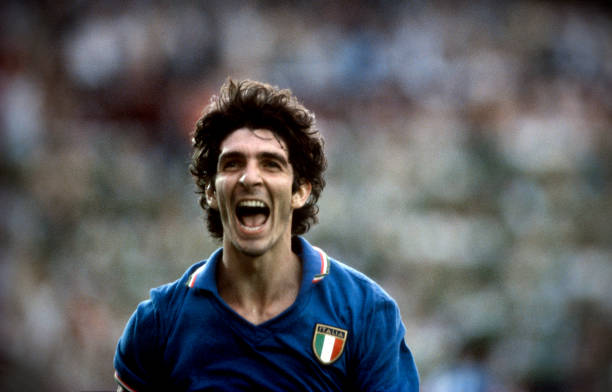
While Brazil arrived as football’s darlings, Italy entered the tournament surrounded by uncertainty.
Their star striker, Paolo Rossi, had only recently returned from suspension following the Totonero match-fixing scandal.
The ban had kept him away from football for nearly two years.
Many questioned whether he should even be in the squad.
His early performances did little to silence critics. Rossi struggled for form and looked far from the player who had once been among Italy’s brightest attacking talents.
Few could have imagined that the story of the 1982 World Cup would soon belong to him.
Why Brazil Only Needed a Draw
The match between Brazil and Italy on 5 July 1982 was effectively a quarter-final.
Both teams were part of the second group stage format used during the tournament.
The mathematics were simple. Italy needed to win. Brazil only needed a draw to advance. Most teams would have played cautiously with such an advantage. Brazil did not know how. Their philosophy was built on attack. They believed football should be played positively regardless of circumstance.
That commitment to beauty would ultimately become their downfall.
Paolo Rossi World Cup Hat Trick Stuns Brazil
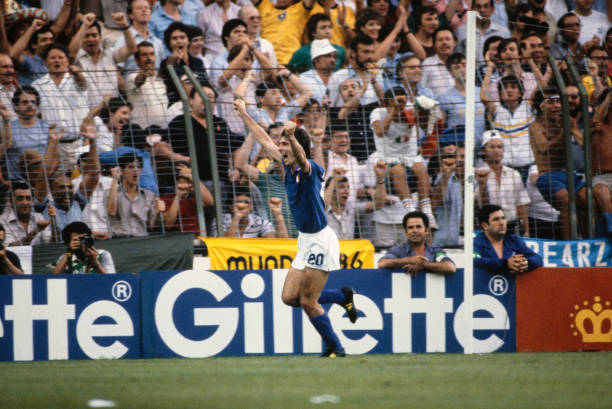
The match began at a frantic pace. Just five minutes into the contest, Rossi headed Italy into the lead. Brazil responded quickly. Sócrates equalized with a brilliant finish after combining beautifully with Zico.
At 1-1, Brazil still held the advantage they needed. Then disaster struck. A defensive mistake allowed Rossi to score again, restoring Italy’s lead and silencing sections of the crowd.
Yet Brazil refused to panic. They continued attacking, continued creating chances, and continued believing. Their reward arrived through Falcão.
The midfielder produced a stunning strike to level the match at 2-2. Again, a draw was enough. Again, Brazil could have protected the result. Again, they chose to attack.
Then came the decisive moment. A corner was only partially cleared. The ball fell kindly to Rossi inside the penalty area.
The striker reacted first and slammed home his third goal.
The Paolo Rossi World Cup hat trick was complete. One of football’s greatest individual performances had just unfolded against one of football’s greatest teams.
The Cruel Beauty of Brazil’s Defeat
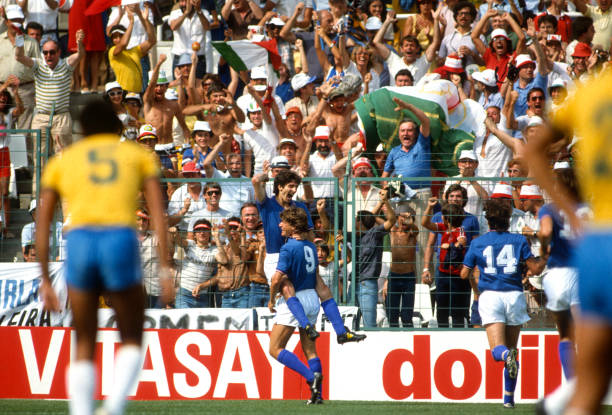
Even after falling behind for the third time, Brazil continued attacking. Wave after wave of yellow shirts surged forward. The chances came.
The pressure increased. Italy defended desperately. Every clearance felt significant. Every save felt monumental.
When the final whistle arrived, the scoreboard read:
Italy 3-2 Brazil
The result sent shockwaves through football. Brazil were out. The most exciting team at the 1982 World Cup had been eliminated.
For millions of supporters, it felt deeply unfair. How could a team that played so beautifully go home empty-handed? Football, as always, offered no easy answers.
How Rossi Changed the 1982 World Cup
The Paolo Rossi World Cup hat trick transformed the entire tournament. Before the Brazil match, Rossi had scored no goals. After it, he became unstoppable.
He scored twice against Poland in the semi-final. He added another goal in the final against West Germany. Italy won the World Cup.
Rossi finished as the tournament’s top scorer with six goals and won the Golden Boot. He also claimed the Golden Ball as the competition’s best player. From match-fixing exile to World Cup hero, it remains one of the most extraordinary redemption stories in football history.
Why the 1982 World Cup Match Still Matters
More than four decades later, fans continue debating this game. Some argue Italy deserved victory because they were tactically disciplined and ruthlessly efficient.
Others believe football lost something precious when Brazil were eliminated. The truth is that both perspectives can coexist. Italy showed the value of organization, resilience, and clinical finishing.
Brazil showed the beauty of creativity, courage, and attacking football. The match became a collision between two footballing philosophies.
It remains one of the defining moments of the 1982 World Cup.
The Legacy of Brazil’s Greatest Team
History remembers winners. Yet somehow, the Brazil team of 1982 is remembered almost as fondly as champions. Their influence extends far beyond trophies.
Many coaches, players, and supporters still point to that team as the embodiment of how football should be played. They did not win the World Cup.
They won something else. They won admiration. They won respect.
They won immortality.
The Day Football Broke a Million Hearts
The story of the 1982 World Cup is ultimately a story about football’s beautiful cruelty. Brazil had the better artists.
Italy had the better ending. One team gave the world unforgettable football. The other lifted the trophy.
And at the center of it all stood Paolo Rossi, a man who returned from suspension to score a legendary Paolo Rossi World Cup hat trick and change football history forever.
The day Brazil lost 3-2 to Italy remains one of the sport’s greatest tragedies and one of its greatest masterpieces. The beautiful game has rarely been more beautiful.
Or more cruel. The day the beautiful game broke a million hearts.

1 comment
[…] its introduction in 1982, the Golden Ball has celebrated players who have carried their teams through extraordinary […]