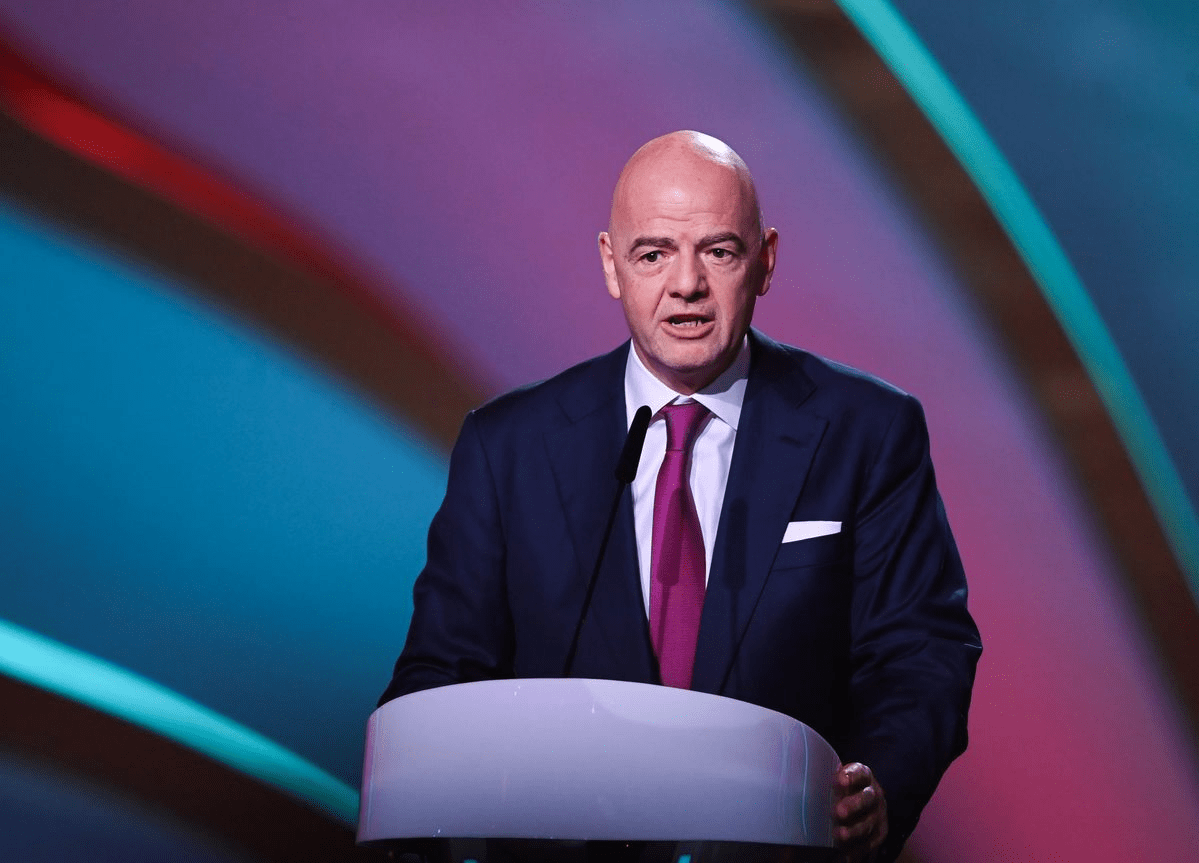
The statement by Gianni Infantino that FIFA will fully support Iran’s participation in the 2026 FIFA World Cup is far more than a routine administrative assurance. It sits at the intersection of global sport, geopolitics, diplomacy, and the long-standing debate over whether football can truly remain separate from politics.
Infantino’s promise comes at a time when tensions between Iran, the United States, and its allies have escalated into open conflict, raising unprecedented concerns about safety, logistics, and even the feasibility of Iran’s participation in a tournament co-hosted by the U.S., Canada, and Mexico. Against this backdrop, FIFA’s insistence that “Iran will play” reflects both the governing body’s commitment to sporting continuity and the complex realities of international football in a divided world.
Infantino’s Assurance: “Iran Will Play”
At the heart of the issue is Infantino’s firm declaration that Iran will participate in the 2026 World Cup. Speaking during a visit to Iran’s training camp in Turkey, he made it clear that FIFA has no alternative plan and is committed to ensuring Iran’s presence at the tournament.
His message was unambiguous:
- Iran has qualified for the tournament on merit.
- FIFA expects all qualified teams to compete according to the official schedule.
- The organization will provide whatever support is necessary to ensure Iran’s participation.
Infantino even went further, personally pledging to assist the Iranian national team with logistics, training arrangements, and preparations. This hands-on approach highlights FIFA’s determination to avoid disruption to the competition.
The Geopolitical Context
The controversy surrounding Iran’s participation stems from escalating military tensions involving Iran, the United States, and Israel. Recent airstrikes and retaliatory actions have significantly strained relations, leading to concerns about safety and diplomatic feasibility.
This conflict has had direct implications for football:
- Iran’s government has restricted travel to countries it considers hostile.
- Iranian officials have expressed concerns about player safety if matches are held in the United States.
- Political rhetoric from U.S. leadership has added uncertainty, with warnings about security risks.
These tensions have transformed what should be a purely sporting event into a complex diplomatic challenge.
Iran’s Request to Relocate Matches
One of the most significant developments has been Iran’s request to move its World Cup matches from the United States to Mexico. The reasoning is straightforward:
- Concerns over player safety
- Political hostility between nations
- Logistical complications related to visas and travel restrictions
Mexico, one of the co-hosts, has reportedly shown willingness to accommodate such a request.
However, FIFA has firmly rejected this proposal. Infantino emphasized that there is “no plan B, C or D”, signaling that the tournament structure will not be altered for political reasons.
This decision underscores FIFA’s commitment to maintaining the integrity of the competition schedule, even under extraordinary circumstances.
The Principle: Football vs Politics
FIFA has long promoted the idea that football should remain separate from politics. Infantino’s stance on Iran reflects this philosophy.
By insisting that Iran will play as scheduled, FIFA is attempting to:
- Preserve the neutrality of sport
- Avoid setting a precedent where political conflicts disrupt tournaments
- Reinforce football’s role as a unifying global force
Infantino himself framed football as a tool for dialogue and peace, suggesting that participation in the World Cup could serve as a bridge between divided nations.
However, critics argue that this separation is increasingly difficult to maintain. The reality is that international sport often reflects geopolitical tensions rather than escaping them.
Iran’s Qualification and Sporting Merit
It is important to note that Iran’s place at the World Cup is not in question from a sporting perspective. The team qualified convincingly through the Asian qualifiers and earned its spot among the world’s elite teams.
They are scheduled to compete in Group G alongside:
- Belgium
- Egypt
- New Zealand
All of Iran’s group matches are set to be played in U.S. cities such as Los Angeles and Seattle.
From a purely footballing standpoint, excluding Iran would undermine the integrity of the competition. This is a key reason FIFA is resisting any calls for removal or relocation.
Humanitarian and Symbolic Dimensions
The situation has also taken on a humanitarian dimension. Iranian players have used recent matches to honor victims of the ongoing conflict, drawing global attention to the human cost of war.
These gestures highlight:
- The emotional burden on players
- The intersection of sport and national identity
- The role of athletes as representatives of their people
Such actions reinforce the idea that football cannot be entirely isolated from real-world events.
Logistical Challenges Ahead
Even with FIFA’s backing, significant challenges remain:
1. Travel and Security
Iranian teams may face difficulties entering the United States due to diplomatic tensions and travel restrictions. Ensuring safe passage will require coordination between FIFA, host nations, and governments.
2. Player Safety
Concerns about security are not merely political rhetoric—they are genuine issues that could affect players, staff, and fans.
3. Public Perception
The presence of Iran in the tournament may spark protests or political demonstrations, particularly in host cities.
4. Tournament Integrity
FIFA must balance fairness with flexibility, ensuring that no team gains an advantage or suffers a disadvantage due to geopolitical factors.
FIFA’s Broader Challenge
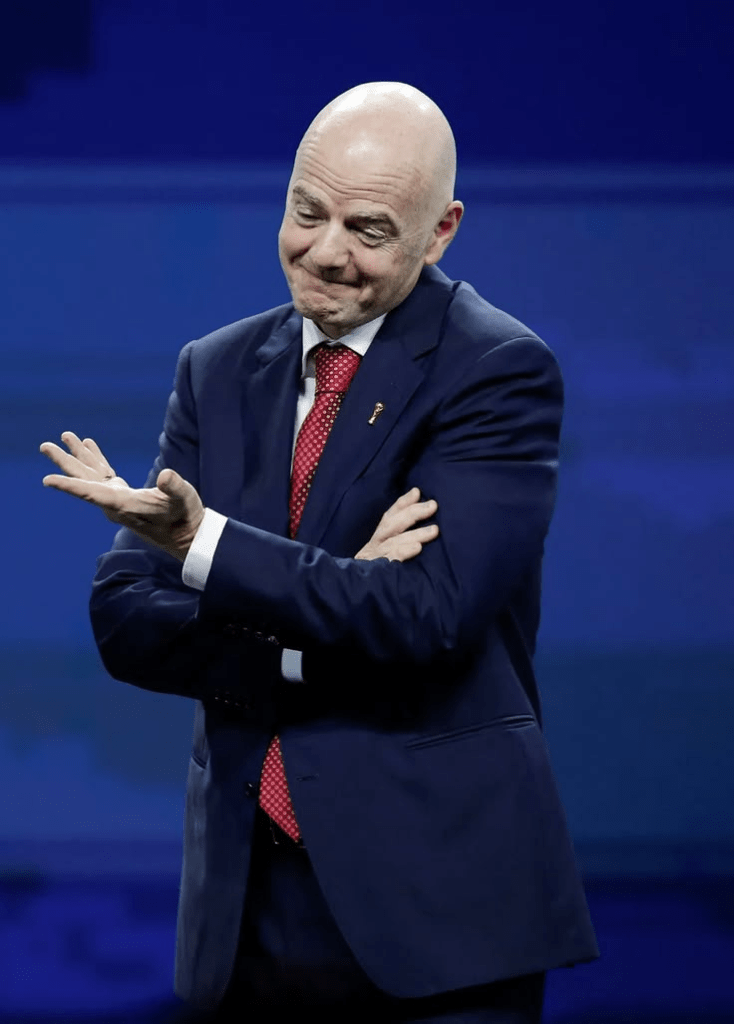
This situation reflects a broader challenge facing FIFA and international sports organizations: how to manage global competitions in an increasingly polarized world.
The 2026 World Cup, already historic for its expansion to 48 teams, now carries additional weight as a test of:
- Organizational resilience
- Diplomatic negotiation
- The limits of sport’s neutrality
Infantino’s leadership will be closely scrutinized, as his decisions could set precedents for future tournaments.
Potential Scenarios
Several possible outcomes could unfold as the tournament approaches: Infantino
- Status Quo Maintained
Iran plays all matches in the United States as scheduled, with enhanced security measures. - Compromise Solution
While officially unlikely, FIFA could quietly adjust logistics without altering the official schedule. - Political Escalation
If tensions worsen, participation could become untenable despite FIFA’s intentions. - Symbolic Success
Iran’s participation could serve as a powerful example of sport transcending conflict.
Gianni Infantino’s promise of FIFA backing for Iran to play at the 2026 World Cup is a defining moment for modern football. It encapsulates the tension between sport and politics, highlighting both the unifying power of the game and the realities of a fractured global landscape.
By insisting that Iran will participate, FIFA is making a bold statement about the integrity of competition and the universality of football. Yet, this stance also exposes the organization to significant risks and challenges, from logistical hurdles to geopolitical backlash.
Ultimately, the success of this approach will depend on whether FIFA can translate its principles into practical solutions. If Iran takes the field as planned, it will not just be a sporting achievement it will be a powerful symbol of resilience, diplomacy, and the enduring belief that football can bring the world together, even in times of conflict. Infantino