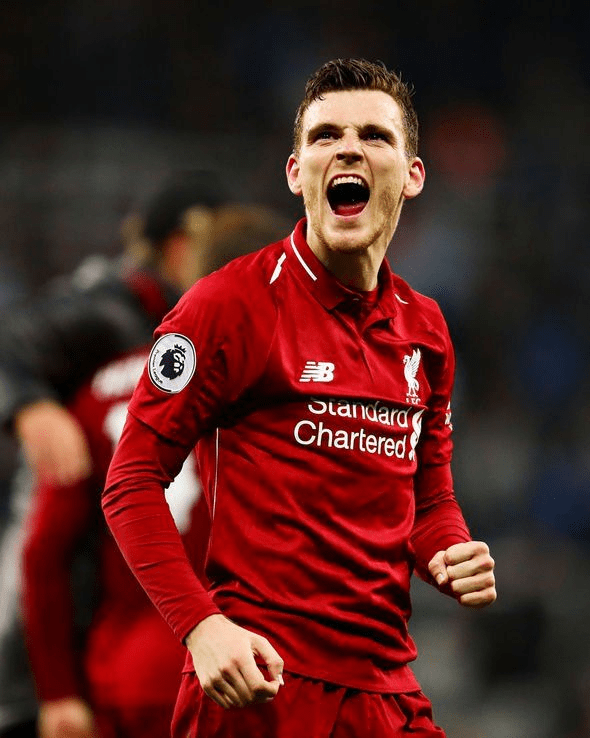
The announcement that Andy Robertson will leave Liverpool FC at the end of the 2025–26 season marks more than just a routine squad change it signals the closing chapter of one of the most transformative eras in the club’s modern history. After nearly a decade at Anfield, Robertson’s departure represents both a moment of reflection and a turning point for Liverpool as it transitions into a new generation.
This is not merely the exit of a player; it is the farewell of a symbol an embodiment of grit, consistency, and evolution in modern football.
From Underdog to Elite: Robertson’s Journey
When Robertson joined Liverpool from Hull City in 2017 for a modest fee of around £8 million, few could have predicted the scale of his impact. At the time, he was seen as a hardworking full-back with potential but not necessarily a future world-class player.
Yet football often rewards determination as much as talent. Robertson quickly forced his way into the starting lineup, displacing more established options and becoming indispensable under manager Jürgen Klopp.
Over the years, he developed into one of the finest left-backs in world football, known for:
- Relentless stamina
- Precision crossing
- Tactical intelligence
- Leadership on and off the pitch
His rise mirrors Liverpool’s own resurgence from a team searching for identity to one that conquered Europe and England.
A Trophy-Laden Legacy
Robertson’s time at Liverpool coincided with one of the most successful periods in the club’s history. During his nine-year stay, he helped secure an impressive collection of silverware:
- 2 × Premier League titles
- 1 × UEFA Champions League
- 1 × FA Cup
- 2 × League Cups
- FIFA Club World Cup
- UEFA Super Cup
- Community Shield
These achievements are not just statistics they represent a transformation in Liverpool’s competitive stature. From near misses to dominant champions, Robertson was a constant presence throughout.
Individually, his contribution was equally remarkable. Across 373 appearances, he recorded 13 goals and 69 assists exceptional numbers for a defender.
But numbers alone cannot capture his influence. Robertson redefined what it meant to be a modern full-back, combining defensive reliability with relentless attacking output.
The Full-Back Revolution
One of the defining tactical features of Klopp’s Liverpool was the use of attacking full-backs. Alongside Trent Alexander-Arnold, Robertson formed one half of a revolutionary partnership.
Rather than traditional defenders, both players operated almost as auxiliary playmakers. Their roles included:
- Delivering crosses from wide areas
- Creating chances in open play
- Stretching opposition defenses
- Supporting high-pressing systems
At times, Liverpool’s creativity flowed more through its full-backs than its midfield.
Robertson, in particular, became synonymous with explosive overlapping runs and pinpoint deliveries into the box. His chemistry with forwards like Mohamed Salah and Sadio Mané was central to Liverpool’s attacking success.
Also Read- FIFA World Cup 2026 Group Stage Predictions: Full Breakdown of All Groups, Winners, and Qualifiers
Why Now? Understanding the Departure
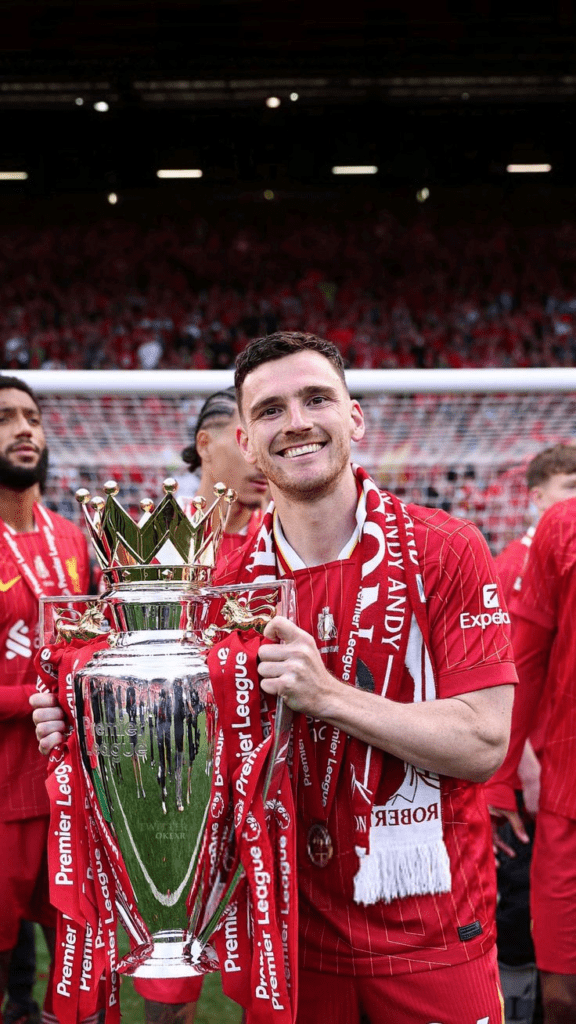
Robertson’s exit at the end of the season is not sudden it is the culmination of several underlying factors.
1. Contract Expiry
His current deal expires in the summer of 2026, and both player and club have opted not to extend it.
2. Changing Role in the Squad
This season has seen Robertson lose his automatic starting spot, with younger options such as Milos Kerkez stepping into prominence.
3. Natural Career Progression
At 32, Robertson is entering the latter stages of his career. A move could offer a fresh challenge or a different competitive environment.
4. Wider Squad Transition
His departure is part of a broader shift at Liverpool, with long-serving players like Mohamed Salah also set to leave.
Taken together, these factors suggest a mutually understood decision one rooted in timing rather than conflict.
Emotional Farewell: More Than Just Football
Robertson’s farewell message highlighted the emotional weight of his decision. After nearly a decade at the club, Liverpool has become deeply intertwined with his personal and professional life.
He acknowledged:
- The difficulty of leaving
- His gratitude toward fans
- The pride in his contributions
- The belief that it was the “right time” to move on
Such statements reflect a player who recognizes both his legacy and the inevitability of change in football.
What Robertson Leaves Behind
Robertson’s departure leaves a void that extends beyond his position on the pitch.
1. Leadership
As vice-captain and a senior figure, he played a key role in maintaining team spirit and standards.
2. Consistency
Few players have matched his reliability over the years. Week after week, season after season, he delivered high-level performances.
3. Identity
Robertson embodied Liverpool’s ethos under Klopp intensity, resilience, and unity.
Replacing these qualities is far more difficult than simply signing a new left-back.
What’s Next for Robertson?
While no official destination has been confirmed, several top European clubs are reportedly interested in signing him.
Potential paths include:
- Joining a Champions League contender in Europe
- Moving to a league with a different pace and style
- Returning to Scotland, though this is considered unlikely at this stage
Regardless of where he goes, Robertson remains a valuable asset an experienced defender with elite-level pedigree.
Liverpool’s Challenge: Rebuilding Without a Pillar
For Liverpool, Robertson’s departure is part of a broader rebuilding process. The club must now address several key questions:
Who Replaces Him?
Finding a left-back who can replicate both his defensive and offensive contributions is no easy task.
How Does the Team Evolve?
Liverpool may shift tactically, potentially moving away from full-back-centric creativity.
Who Steps Up as Leader?
With multiple senior players leaving, a new leadership core must emerge.
The answers to these questions will shape Liverpool’s future trajectory.
The Symbolism of His Exit
Football is often defined by eras periods marked by specific players, managers, and achievements. Robertson’s departure symbolizes the end of Liverpool’s “Klopp era core,” a group that brought sustained success and global recognition.
Players like:
- Mohamed Salah
- Virgil van Dijk
- Alisson Becker
Alongside Robertson, formed the backbone of a team that restored Liverpool’s dominance.
As they begin to move on, the club faces the challenge of writing its next chapter.
Legacy: More Than Just Trophies
Robertson’s legacy at Liverpool goes beyond medals and statistics. It is defined by:
- His journey from rejection (released by Celtic as a youth) to global success
- His relentless work ethic
- His connection with fans
- His role in redefining his position
He will be remembered not just as a great player, but as a symbol of perseverance and belief.
A Turning Point for Modern Football
Robertson’s career also reflects broader trends in football:
- The evolution of full-backs into attacking creators
- The importance of system-based success
- The value of leadership and mentality
His story shows that modern football is not just about individual brilliance it is about fitting into a collective vision and elevating it.
The departure of Andy Robertson from Liverpool is a moment of both closure and transition. It closes a chapter defined by success, unity, and transformation, while opening the door to a new era filled with uncertainty and opportunity.
For Liverpool fans, it is a bittersweet farewell to a player who gave everything to the club. For Robertson, it is the beginning of a new journey one that will build on a legacy already secured in football history.
In the end, his story is a reminder of what makes football compelling: not just the trophies or the goals, but the journeys, the evolution, and the moments that define a generation.